
Key Takeaways
- PRP is a platelet-concentrated blood product; it is not stem-cell or exosome therapy.
- Research results differ across trials, partly because PRP preparations, comparison treatments, and patient groups vary.
- A reasonable conversation starts with the diagnosis, osteoarthritis severity, prior care, goals, cost, and the uncertainty around who is most likely to benefit.
- PRP should not be described as regrowing cartilage or preventing knee replacement; those outcomes are not established.
Start with the knee, not the injection
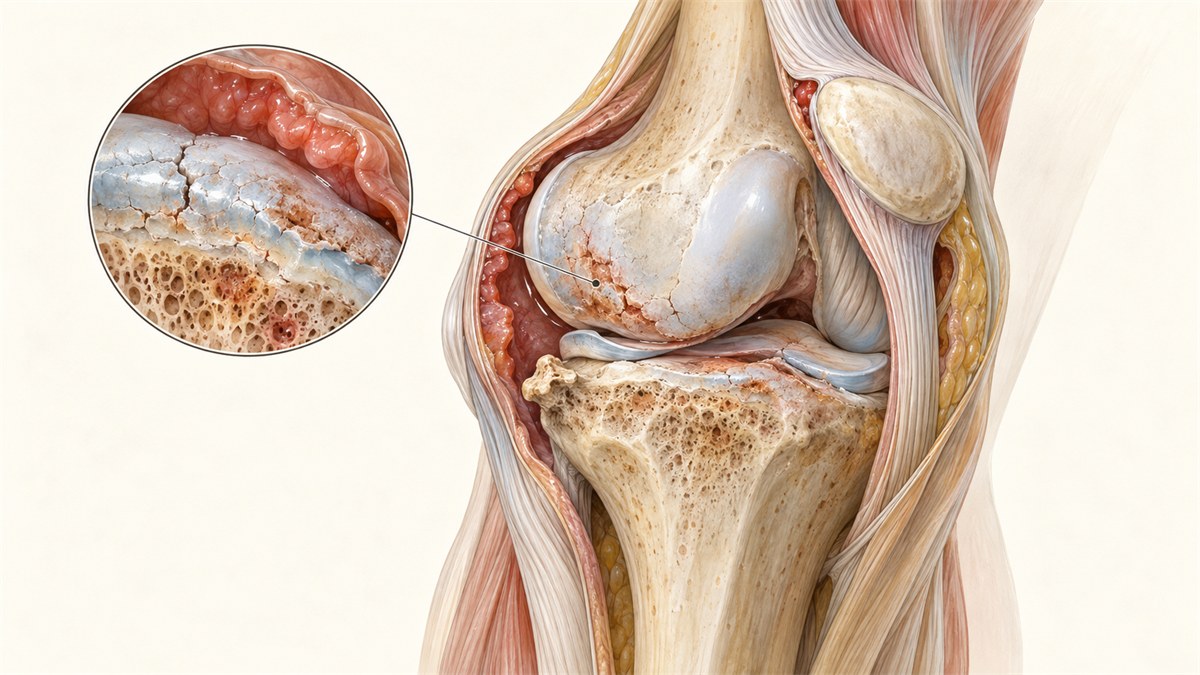
Knee osteoarthritis is not one uniform experience. Pain may be influenced by joint structure, inflammation, strength, activity demands, sleep, weight-bearing tolerance, and other diagnoses around the hip, back, or knee. An injection decision makes more sense after the symptom pattern, examination, and available imaging are considered together.
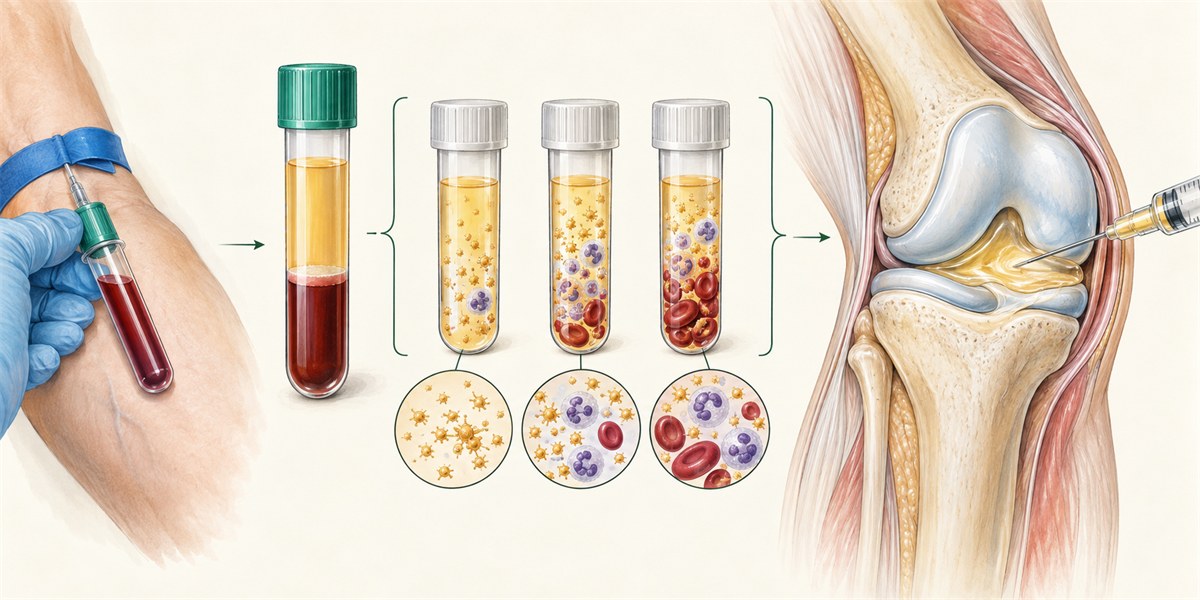
PRP is prepared by drawing blood and concentrating platelets in plasma before injection. The details matter: preparation systems can produce products with different platelet and white-cell characteristics. That variability is one reason a result from one trial cannot automatically be applied to every PRP protocol.
What the evidence actually says
Systematic reviews and expert consensus documents report symptom improvement in many studies, particularly among people with mild-to-moderate knee osteoarthritis. That is an encouraging signal, not a promise for an individual patient. Many comparisons involve hyaluronic acid or corticosteroid injections, and study methods are heterogeneous.
A rigorous placebo-controlled trial offers an important counterweight. In the RESTORE trial, three PRP injections did not produce a statistically significant advantage over saline placebo for the study’s primary pain outcome at 12 months, and did not reduce medial tibial cartilage-volume loss. A balanced discussion should hold both bodies of evidence at once rather than selecting only favorable studies.
What PRP may—and may not—be trying to do
For a patient considering PRP, the practical goal is usually a meaningful improvement in pain and function that supports walking, exercise, work, or rehabilitation. The treatment should not be framed as a cure, as guaranteed tissue regeneration, or as proof that other parts of a care plan are no longer needed.
The time course, number of injections, medication instructions, and rehabilitation plan may differ by clinician and protocol. Patients should receive procedure-specific instructions from the treating practice rather than change medicines or activity based on a general article.
Questions worth asking before deciding
A useful consultation is specific. Ask what diagnosis is being treated; why PRP is being considered now; what alternatives remain reasonable; which preparation is used; how outcomes will be measured; what out-of-pocket cost is expected; and what would count as an unsuccessful trial. Also ask how the injection fits with exercise, strength, weight management when relevant, medications, and surgical consultation when appropriate.
Candidacy and safety depend on the person, procedure, medications, and health history. Infection risk, bleeding considerations, post-injection symptoms, and medication management require individualized instructions. This development article intentionally does not supply a universal contraindication list.
Evidence context
Evidence is moving, and different professional groups have interpreted it differently. The most honest conclusion is narrower than either enthusiasm or dismissal: PRP may be considered for some patients with symptomatic knee osteoarthritis after diagnosis-first evaluation and informed discussion, while meaningful uncertainty remains about protocol, selection, durability, structural effects, and comparative value.
References
- The use of injectable orthobiologics for knee osteoarthritis: a European ESSKA-ORBIT consensus. Part 1—blood-derived products. Knee Surgery, Sports Traumatology, Arthroscopy, 2024.
- Effect of Intra-articular Platelet-Rich Plasma vs Placebo Injection on Pain and Medial Tibial Cartilage Volume in Patients With Knee Osteoarthritis. JAMA, 2021-11-23.