
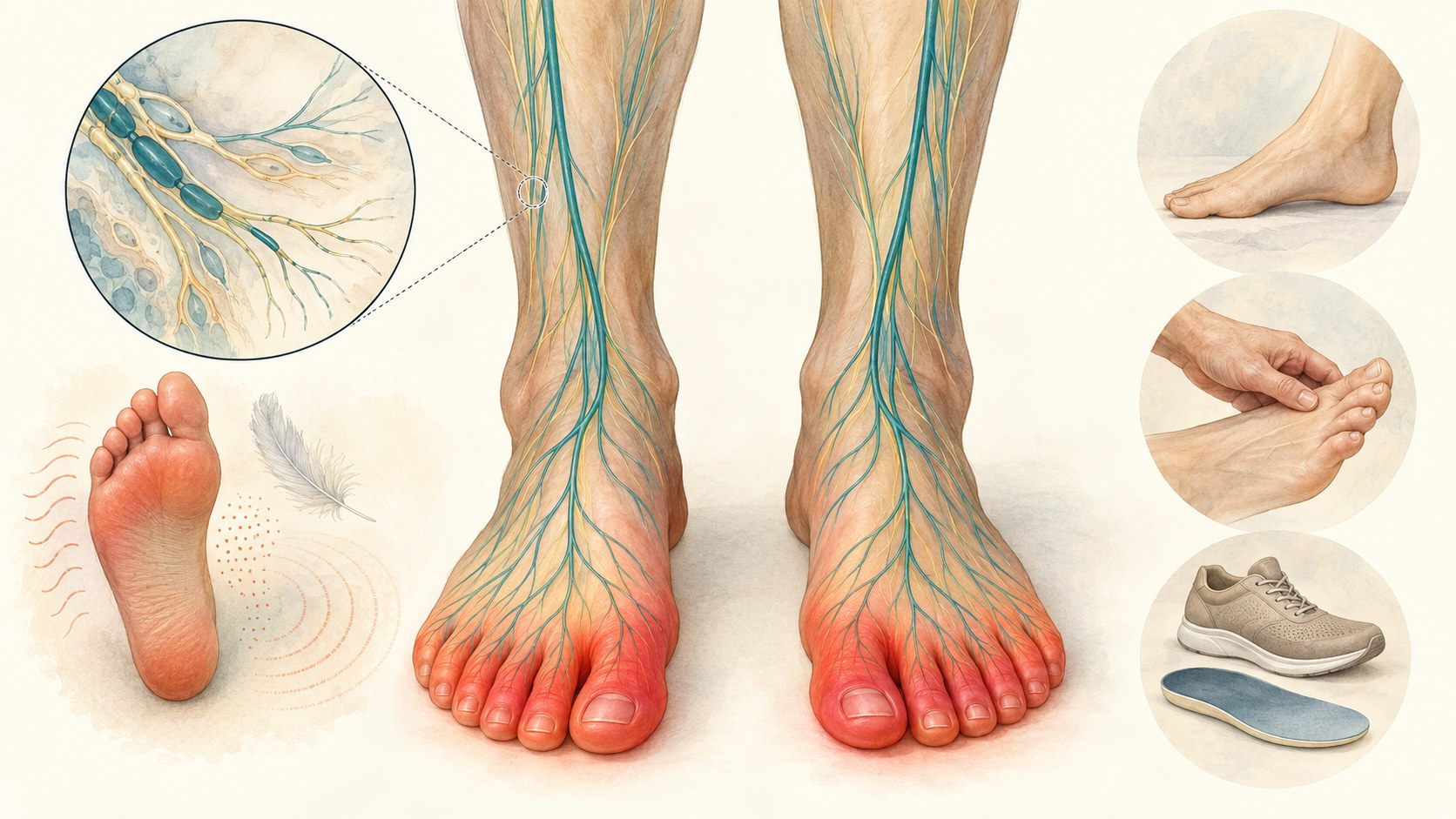
Symptoms often begin in the toes and feet on both sides.
Nerve Pain
Painful Diabetic Neuropathy
Painful diabetic neuropathy often causes burning, tingling, electric pain, or numbness in both feet. Because diabetes can coexist with vascular, spine, medication, and other nerve problems, the pattern still needs a careful evaluation.
Quick orientation
What to know first
Pain and loss of protective sensation can coexist.
Glucose management and foot protection remain essential even when pain treatment is being considered.
What we may consider next
How we may treat this
These options depend on the diagnosis, exam findings, prior care, goals, and individual risk review. A listed pathway does not establish candidacy or guarantee a later procedure.
Options that may be considered
These are options, not required steps. Selection depends on the diagnosis and individual review.
Treatment option
Spinal Cord Stimulation
May be considered within an approved-label, trial-based neuromodulation pathway after diagnosis and selection.
Alternatives, not a sequence
These options may be considered separately; one does not automatically lead to another.
Selected alternative
Vagus / Auricular Neuromodulation
Practice-specific alternative only for selected patients under the actual temporary protocol; not implanted cervical VNS.
Symptoms are clues, not a diagnosis
What the pattern can feel like
Symptoms help define the pattern but do not confirm the diagnosis by themselves. Distribution, timing, neurologic findings, and important alternatives shape the evaluation.
Burning, tingling, electric, or stabbing foot pain
Numbness or altered temperature sensation
Pain from light touch or symptoms that worsen at night
Relevant anatomy
Anatomy and pain mechanisms
Long peripheral nerve fibers are commonly affected first, creating a distal symmetric pattern. Small and large sensory fibers can be involved, so a painful foot can also have reduced protective sensation.
History and examination first
How the diagnosis is evaluated
Evaluation reviews diabetes history and control, symptom distribution, medication and nutrition risks, strength, reflexes, sensory testing, pulses, skin, and footwear. Atypical asymmetry, rapid progression, prominent weakness, or upper-limb onset can prompt broader testing.

Keep the differential open
What else can look similar
A safe diagnosis keeps common and serious alternatives open until the history and examination support a narrower conclusion.
Lumbar radiculopathy or spinal stenosis
Vitamin, thyroid, medication, alcohol, or other metabolic neuropathy
Peripheral artery disease
Entrapment neuropathy or another focal nerve disorder
Core care
Conservative and coordinated care
Procedure discussions belong inside a broader plan that protects function and addresses the underlying condition.
Coordinate glucose and cardiovascular risk management with diabetes care
Use regular foot inspection and appropriate footwear
Discuss evidence-based medication classes and adverse effects
Build safe activity, balance, and fall-prevention strategies
Evidence at a glance
Evidence at a glance
Evidence strength, comparator, follow-up, and patient selection affect how a finding should be used.
Guidelines emphasize foot assessment and treatment of neuropathic pain alongside diabetes care.
Several medication classes may reduce pain, but choice depends on comorbidities and adverse effects.
Randomized high-frequency SCS evidence applies to carefully selected refractory patients and does not replace diabetes or foot care.
Decision quality matters
Evidence, limits, and who it may fit
A listed option does not establish candidacy. Diagnosis, relevant anatomy, prior care, risk, alternatives, goals, and the evidence for the exact indication must align.
Referral and urgent signs
When urgent or different evaluation matters
These findings can change the timing or destination of care.
A new ulcer, skin breakdown, drainage, or infection sign
A cold, pale, or suddenly painful foot
Rapid weakness or a markedly asymmetric pattern
The visit
What to expect at an evaluation
The visit should narrow the diagnosis, identify safety or referral needs, review prior care, and choose the next useful decision rather than defaulting to a procedure.
Map symptoms and protective sensation
Check circulation, skin, strength, and reflexes
Review diabetes care, medication options, foot safety, and escalation criteria
Common questions
Painful Diabetic Neuropathy FAQ
These answers are educational and cannot determine an individual diagnosis or treatment plan.
Can neuropathy hurt and feel numb at the same time?
Yes. Painful sensations and reduced protective sensation can coexist, which is why foot checks remain important.
Does better glucose control reverse neuropathy pain?
Glucose management is essential for overall risk and may slow progression, but established pain may not quickly reverse.
When is SCS discussed?
It may be discussed for selected refractory painful diabetic neuropathy after diagnosis, standard care, goals, and implant risks are reviewed.
Diagnosis before procedure
Start with a careful evaluation
A focused evaluation can clarify the diagnosis, important alternatives, and the next step that best fits the clinical picture.