
PNS targets a named peripheral nerve, not the spinal cord or a dorsal root ganglion.
Neuromodulation
Peripheral Nerve Stimulation
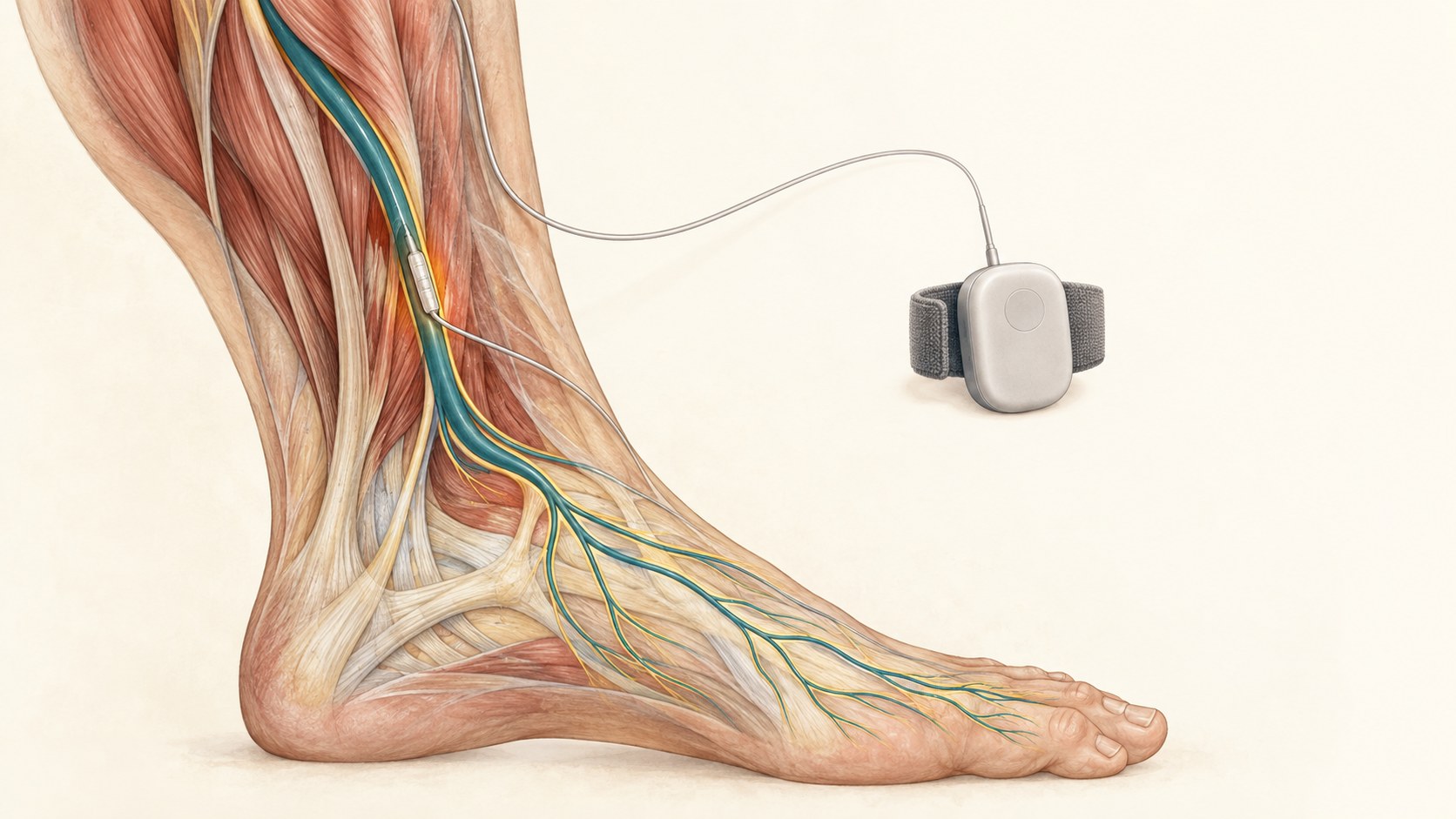
Peripheral nerve stimulation places a small lead near a selected nerve outside the brain and spinal cord. The treatment question begins with whether one nerve plausibly matches the pain pattern.
Quick orientation
What to know first
Systems may be temporary or implantable, with different steps and follow-up.
CRPS and occipital neuralgia may enter selected discussions but are not presented as primary indications.
Learn what may come next
Related guides.
Use these links to learn about related symptoms, conditions, and treatments. An individual evaluation is still needed to determine a diagnosis or whether a treatment may be appropriate.
Care overview
Neuromodulation
Compare approved neuromodulation pathways and understand how modality selection differs by diagnosis, anatomy, and goals.
Open this guideSpecific treatment
Spinal Cord Stimulation
Understand spinal cord stimulation evaluation, trial, implantation, limitations, and selection context.
Open this guideSpecific treatment
Dorsal Root Ganglion (DRG) Stimulation
Understand DRG stimulation for selected focal neuropathic pain presentations, including trial and selection context.
Open this guideSpecific treatment
Vagus / Auricular Neuromodulation
Understand the actual nontraditional vagus/auricular neuromodulation service offered by the practice without implying implanted cervical VNS for epilepsy.
Open this guideTarget and mechanism
The target defines the modality
A peripheral nerve carries sensory and motor signals between the central nervous system and a defined body region. PNS places stimulation near the selected nerve while avoiding intraneural placement.
Patient selection
Selection questions
These questions help determine whether the proposed neural target and treatment plan fit the individual problem.
A pain pattern that can be mapped to a specific peripheral nerve
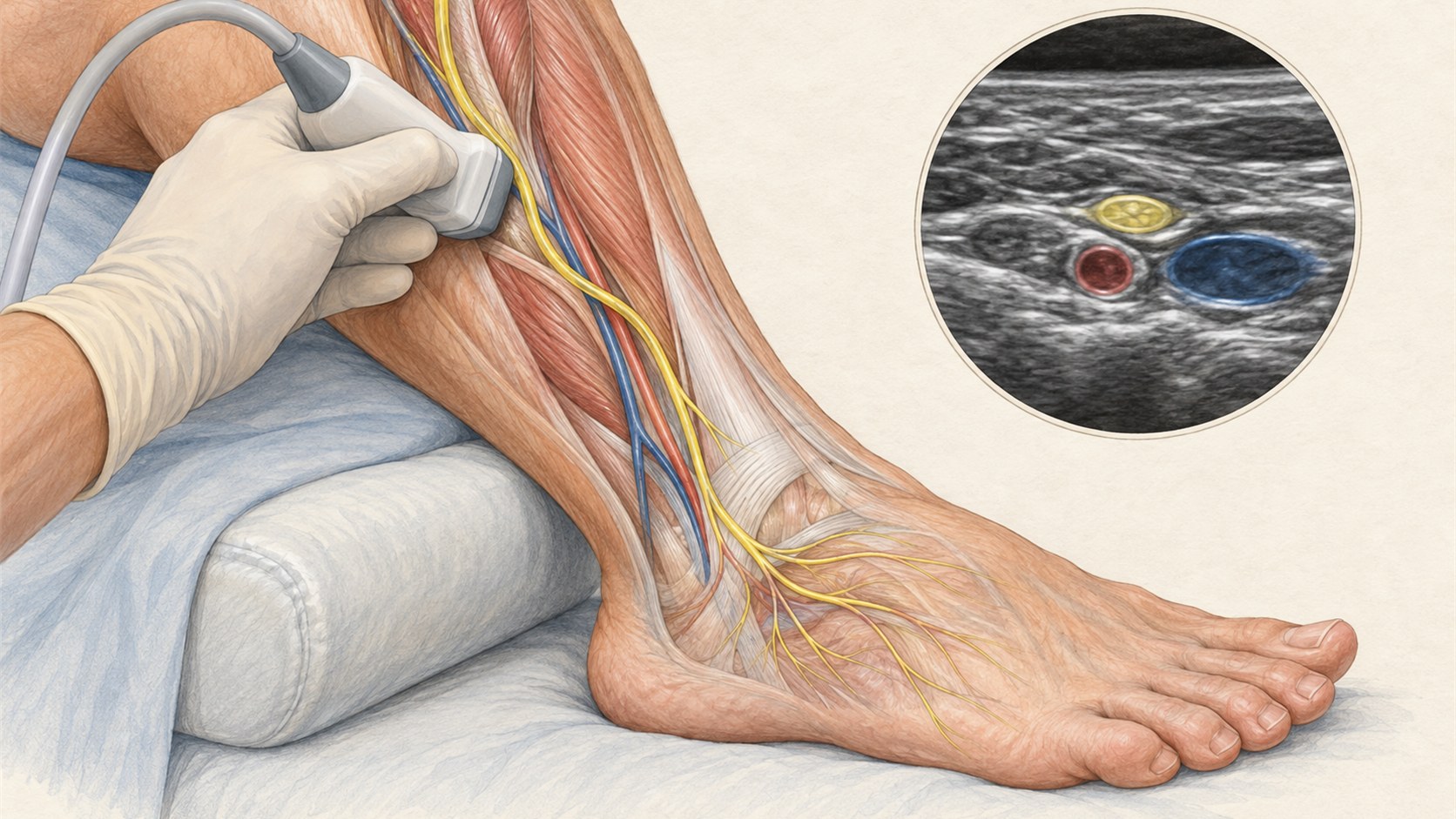
A diagnosis and examination that make the nerve a plausible target
Persistent functional limits despite appropriate care
No medical, anatomic, or behavioral factor that makes the planned system unsafe
A staged decision
How we decide what may come next
The clinician confirms the target using history, examination, prior response, and sometimes ultrasound or diagnostic procedures. A fine lead is positioned near the nerve and connected to a temporary or implanted system. The treatment duration and removal or implant plan depend on the system.
Related care
Conditions this treatment may be considered for
These related guides show educational connections. They do not establish candidacy, a recommendation, or a required sequence.
Needs a separate clinical evaluation
Occipital Neuralgia
Potential alternative for selected refractory named peripheral-nerve pain after diagnosis-specific review.
Explore this pageNeeds a separate clinical evaluation
Complex Regional Pain Syndrome
Potential alternative only when a target-specific peripheral pathway is established.
Explore this pageDecision process
Decision sequence
The safest sequence starts with diagnosis and target, then compares alternatives and evidence, and only then considers a trial, temporary treatment, or implant.
Name the suspected nerve and why it matches symptoms
Review temporary and implantable pathways separately
Set a functional goal and follow-up plan
Evidence at a glance
Evidence at a glance
Evidence must be matched to the exact diagnosis, comparator, follow-up period, and system studied.
Consensus guidance emphasizes target selection and diagnosis-specific evidence.
Evidence is heterogeneous across nerves, devices, and pain conditions.
Occipital stimulation evidence is largely lower-level, and the relevant device classification may differ from limb PNS.
CRPS evidence includes retrospective and small reports rather than a broad featured indication.
Decision quality matters
Evidence, limits, and who it may fit
Relationship membership does not establish candidacy. Published results must be qualified by selection criteria, study design, durability, complications, and alternatives.
Risks and limits
Evidence, risks, and limits
Consensus guidance emphasizes target selection and diagnosis-specific evidence. Evidence is heterogeneous across nerves, devices, and pain conditions. Occipital stimulation evidence is largely lower-level, and the relevant device classification may differ from limb PNS. CRPS evidence includes retrospective and small reports rather than a broad featured indication.
The wrong target can produce little benefit even when the procedure is technically successful.
Lead migration, infection, skin irritation, fracture, and neurologic symptoms can occur.
Evidence from one nerve or device should not be generalized to another.
The visit
What to expect from an evaluation
The visit should identify the diagnosis, the proposed neural target, the evidence that applies to that exact condition, alternatives, and a measurable next step.
Common questions
Peripheral Nerve Stimulation FAQ
These answers are educational and cannot determine an individual diagnosis or treatment plan.
How is PNS different from SCS?
PNS targets a selected nerve in the limb or another peripheral region. SCS targets pathways near the spinal cord.
Is every PNS system permanent?
No. Some are designed for a temporary treatment period, while others are implanted for longer-term use.
Can PNS treat occipital neuralgia or CRPS?
Those relationships require diagnosis-specific review. The current evidence is limited or heterogeneous, so they are not presented here as featured indications.
Target before technology
Start with a target-specific consultation
A consultation can clarify whether this modality, another treatment, or continued diagnostic work is the appropriate next step.