Joint
Knee osteoarthritis involves a joint and has its own evidence base.

Physician-led PRP care
PRP uses a concentrated portion of your own blood, placed at a specific joint, tendon, or soft-tissue target after a careful evaluation. The goal is to match the treatment to the diagnosis, not offer the same injection for every kind of pain.

PRP begins with a small blood draw. A centrifuge separates and concentrates the platelet-rich portion, which is then placed at a specific treatment target.
Image guidance may be used according to the target and practice protocol. PRP is made from your own blood. It is not stem-cell therapy or exosome therapy.
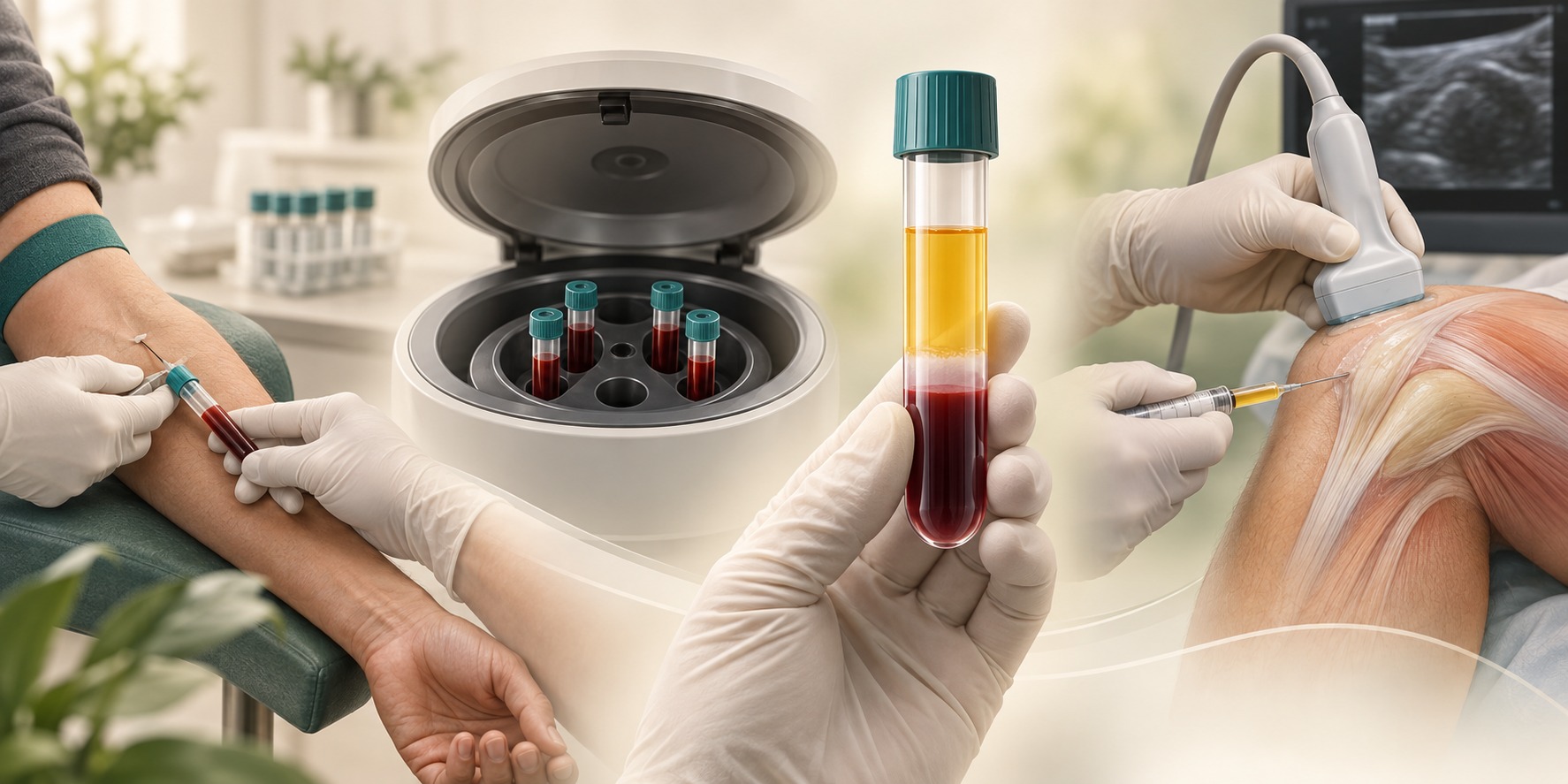
PRP used for a joint, a tendon, the plantar fascia, or lateral hip structures is not one identical clinical situation. Each target has a different diagnosis and evidence base, so the evaluation comes before the injection plan.
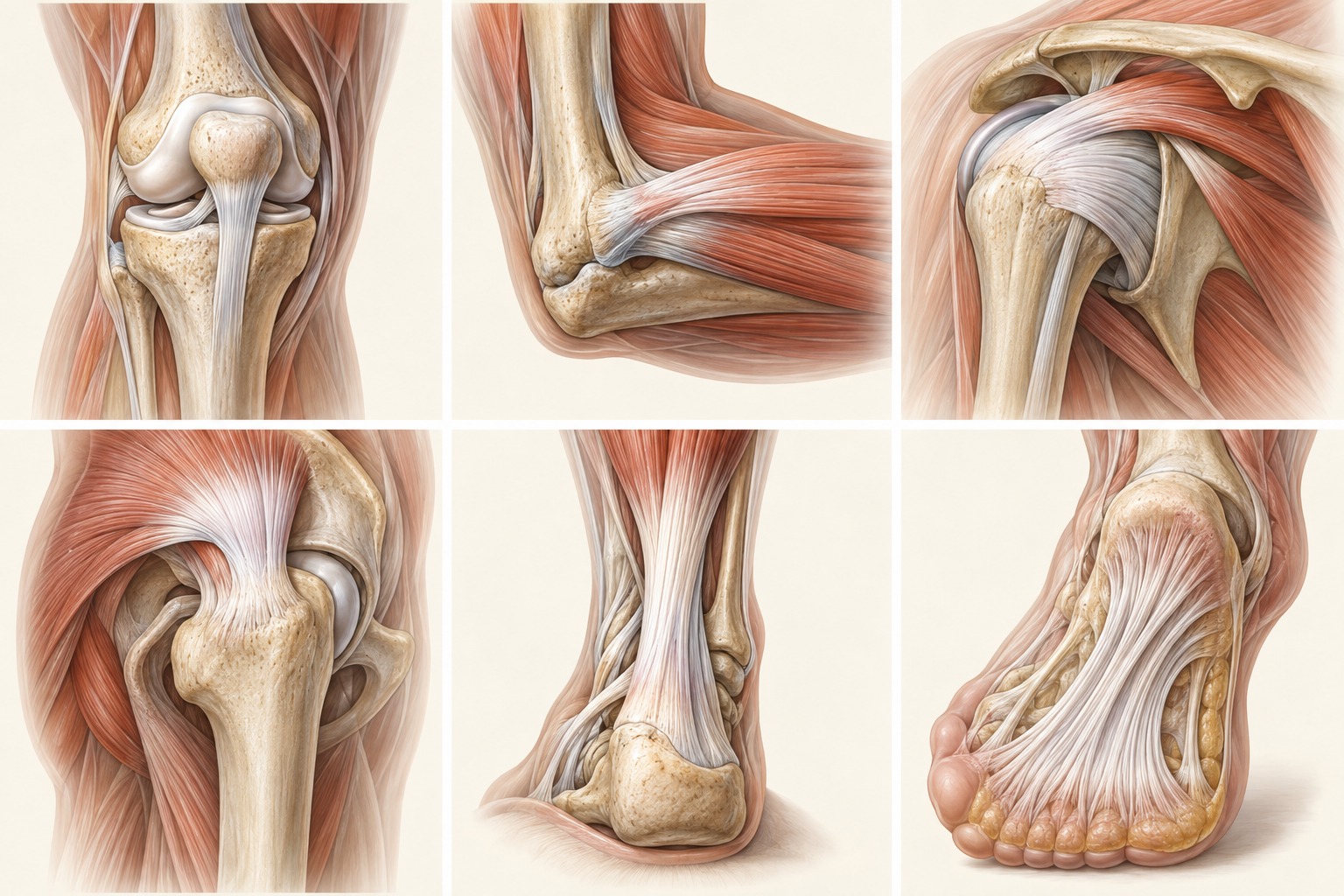
Knee osteoarthritis involves a joint and has its own evidence base.
Elbow, shoulder, and Achilles tendinopathy are distinct tendon problems.
Plantar fascia and lateral hip structures require their own diagnosis and target.
A condition-by-condition view
The evidence is not the same for every diagnosis. This quick view preserves those differences without turning the page into a research report.
Moderate and growing
More extensively studied. Evidence suggests possible benefit, but results and guideline support are not uniform.
Moderate
Some evidence suggests slower but potentially longer-lasting improvement than corticosteroid injection.
Mixed and conflicting
Mixed and conflicting evidence. Recent reviews do not reach the same conclusion.
Moderate
Mixed to modest evidence, with some reviews reporting a later, durable benefit.
Mixed and conflicting
Conflicting trial results. One study was favorable; a newer placebo-controlled trial was not.
Moderate to good
Relatively more consistent evidence among these six, especially compared with corticosteroid injection at three and six months.
PRP may be considered only after an evaluation brings the diagnosis, treatment target, prior care, and safety review together. These points guide the conversation. They do not establish eligibility.
Symptoms and examination point to a specific joint, tendon, fascia, or lateral hip target.
Appropriate rehabilitation, activity changes, or other first steps have already been considered.
The structure being treated matches the diagnosis and the evidence reviewed for that condition.
Health history, medications, and injection risks are reviewed before any plan is made.
The exact visit depends on the diagnosis and target. The core process is straightforward, while details such as guidance method and local anesthetic use remain individualized.
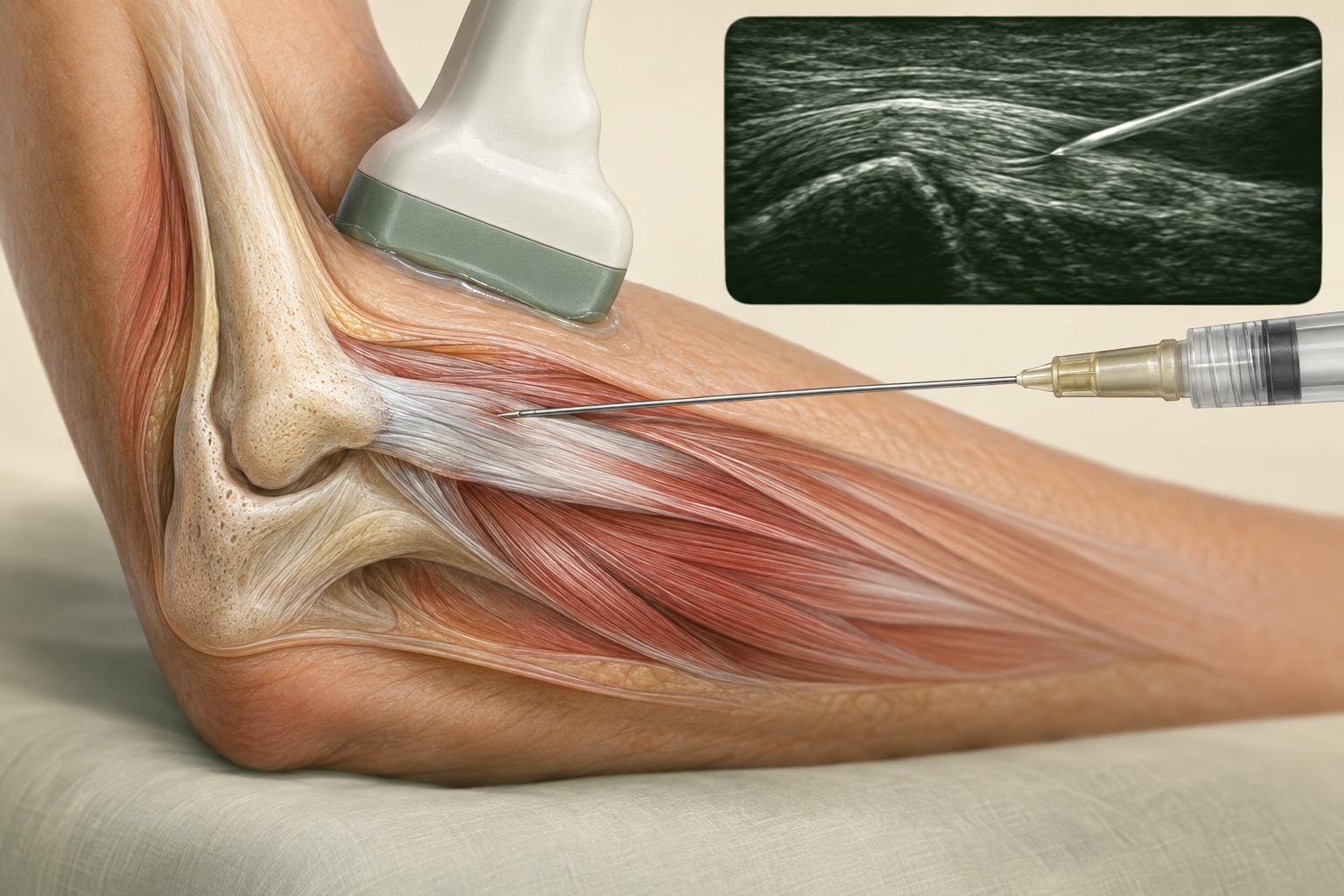
Illustrative example of ultrasound-guided target confirmation. The guidance method varies by target and practice protocol.
A small blood sample is collected, similar to routine lab work.
The sample is processed to concentrate the platelet-rich portion.
The diagnosis and specific structure guide where treatment is planned.
Imaging may support target confirmation according to the structure and practice protocol.
Recovery is guided by the diagnosis and target. The timeline below is intentionally general because activity restrictions and rehabilitation plans need physician direction.
Soreness and relative rest are expected while the treated area settles.
Activity progresses according to the diagnosis and physician instructions.
Response is assessed over time rather than immediately after the injection.
PRP is still an injection, and it is not the right next step for every diagnosis. The balance of risks, limits, and alternatives depends on the condition being treated.
Soreness, swelling, bruising, a temporary pain flare, bleeding, and uncommon infection are among the risks reviewed before treatment.
Results vary, evidence is mixed for some conditions, and PRP does not reverse established structural damage.
Depending on the diagnosis, options may include rehabilitation, activity changes, medication strategies, other injections or interventions, continued conservative care, or surgical referral.
Evidence for PRP is condition-specific. Study methods, preparations, comparison treatments, and follow-up periods differ, so a result for one diagnosis should not be generalized to another. The notes below preserve the deeper evidence context and patient-selection limits for each condition.
one of the more studied uses of PRP. Recent trial reviews suggest possible benefit over hyaluronic acid, especially in mild to moderate arthritis, though a leading U.S. orthopaedic society still rates the evidence as inconclusive for a formal recommendation.
PRP tends to work more slowly than a corticosteroid injection, but several reviews report better pain and function results by around six months and beyond.
genuinely mixed evidence. Some reviews report meaningful improvement, while at least one recent, well-designed placebo-controlled review found no significant clinical benefit.
little difference from other treatments in the first few months, with a modest, more durable benefit reported by several reviews around six months and later.
directly conflicting trial results. One trial found PRP outperformed a corticosteroid injection with benefit sustained for two years; a more recent, larger placebo-controlled trial found no significant benefit at all.
one of the larger and more consistent evidence bases reviewed here, with several studies reporting better pain scores than corticosteroid injection at three and six months.
No. PRP comes from the platelet-rich portion of your own blood. It is not a stem cell treatment and not an exosome product, and this practice does not offer or advertise either. Some clinics blur these categories in their marketing, so it's worth asking any clinic directly what is actually being injected, where it came from, and what evidence supports it for your specific diagnosis.
There is no fixed number. Some diagnoses are treated with a single injection and reassessed; others are managed with a planned series. The decision depends on your diagnosis, how you respond to the first treatment, and what your physician finds at follow-up. Anyone who quotes you a package of injections before examining you and reviewing your imaging is selling a course of treatment rather than planning your care.
The blood draw feels like routine lab work. The injection site is numbed with local anesthetic first, so most people notice pressure rather than sharp pain during the procedure itself. Afterward is different: soreness and a temporary flare in the treated area for a few days is common and expected, and it is not a sign that something went wrong.
PRP does not work like a numbing injection, so there is usually no immediate relief, and the first few days may feel worse before they feel better. If PRP is going to help, change generally develops gradually over weeks. That's why a follow-up visit is used to judge the result rather than the first week, and why repeating treatment is a decision made after reassessment rather than in advance.
Bring a complete, current medication list to your evaluation, including anti-inflammatory drugs, blood thinners, and any supplements. Some medications are commonly adjusted around a PRP injection, but the right approach depends on why you take them and what else is going on in your health history, so this is planned individually with your physician rather than decided from a website.
Coverage varies by plan, and PRP is frequently not a covered benefit. Confirm the current cost with our office before scheduling, and ask what a follow-up injection would cost if one is recommended later, so the full picture is clear from the start.
PRP may not be appropriate if your pain does not have a specific diagnosis, if you have certain blood or platelet disorders, active infection, some cancers, or if you are pregnant, among other factors your physician will review. It may also not be the right choice for a diagnosis where the evidence is currently too mixed to support routine use, which is true for some of the conditions discussed on this page. If PRP is not right for you, the conversation moves to what would actually help, whether that is rehabilitation, a different procedure, or a referral.