
Pain location alone does not establish the diagnosis.
Back, spine & sacroiliac conditions
Coccydynia
Coccydynia is pain centered around the coccyx or tailbone. Trauma, repetitive loading, mobility changes, surrounding soft tissue, referred pain, infection, and uncommon tumors can produce different clinical pictures.
Quick orientation
What to know first
Visceral, musculoskeletal, spinal, hip, pelvic-floor, neuropathic, postsurgical, infectious, vascular, and oncologic causes can overlap.
Red flags and the likely organ or tissue source can change the timing and destination of care.
What we may consider next
How we may treat this
These options depend on the diagnosis, exam findings, prior care, goals, and individual risk review. A listed pathway does not establish candidacy or guarantee a later procedure.
Options that may be considered
These are options, not required steps. Selection depends on the diagnosis and individual review.
Treatment option
Ganglion Impar Block
May be considered for selected coccydynia presentations after diagnosis and conservative-care review; evidence strength and patient selection remain unreviewed.
Symptoms are clues, not a diagnosis
What the pattern can feel like
Symptoms help define a syndrome, but they do not confirm which structure is responsible. Distribution, timing, aggravating factors, neurologic findings, function, and important alternatives all shape the evaluation.
Distribution, timing, quality, sensory change, posture, movement, coughing, meals, bowel or bladder symptoms, and prior surgery help define the pattern.
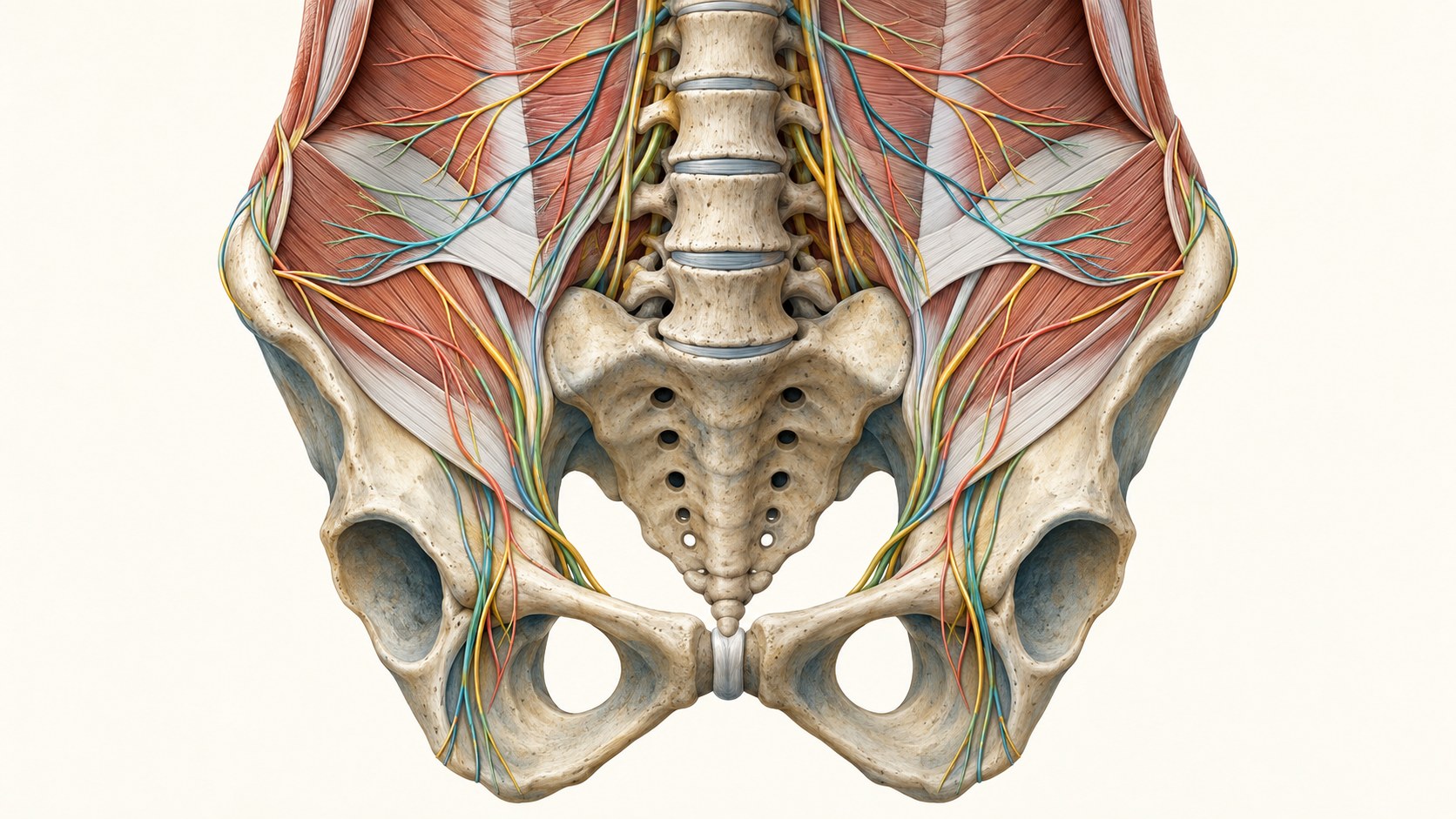
Named nerve territories overlap and vary; tenderness or pain in a territory does not by itself prove neuralgia.
Function, sleep, trauma, infection, systemic disease, and progression shape the evaluation.
Relevant anatomy
Anatomy and pain mechanisms
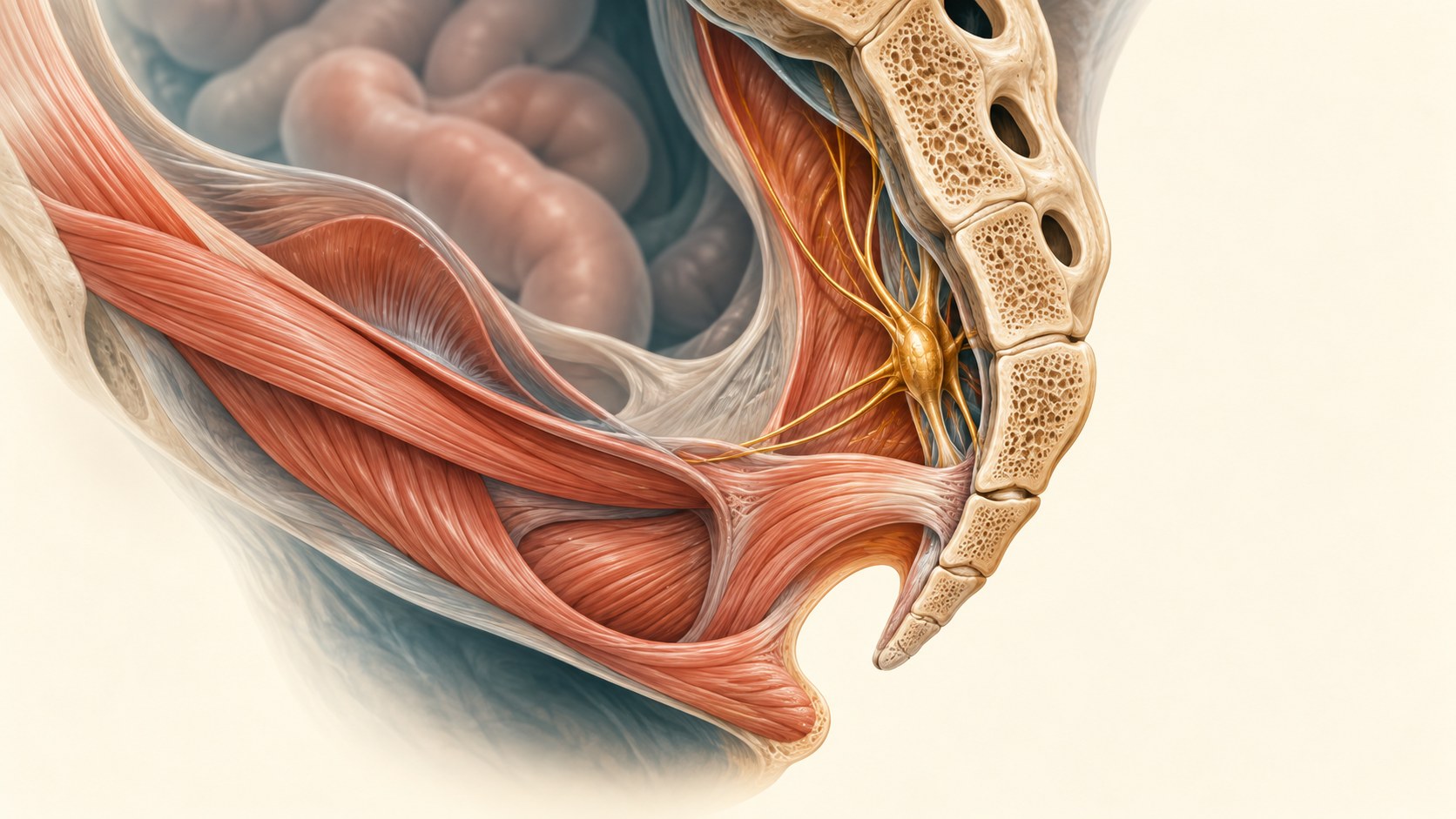
The coccyx sits below the sacrum near pelvic-floor attachments and the terminal sympathetic region. Pain near the tailbone may be somatic, referred, or mixed; the coccyx and ganglion impar are not the same target.
History and examination first
How the diagnosis is evaluated
Evaluation starts by separating urgent and visceral causes from abdominal-wall, pelvic-floor, hip, spine, musculoskeletal, and named-nerve patterns. Examination and selective testing are matched to the clinical question. A temporary block response can add information but does not independently prove the diagnosis.
Keep the differential open
What else can look similar
Keep common and serious alternatives open until the evidence supports a narrower conclusion.
Local trauma, coccygeal mobility or degenerative change, pelvic-floor or soft-tissue pain
Lumbar, sacral, pelvic, rectal, visceral, infectious, inflammatory, or referred pain
Uncommon tumor or other structural disease when red flags are present
Core care
Conservative and coordinated care
Procedure discussions belong inside a broader plan that protects neurologic function and daily activity.
Education and activity changes matched to the suspected diagnosis
Medication review with the appropriate clinician
Physical or pelvic-floor rehabilitation when the evaluation supports it
Reassessment when symptoms, neurologic findings, function, or treatment response change
Evidence at a glance
Evidence at a glance
Evidence strength, comparator, follow-up, and selection affect interpretation.
Conservative care is commonly used first, but studies vary in design and quality.
Interventional evidence is heterogeneous and does not identify one universally superior option.
The newest ganglion impar synthesis rates certainty as very low, so benefit estimates require substantial caution.
Decision quality matters
Evidence, limits, and who it may fit
A listed option does not establish candidacy. Diagnosis, anatomy, prior care, risk, alternatives, goals, and evidence must align.
Referral and urgent signs
When urgent or different evaluation matters
These findings can change the timing or destination of care.
New severe pelvic or abdominal pain with fainting, heavy bleeding, pregnancy concern, fever, or persistent vomiting
New bowel or bladder dysfunction, saddle sensory loss, progressive weakness, or rapidly worsening neurologic symptoms
A new mass, unexplained weight loss, major trauma, visible blood, or symptoms suggesting infection, vascular disease, or cancer
The visit
What to expect at an evaluation
The visit should narrow the diagnosis, identify safety and referral needs, review imaging and prior care in context, and choose the next useful decision. The clinician should explain uncertainty and what a treatment is expected to add before it is performed.
Define the exact distribution, timing, triggers, sensory features, prior surgery or trauma, and functional effect
Examine the abdomen, pelvis, groin, spine, hip, chest wall, skin, neurologic system, or pelvic floor as the presentation requires
Use imaging, laboratory testing, specialist referral, or a focused diagnostic procedure selectively
Choose conservative care, further diagnostic work, a target-specific treatment discussion, or referral without assuming a fixed sequence
Common questions
Coccydynia FAQ
These answers are educational and cannot determine an individual diagnosis or treatment plan.
Does tailbone pain always mean the coccyx is damaged?
No. Local tissue, pelvic-floor, spine, referred, infectious, inflammatory, and uncommon tumor causes can overlap.
Is a ganglion impar block the same as treating the coccyx?
No. The ganglion impar is a terminal sympathetic target near the coccyx; it is distinct from the bone and surrounding somatic tissues.
Is an injection always the next step?
No. Evaluation, conservative care, function, evidence, risks, and the suspected pain mechanism shape the plan.
Diagnosis before procedure
Start with a careful evaluation
A focused evaluation can clarify the diagnosis, important alternatives, and the next step that fits the clinical picture.