
The diagnosis and patient goal come before a treatment choice.
Medication safety & all treatments
Opioid Mitigation
Opioid mitigation is an individualized safety and function process, not a punishment or automatic taper. It reviews current therapy, benefits, risks, goals, other medications, overdose prevention, monitoring, and appropriate non-opioid or interventional options.

Quick orientation
What to know first
Each pathway has a distinct purpose, evidence base, limitations, and risk profile.
A consultation organizes options without creating an automatic procedure sequence.
Target and mechanism
The target defines the procedure
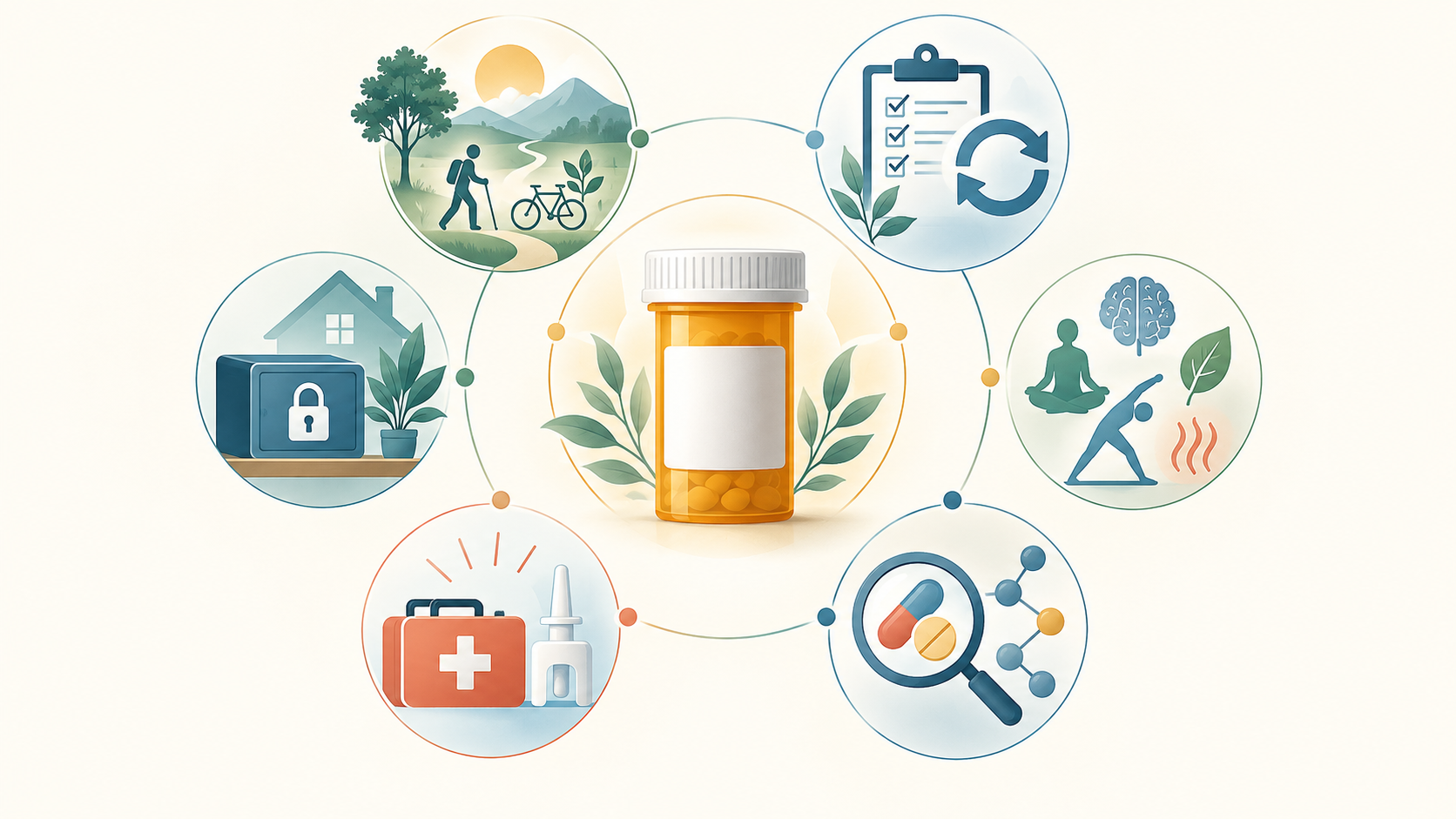
Opioid benefit and harm are shaped by dose, duration, tolerance, breathing and sleep conditions, kidney or liver function, other sedating substances, mental health, substance-use risk, daily activities, and the underlying pain diagnosis. No single score replaces clinical judgment.
Patient selection
Selection questions
Selection begins with a clinically coherent diagnosis and a specific anatomic target. It also considers competing diagnoses, prior treatment, medication and bleeding risk, infection risk, goals, and whether a procedure is the right next decision.
A clinically coherent diagnosis and specific patient question
Meaningful functional limitation despite appropriate initial care
Risks, alternatives, goals, and expected value reviewed together
A defined reassessment or referral plan
A staged decision
How we decide what may come next
The clinician and patient review the medication history, functional benefit, adverse effects, PDMP information when appropriate, medication combinations, overdose risk, naloxone, monitoring, alternatives, and coordination with other prescribers. Any dosage change should be collaborative and individualized; abrupt or unsupported discontinuation can cause harm.
Decision process
Decision sequence
A procedure is an optional treatment discussion, not an automatic step. The response must be reassessed against the usual symptoms and meaningful activities. A limited, absent, or discordant response should reopen the diagnosis and alternatives instead of triggering an automatic series.
Clarify the diagnosis and main functional problem
Review prior care, imaging, medication, and medical risks in context
Compare appropriate conservative, interventional, surgical, and referral options
Choose the next useful decision and define how it will be reassessed
Evidence at a glance
Evidence at a glance
Study results depend on diagnosis, selection, comparator, technique, outcome, and follow-up.
CDC guidance emphasizes person-centered decisions, periodic reassessment, nonopioid care when appropriate, PDMP review, selective toxicology testing, and offering naloxone for increased overdose risk.
Toxicology testing should not be punitive, and PDMP information should not be used to dismiss patients from care.
HHS guidance warns against rapid or abrupt discontinuation and supports individualized, collaborative dosage decisions.
Decision quality matters
Evidence, limits, and who it may fit
A listed option or imaging finding does not establish candidacy. Evidence and uncertainty must be matched to the individual question.
Risks and limits
Evidence, risks, and limits
CDC guidance emphasizes person-centered decisions, periodic reassessment, nonopioid care when appropriate, PDMP review, selective toxicology testing, and offering naloxone for increased overdose risk. Toxicology testing should not be punitive, and PDMP information should not be used to dismiss patients from care. HHS guidance warns against rapid or abrupt discontinuation and supports individualized, collaborative dosage decisions.
Treatment evidence applies to defined diagnoses, techniques, and populations rather than every pain presentation.
Patient selection, medication, technique, recovery, and follow-up are individualized.
A procedure or medication plan does not replace urgent neurologic, surgical, behavioral-health, or addiction-treatment evaluation when indicated.
The visit
What to expect from a consultation
The visit should define the diagnosis, intended target, evidence, alternatives, risks, and the next useful decision. Medication, frequency, sedation, medication holds, driving, and aftercare remain individualized clinician decisions.
Common questions
Opioid Mitigation FAQ
These answers are educational and cannot determine an individual diagnosis or treatment plan.
Does opioid mitigation mean every patient must taper?
No. Decisions depend on benefits, harms, goals, safety, alternatives, and patient circumstances; there is no single policy for every person.
Will monitoring be used to punish or dismiss me?
It should not. Monitoring is interpreted with other clinical information to improve safety, reduce bias, and guide respectful communication and care.
Should I stop medication before an appointment?
No. Do not abruptly stop or independently change a prescribed opioid based on website information; contact the prescribing clinician for individualized guidance.
Question before procedure
Start with a diagnosis-first consultation
A consultation can clarify whether a selected procedure, another treatment, continued conservative care, or referral fits the clinical picture.