
The diagnosis and patient goal come before a treatment choice.
Sympathetic & autonomic procedures
Stellate Ganglion Block
A stellate ganglion block places medication near a cervical sympathetic target at the lower neck. It may enter selected diagnostic or therapeutic discussions, but the indication, anatomy, evidence, and safety plan must be specific.
Quick orientation
What to know first
Each pathway has a distinct purpose, evidence base, limitations, and risk profile.
A consultation organizes options without creating an automatic procedure sequence.
Target and mechanism
The target defines the procedure
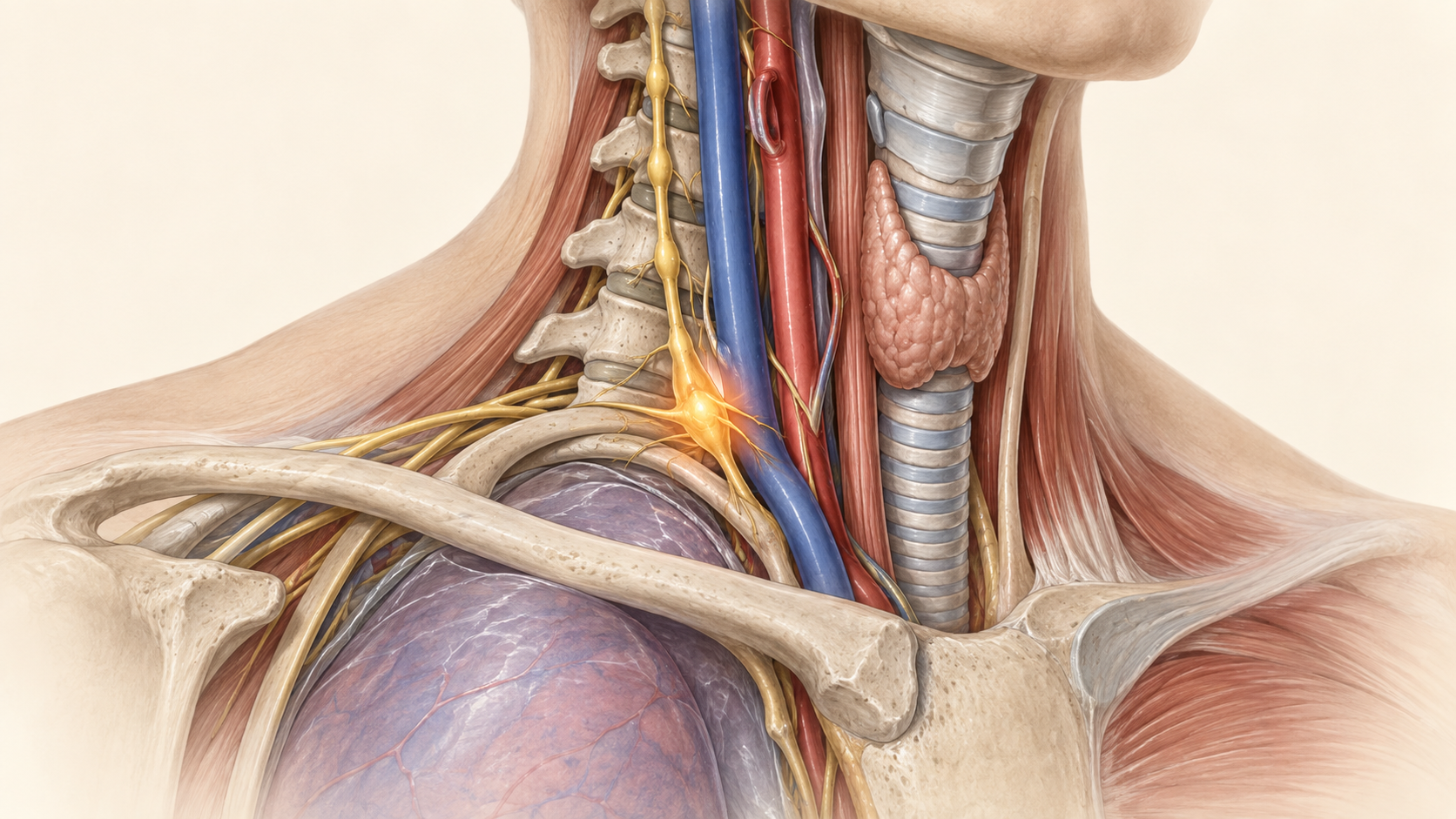
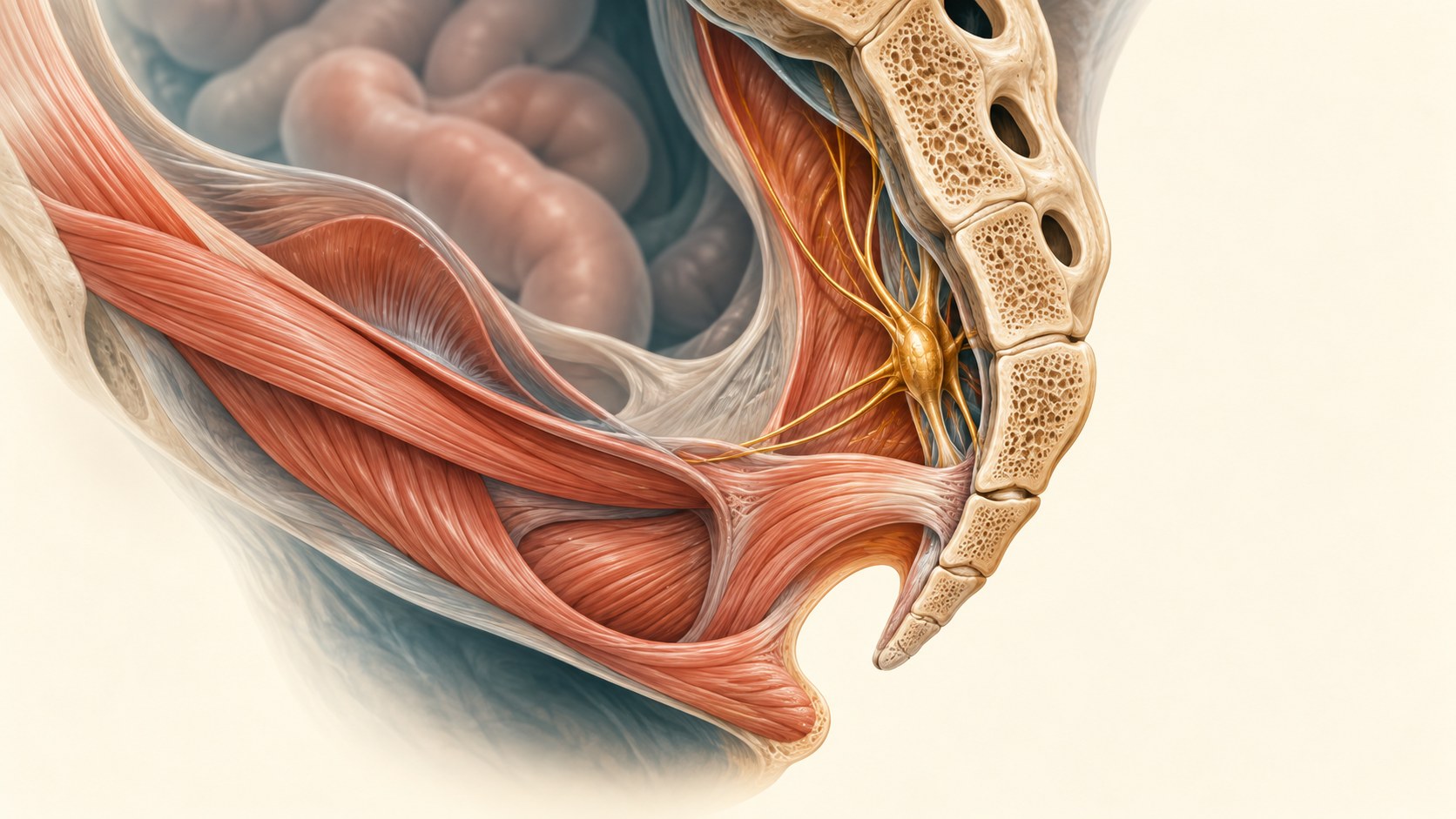
The stellate region is at the cervicothoracic sympathetic chain near major blood vessels, nerves, airway and esophagus, and the pleural apex. Ganglion impar is a distinct terminal caudal sympathetic target in the pelvic and coccygeal region; the procedures are not interchangeable.
Patient selection
Selection questions
Selection begins with a clinically coherent diagnosis and a specific anatomic target. It also considers competing diagnoses, prior treatment, medication and bleeding risk, infection risk, goals, and whether a procedure is the right next decision.
A clinically coherent diagnosis and specific patient question
Meaningful functional limitation despite appropriate initial care
Risks, alternatives, goals, and expected value reviewed together
A defined reassessment or referral plan
A staged decision
How we decide what may come next
The clinician confirms the indication and side, reviews alternatives and medical risks, and uses image guidance to approach the selected cervical sympathetic target. Temporary voice, eyelid, temperature, or swallowing changes and serious vascular, neural, airway, esophageal, infectious, or pleural complications require target-specific consent and monitoring.
Related care
Conditions this treatment may be considered for
These related options are educational. They do not establish a diagnosis, candidacy, recommendation, or required treatment sequence.
Alternative
Complex Regional Pain Syndrome
Alternative consideration only for selected upper-extremity CRPS presentations within multidisciplinary care; this edge does not apply to every CRPS presentation.
Explore this pageDecision process
Decision sequence
A procedure is an optional treatment discussion, not an automatic step. The response must be reassessed against the usual symptoms and meaningful activities. A limited, absent, or discordant response should reopen the diagnosis and alternatives instead of triggering an automatic series.
Clarify the diagnosis and main functional problem
Review prior care, imaging, medication, and medical risks in context
Compare appropriate conservative, interventional, surgical, and referral options
Choose the next useful decision and define how it will be reassessed
Evidence at a glance
Evidence at a glance
Study results depend on diagnosis, selection, comparator, technique, outcome, and follow-up.
Evidence varies substantially by indication and many studies are small or heterogeneous.
CRPS syntheses report possible short-term benefit but also material uncertainty and no high-certainty evidence across treatment comparisons.
Complications have been reported with landmark and image-guided techniques, so image guidance does not eliminate risk.
Decision quality matters
Evidence, limits, and who it may fit
A listed option or imaging finding does not establish candidacy. Evidence and uncertainty must be matched to the individual question.
Risks and limits
Evidence, risks, and limits
Evidence varies substantially by indication and many studies are small or heterogeneous. CRPS syntheses report possible short-term benefit but also material uncertainty and no high-certainty evidence across treatment comparisons. Complications have been reported with landmark and image-guided techniques, so image guidance does not eliminate risk.
Treatment evidence applies to defined diagnoses, techniques, and populations rather than every pain presentation.
Patient selection, medication, technique, recovery, and follow-up are individualized.
A procedure or medication plan does not replace urgent neurologic, surgical, behavioral-health, or addiction-treatment evaluation when indicated.
The visit
What to expect from a consultation
The visit should define the diagnosis, intended target, evidence, alternatives, risks, and the next useful decision. Medication, frequency, sedation, medication holds, driving, and aftercare remain individualized clinician decisions.
Common questions
Stellate Ganglion Block FAQ
These answers are educational and cannot determine an individual diagnosis or treatment plan.
Is this the same as a ganglion impar block?
No. Stellate ganglion block targets the cervical sympathetic chain; ganglion impar block targets a terminal caudal sympathetic region near the coccyx.
Does temporary warmth or eyelid change prove long-term benefit?
No. Expected physiologic signs and symptom response are interpreted in context and do not guarantee durable benefit.
Is this a routine block for every CRPS patient?
No. Diagnosis, region, rehabilitation plan, evidence uncertainty, alternatives, and individualized risk determine whether it enters the discussion.
Question before procedure
Start with a diagnosis-first consultation
A consultation can clarify whether a selected procedure, another treatment, continued conservative care, or referral fits the clinical picture.