
Key Takeaways
- The diagnosis and pain pattern matter: evidence is stronger for radicular pain than for nonspecific axial back pain.
- A 2025 American Academy of Neurology review found mostly limited, short-term benefit for cervical and lumbar radiculopathy, with different findings for spinal stenosis.
- Epidural corticosteroid use is not FDA-approved, and rare but serious neurologic events have been reported.
- The purpose should be explicit—such as creating a window for function or rehabilitation—not simply repeating injections on a calendar.
What “epidural” describes
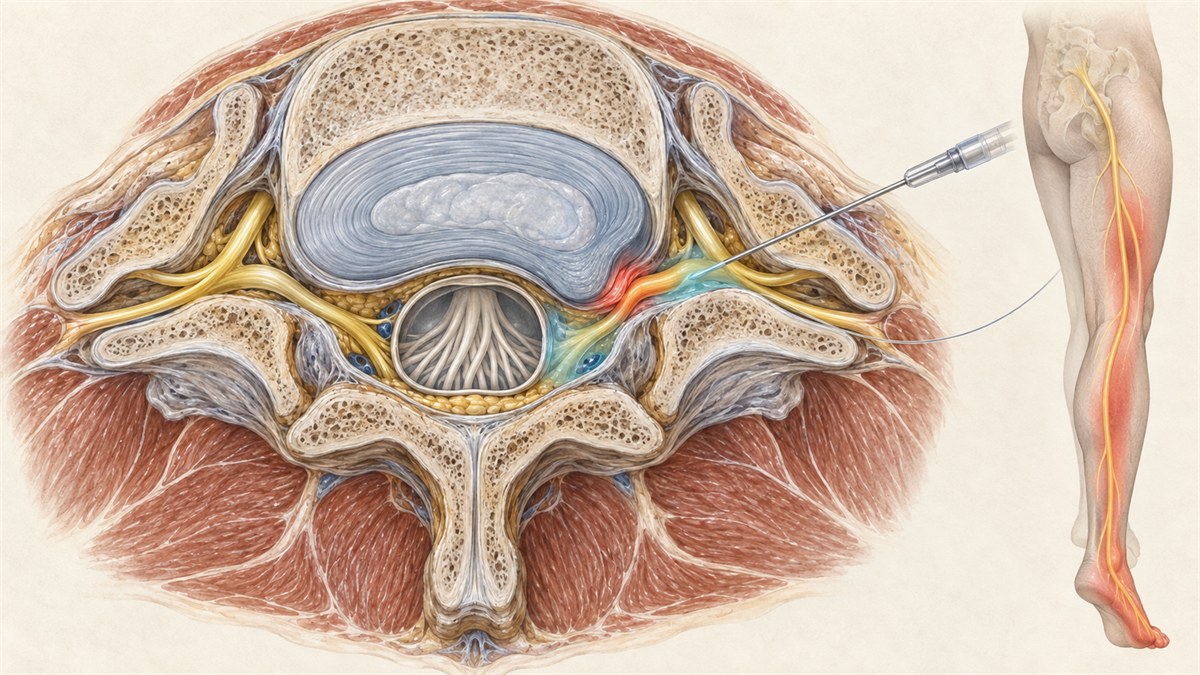
The epidural space surrounds structures inside the spinal canal. Depending on the diagnosis and anatomy, medication may be delivered through interlaminar, transforaminal, or caudal approaches. These approaches are not interchangeable; target, imaging, medication choice, and risk discussion should match the clinical problem.
The corticosteroid is intended to reduce inflammatory signaling around irritated neural tissue. Local anesthetic may also be used. The injection does not remove disc material, reverse arthritis, stabilize the spine, or permanently change the size of the spinal canal.
What the evidence supports
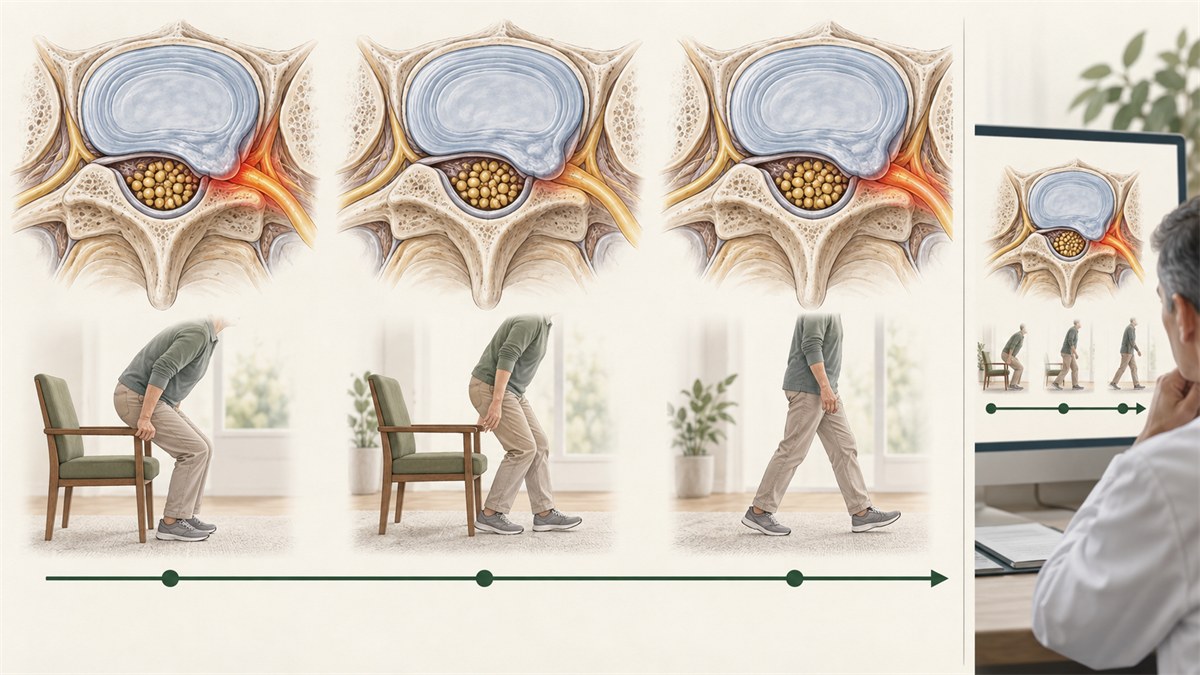
The 2025 American Academy of Neurology systematic review evaluated 90 randomized trials. For cervical and lumbar radiculopathies, the authors concluded that epidural steroid injections probably reduce short-term pain and disability and may reduce long-term disability, while evidence was insufficient for long-term pain reduction.
For lumbar spinal stenosis, the review found possible improvement in disability but not short-term pain; evidence for long-term pain was insufficient. Evidence was also insufficient to determine effectiveness for cervical spinal stenosis. These distinctions are why an accurate diagnosis is more useful than the broad label “back pain.”
What an injection cannot promise
An epidural steroid injection cannot guarantee relief, establish that every symptom comes from one nerve, prevent future episodes, or prove that surgery will never be needed. When it helps, the practical value may be a period of lower symptoms that permits sleep, walking, work, or a more productive rehabilitation program.
A response should be measured against a goal established beforehand. Repeating a procedure without meaningful benefit deserves reassessment rather than momentum.
Safety deserves direct language
The FDA states that corticosteroids are not approved for injection into the epidural space. Its safety communication describes rare but serious neurologic events reported after epidural corticosteroid injections. Patients should discuss the procedure’s specific benefits, alternatives, medication and bleeding considerations, infection risk, steroid-related effects, and warning symptoms with the treating clinician.
General web guidance should not replace procedure-day instructions. New weakness, loss of vision or vision change, seizure, severe headache, or other unusual neurologic symptoms after an injection require urgent medical evaluation according to the treating team’s instructions.
Questions to ask
Ask what diagnosis is being treated; which approach and spinal level are planned; why that target fits the symptoms; what outcome and time horizon are realistic; how many injections might be considered and under what stopping rule; what medications require instructions; and how the procedure supports the larger care plan. If the answer is simply “it is time for another injection,” ask what changed and what was learned from the last one.
References
- Epidural Steroids for Cervical and Lumbar Radicular Pain and Spinal Stenosis Systematic Review Summary: Report of the AAN Guidelines Subcommittee. Neurology, 2025-02-12.
- FDA Drug Safety Communication: label changes to warn of rare but serious neurologic problems after epidural corticosteroid injections for pain. U.S. Food and Drug Administration, 2014-04-23.