
Facet-related pain is a clinical hypothesis, not an imaging diagnosis.
Head and neck conditions
Cervicogenic Headache
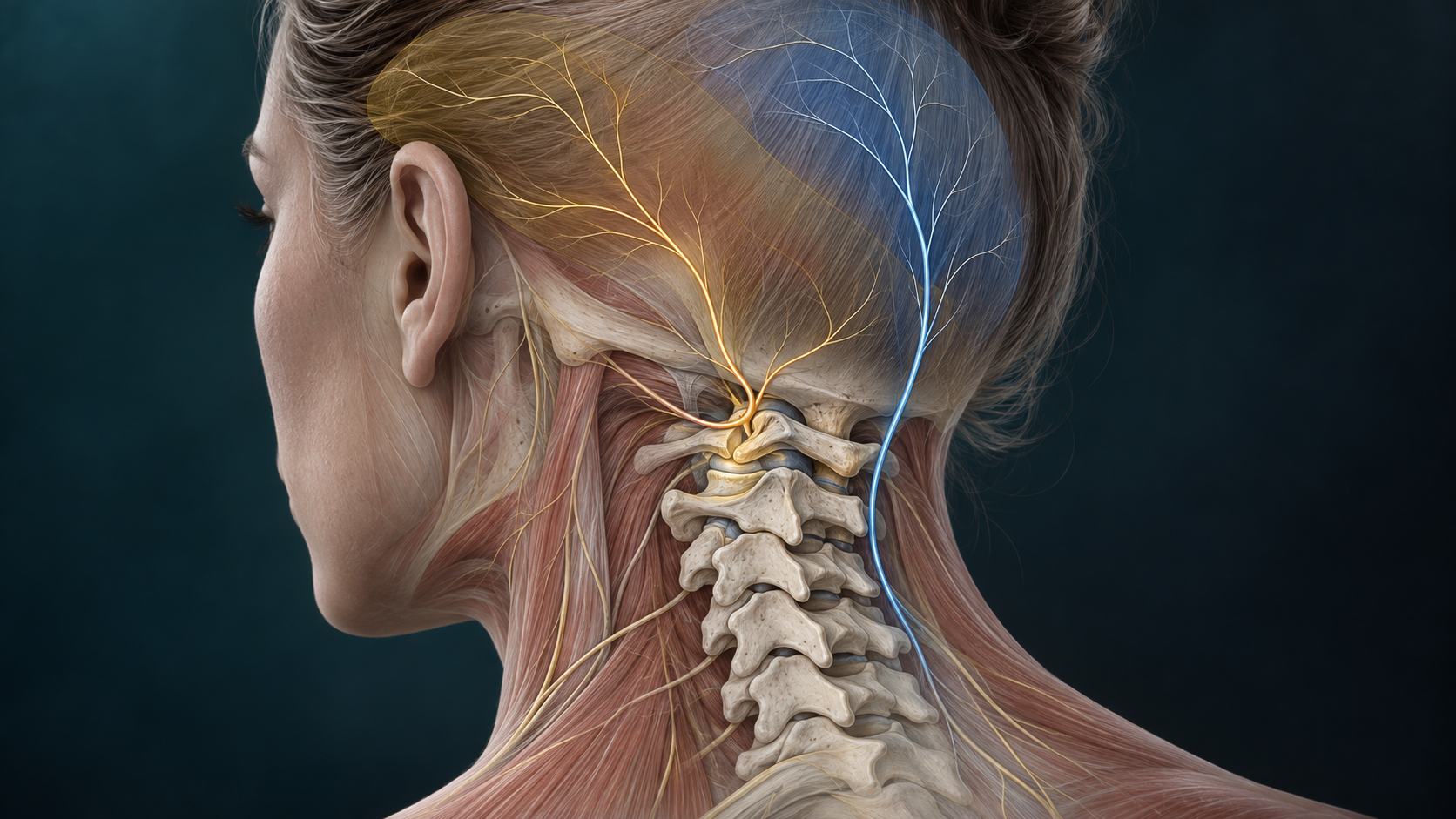
Cervicogenic headache is head pain attributed to a disorder in the neck. Neck pain, one-sided symptoms, or pain triggered by movement can be clues, but none is unique enough to make the diagnosis alone.
Quick orientation
What to know first
History and examination help locate the problem but are not definitive.
A diagnostic block may inform a later decision; it does not obligate treatment.
What we may consider next
How we may treat this
These options depend on the diagnosis, exam findings, prior care, goals, and individual risk review. A listed pathway does not establish candidacy or guarantee a later procedure.
Establish first
Diagnostic or prognostic steps help clarify the pain generator or whether a later option fits.
Diagnostic / prognostic step
Cervical Medial Branch Block
May contribute to a diagnostic pathway when a cervical facet source is clinically suspected.
May come later
A later procedure is considered only when evaluation and the response to earlier steps support it.
Later treatment option
Cervical Radiofrequency Ablation
Later therapeutic step only after diagnosis-specific evaluation and an appropriate block-response pathway.
Symptoms are clues, not a diagnosis
What the pattern can feel like
Symptoms can help define a pattern, but they do not confirm which structure is responsible. Distribution, timing, aggravating factors, neurologic findings, function, and important alternatives all shape the evaluation. A familiar pattern can still have more than one contributor, and a change in pattern may require a different assessment.
Head pain accompanied by neck pain or restricted neck movement
Symptoms provoked by neck movement or pressure can occur
Migraine-like nausea, light sensitivity, or sound sensitivity may coexist and do not exclude another diagnosis
Relevant anatomy
Anatomy and pain mechanisms
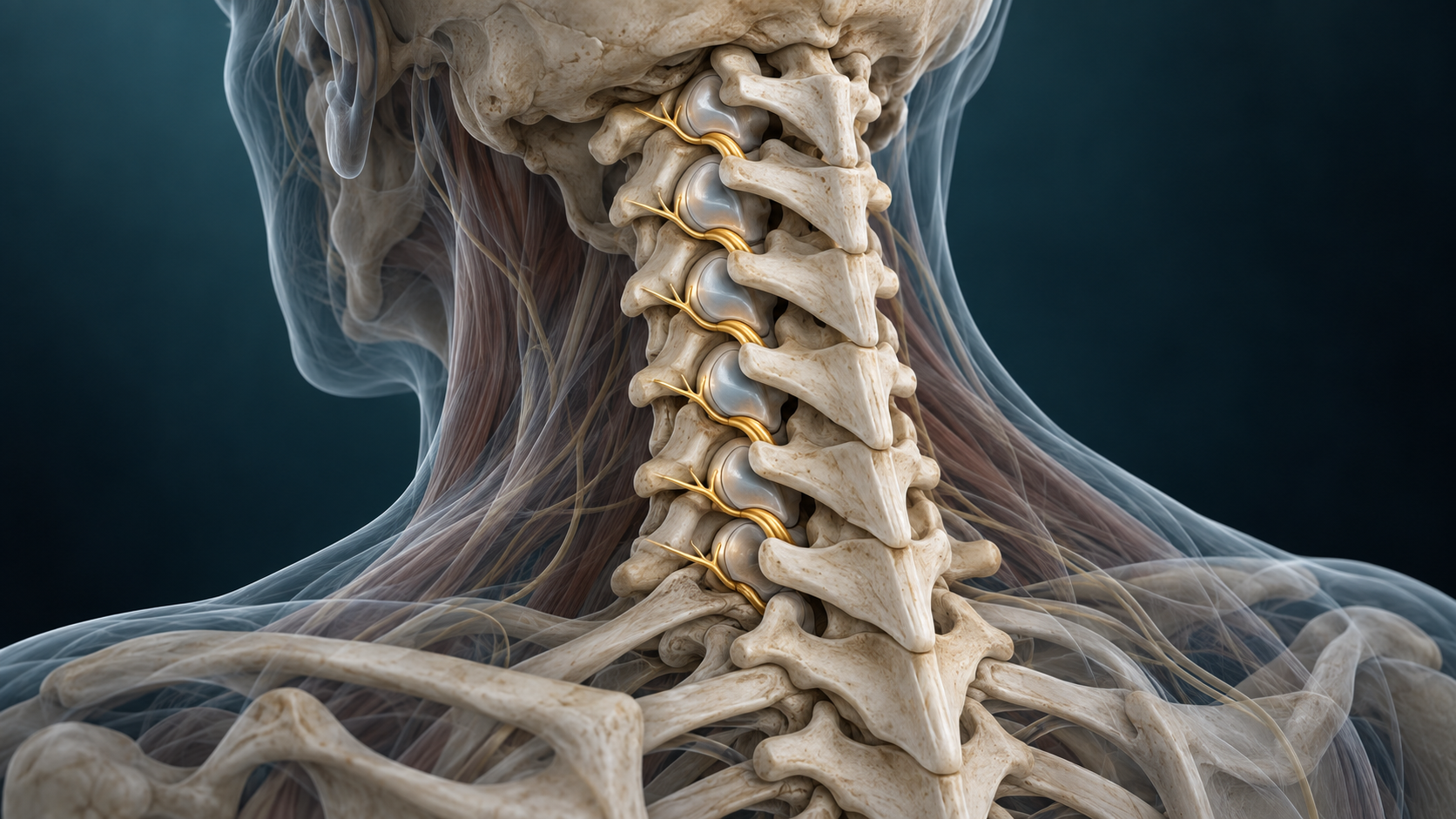
Upper cervical joints and other neck structures can refer pain toward the back, side, or front of the head. This referral overlaps with migraine and occipital neuralgia, so anatomy and symptoms must be interpreted together.
History and examination first
How the diagnosis is evaluated
Diagnosis requires evidence of a cervical disorder plus evidence that it causes the headache. Imaging findings may be suggestive but are not firm proof. Improvement with treatment of the cervical source or abolition with a diagnostic block can support causation, but alternative headache diagnoses must still be considered.
Keep the differential open
What else can look similar
Keep common and serious alternatives open until the evidence supports a narrower conclusion.
Migraine or tension-type headache
Occipital neuralgia
Medication-overuse headache
Temporomandibular, dental, eye, sinus, or vascular causes
Urgent secondary headache when red flags are present
Core care
Conservative and coordinated care
Procedure discussions belong inside a broader plan that protects function.
Education and paced activity
Exercise or physical therapy matched to the diagnosis
Medication review and risk reduction
Reassessment when the pattern changes or does not respond as expected
Evidence at a glance
Evidence at a glance
Evidence strength, comparator, follow-up, and selection affect interpretation.
ICHD-3 requires evidence of causation rather than neck imaging alone.
Features such as side-locked pain, neck provocation, and posterior-to-anterior radiation are not unique to cervicogenic headache.
Evidence for cervical facet injection in cervicogenic headache is sparse and heterogeneous.
Decision quality matters
Evidence, limits, and who it may fit
A listed option does not establish candidacy. Diagnosis, anatomy, prior care, risk, alternatives, goals, and evidence must align.
Referral and urgent signs
When urgent or different evaluation matters
These findings can change the timing or destination of care.
Sudden severe or rapidly peaking headache
New neurologic deficit, confusion, fainting, fever, or stiff neck
New headache after trauma, during pregnancy, with cancer or immune suppression, or after age 50
The visit
What to expect at an evaluation
The visit should narrow the diagnosis, identify safety and referral needs, review imaging and prior care in context, and choose the next useful decision. The clinician should explain uncertainty, distinguish clinical evidence from coverage rules, and define what information a test or treatment is expected to add before it is performed.
Review the pain pattern, neurologic symptoms, imaging, and prior care
Set measurable pain and functional goals before any procedure
Choose the next step from the full clinical picture rather than one isolated test
Common questions
Cervicogenic Headache FAQ
These answers are educational and cannot determine an individual diagnosis or treatment plan.
Is this the same as migraine?
No, although symptoms can overlap and migraine features may coexist.
Is it the same as occipital neuralgia?
No. Occipital neuralgia is a named nerve pain disorder; upper cervical structures can refer pain into a similar region.
Can a scan confirm the diagnosis?
No. Imaging may identify a cervical disorder, but evidence that it causes the headache is also required.
Diagnosis before procedure
Start with a careful evaluation
A focused evaluation can clarify the diagnosis, important alternatives, and the next step that fits the clinical picture.