
The anatomical target defines the procedure.
Facet procedures
Cervical Radiofrequency Ablation
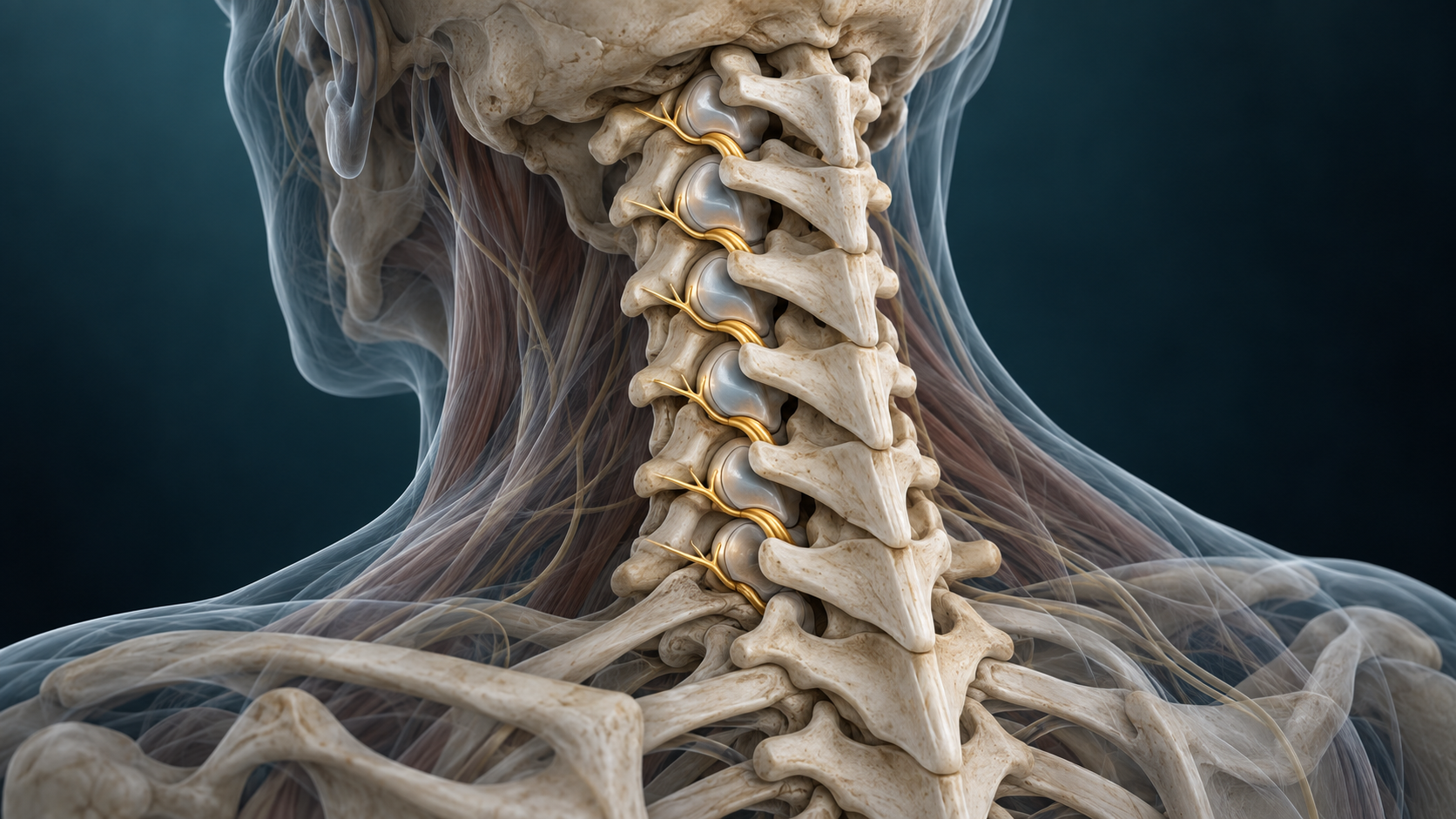
Cervical radiofrequency ablation targets selected medial branch nerves that carry sensation from cervical facet joints. It may be discussed after a careful diagnosis and diagnostic block pathway, but selection remains individualized.
Quick orientation
What to know first
Selection depends on diagnosis, prior care, risks, and a question the procedure can answer.
No block or injection automatically commits a patient to another procedure.
Learn what may come next
Related guides.
Use these links to learn about related symptoms, conditions, and treatments. An individual evaluation is still needed to determine a diagnosis or whether a treatment may be appropriate.
Related treatments
Radiofrequency Ablation
Understand facet RFA generally and compare cervical and lumbar applications.
Open this guideSpecific treatment
Lumbar Radiofrequency Ablation
Lumbar facet RFA anatomy, prerequisite evaluation, selection context, risks, and recovery.
Open this guideTarget and mechanism
The target defines the procedure
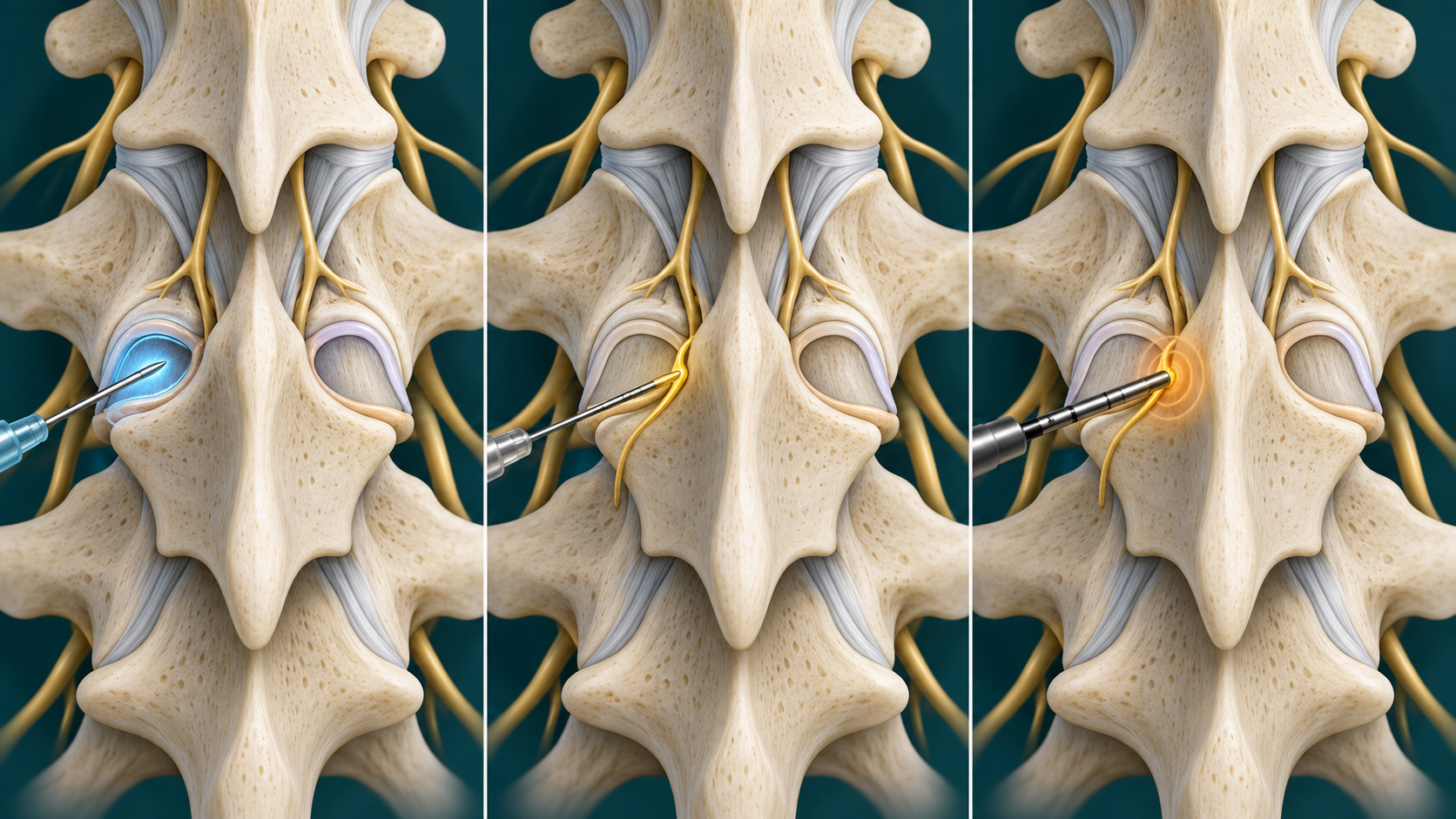
Cervical medial branches lie near compact bony targets and important neural and vascular structures. Exact level, laterality, image guidance, and technique are clinical decisions, not a generic template.
Patient selection
Selection questions
Selection begins with a specific clinical question and an anatomic target. It also considers competing diagnoses, prior treatment, medication and bleeding risk, infection risk, goals, and whether the result would change care. No related listing, scan finding, or isolated examination maneuver establishes candidacy.
A predominantly axial pain pattern that plausibly matches the proposed target
Appropriate evaluation and conservative care have not resolved the decision
The result is expected to change the treatment plan
No medical or anatomic factor makes the procedure unsuitable
A staged decision
How we decide what may come next
The clinician reviews the diagnostic response and alternatives, then positions a radiofrequency cannula near each selected nerve under image guidance. Stimulation or other confirmation may be used according to protocol before controlled thermal energy is delivered. Temporary soreness, numbness, or altered sensation can occur.
Related care
Conditions this treatment may be considered for
These related guides show educational connections. They do not establish candidacy, a recommendation, or a required sequence.
Treatment Sequence
Cervicogenic Headache
Later therapeutic step only after diagnosis-specific evaluation and an appropriate block-response pathway.
Explore this pageTreatment Sequence
Cervical Facet Joint Pain
Later therapeutic step after appropriate diagnostic block response and review.
Explore this pageTreatment Sequence
Cervical Spondylosis
Later treatment option for selected facet-mediated axial neck pain only after appropriate evaluation and a supportive diagnostic/prognostic block response; progression is not automatic.
Explore this pageDecision process
Decision sequence
A diagnostic procedure provides information rather than an obligation to proceed. The response must be compared with the expected medication window, the usual pain, and meaningful activities. An unclear or discordant result should reopen the diagnosis and alternatives instead of triggering an automatic next procedure.
Review the pain pattern, neurologic symptoms, imaging, and prior care
Set measurable pain and functional goals before any procedure
Choose the next step from the full clinical picture rather than one isolated test
Evidence at a glance
Evidence at a glance
Study results depend on selection, comparator, technique, outcome, and follow-up.
Cervical consensus guidance supports RFA for carefully selected patients while acknowledging selection controversy.
A 2022 review found supportive but heterogeneous trials with variable outcomes and follow-up.
Recent sham-controlled evidence across spine procedures remains limited and raises uncertainty about average benefit.
Decision quality matters
Evidence, limits, and who it may fit
A listed option or diagnostic response does not establish candidacy. Evidence and uncertainty must be matched to the individual question.
Risks and limits
Evidence, risks, and limits
Cervical consensus guidance supports RFA for carefully selected patients while acknowledging selection controversy. A 2022 review found supportive but heterogeneous trials with variable outcomes and follow-up. Recent sham-controlled evidence across spine procedures remains limited and raises uncertainty about average benefit.
Symptoms, examination, and imaging do not identify a painful facet joint with certainty.
A diagnostic response can be false-positive or false-negative.
Procedure choice, number of blocks, response threshold, medication, and technique require individualized clinical judgment.
The visit
What to expect from an evaluation
The visit should define the diagnosis, intended target, evidence, alternatives, risks, and the next useful decision. It should also separate clinical recommendations from insurance requirements, address medication and health factors, and explain what would count as an interpretable result without presenting one threshold as universal.
Common questions
Cervical Radiofrequency Ablation FAQ
These answers are educational and cannot determine an individual diagnosis or treatment plan.
Can cervical RFA treat every neck-related headache?
No. Headache diagnosis and the implicated cervical structure must be established separately.
Is the result permanent?
No. Nerves can recover and symptoms can return.
What are the specific risks?
Risks include bleeding, infection, temporary pain or numbness, neuritis, weakness, and rare injury to nearby structures; the individual discussion depends on level and health history.
Question before procedure
Start with a target-specific consultation
A consultation can clarify whether this procedure, another treatment, or continued diagnostic work fits the clinical picture.