
Symptoms, examination, function, and imaging must be interpreted together.
Joint and musculoskeletal conditions
Hip Osteoarthritis
Hip osteoarthritis is a joint disorder that can affect pain, stiffness, walking, and daily function. X-ray changes can support the diagnosis, but symptoms and examination determine their clinical meaning.
Quick orientation
What to know first
Neighboring joints, tendons, nerves, and referred pain can overlap.
A procedure is one possible tool, not proof of the diagnosis or an automatic next step.
What we may consider next
How we may treat this
These options depend on the diagnosis, exam findings, prior care, goals, and individual risk review. A listed pathway does not establish candidacy or guarantee a later procedure.
Establish first
Diagnostic or prognostic steps help clarify the pain generator or whether a later option fits.
Diagnostic / prognostic step
Hip Articular Branch Block
Represents target-response assessment for selected diagnosed hip osteoarthritis; it does not establish candidacy for or automatic progression to ablation.
Options that may be considered
These are options, not required steps. Selection depends on the diagnosis and individual review.
Treatment option
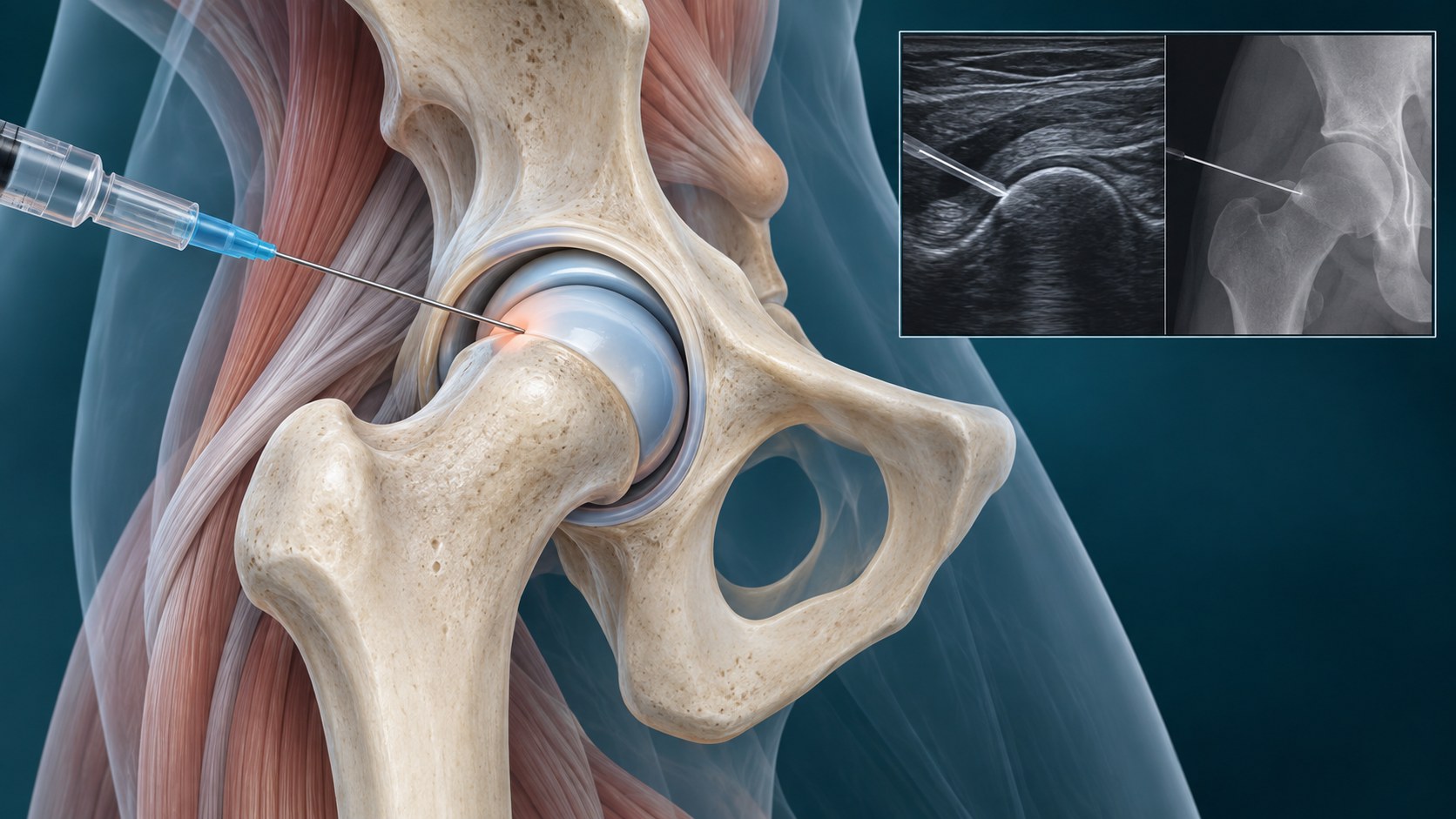
Hip Intra-Articular Injection
May be considered for selected intra-articular hip pain after diagnosis and treatment-goal review.
May come later
A later procedure is considered only when evaluation and the response to earlier steps support it.
Later treatment option
Hip Articular Branch Radiofrequency Ablation
Later treatment consideration only after diagnosis, target confirmation, response assessment, and patient selection; progression from block is not automatic.
Symptoms are clues, not a diagnosis
What the pattern can feel like
Symptoms help define a syndrome, but they do not confirm which structure is responsible. Distribution, timing, aggravating factors, neurologic findings, function, and important alternatives all shape the evaluation.
Pain location and movement sensitivity can narrow the differential but rarely identify one structure alone.
Stiffness, range of motion, loading tolerance, weakness, swelling, and daily function add diagnostic context.
The pattern should be checked for referred pain, neurologic features, inflammatory disease, injury, and other alternatives.
Relevant anatomy
Anatomy and pain mechanisms
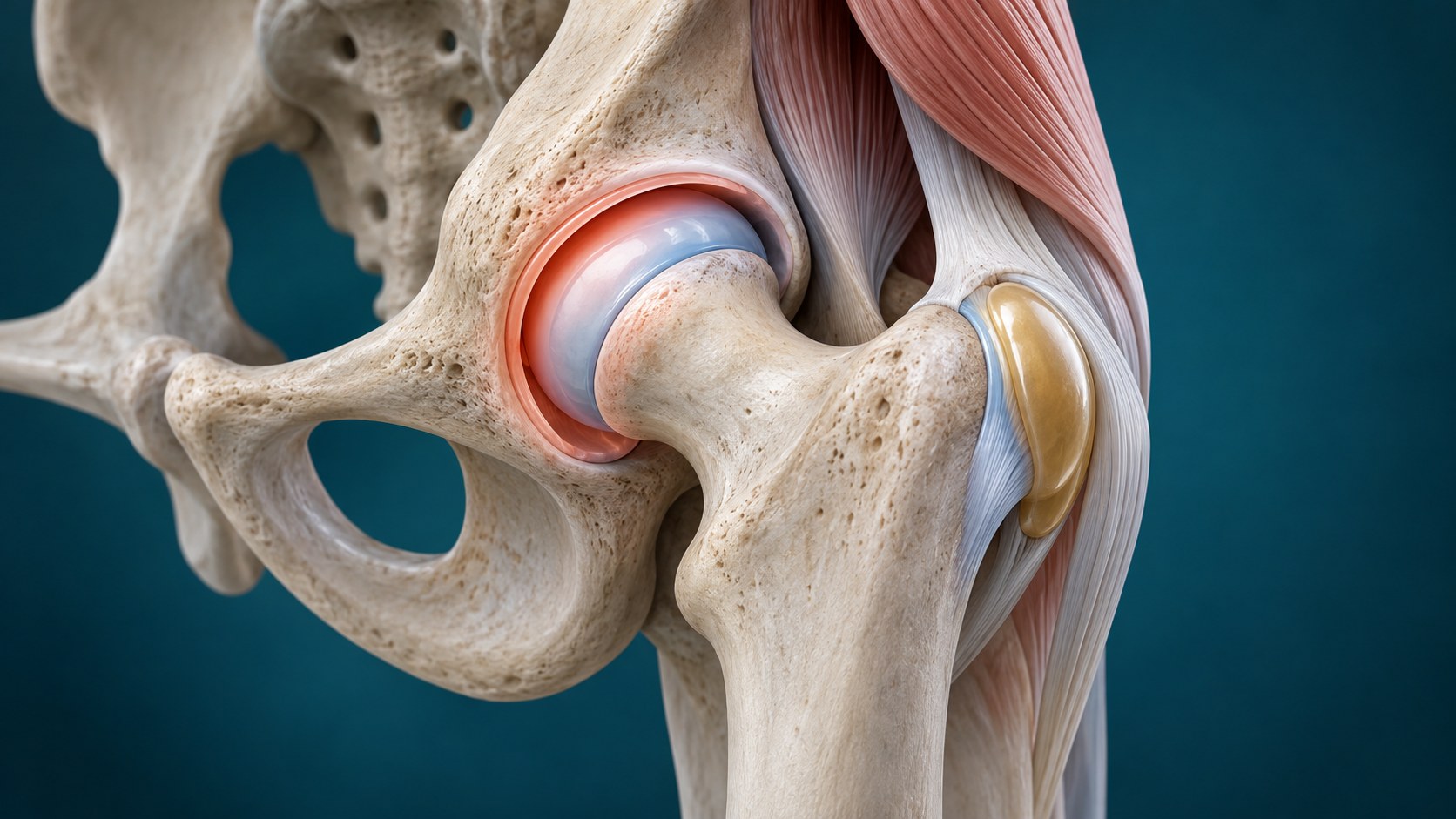
The ball-and-socket hip joint distributes load through articular cartilage, bone, capsule, and surrounding muscles. Groin or deep hip symptoms may fit an intra-articular pattern, while lateral tenderness may point toward tendon or bursa disorders and back-related pain can refer into the region.
History and examination first
How the diagnosis is evaluated
Evaluation combines the history, movement and loading pattern, focused examination, functional goals, and selective imaging. Structural change can support a diagnosis, but imaging severity and symptom severity may not match.
Keep the differential open
What else can look similar
Keep common and serious alternatives open until the evidence supports a narrower conclusion.
Referred spinal or nerve-related pain
Tendon, bursa, muscle, or neighboring joint disorders
Inflammatory arthritis, infection, fracture, or another less common cause when the history suggests it
Core care
Conservative and coordinated care
Procedure discussions belong inside a broader plan that protects neurologic function and daily activity.
Education, pacing, and movement matched to irritability
Progressive strength, mobility, and function when appropriate
Medication review that accounts for individual risks
Reassessment when the pattern changes or improvement stalls
A related option, not a requirement
Can weight management be part of hip osteoarthritis care?
Guidelines support weight management for people with hip osteoarthritis and overweight or obesity, although direct trial evidence is more limited than for knee osteoarthritis. Weight management is not required to receive hip care and does not replace evaluation of the hip or other appropriate treatments.
Evidence at a glance
Evidence at a glance
Evidence strength, comparator, follow-up, and selection affect interpretation.
Exercise and individualized physical therapy can improve pain and function for many patients.
Intra-articular corticosteroid injection may offer short-term improvement for selected symptomatic hip osteoarthritis.
Hip hyaluronic acid has not shown benefit over placebo in the AAOS guideline evidence review.
Decision quality matters
Evidence, limits, and who it may fit
A listed option does not establish candidacy. Diagnosis, anatomy, prior care, risk, alternatives, goals, and evidence must align.
Referral and urgent signs
When urgent or different evaluation matters
These findings can change the timing or destination of care.
Fever, a hot swollen joint, or systemic illness
Major trauma or inability to bear weight or use the limb
Rapidly progressive weakness, numbness, or a new emergency symptom pattern
The visit
What to expect at an evaluation
The visit should narrow the diagnosis, identify safety and referral needs, review imaging and prior care in context, and choose the next useful decision. The clinician should explain uncertainty and what a treatment is expected to add before it is performed.
Define the symptom pattern and meaningful functional limits
Examine the joint and neighboring regions before attributing symptoms to one structure
Review imaging only in clinical context
Choose among rehabilitation, medication review, a selected procedure discussion, or referral without assuming a fixed sequence
Common questions
Hip Osteoarthritis FAQ
These answers are educational and cannot determine an individual diagnosis or treatment plan.
Is all hip pain arthritis?
No. Tendon, bursa, spine, nerve, fracture, inflammatory, and other causes can overlap.
Does worse arthritis on X-ray always mean worse pain?
No. Imaging and symptom severity do not always match.
Is an injection required before surgery?
No. Treatment is individualized, and an injection is not a universal prerequisite or automatic bridge to surgery.
Diagnosis before procedure
Start with a careful evaluation
A focused evaluation can clarify the diagnosis, important alternatives, and the next step that fits the clinical picture.