
The diagnosis and anatomic target come before the procedure.
Joint and musculoskeletal treatments
Hip Intra-Articular Injection
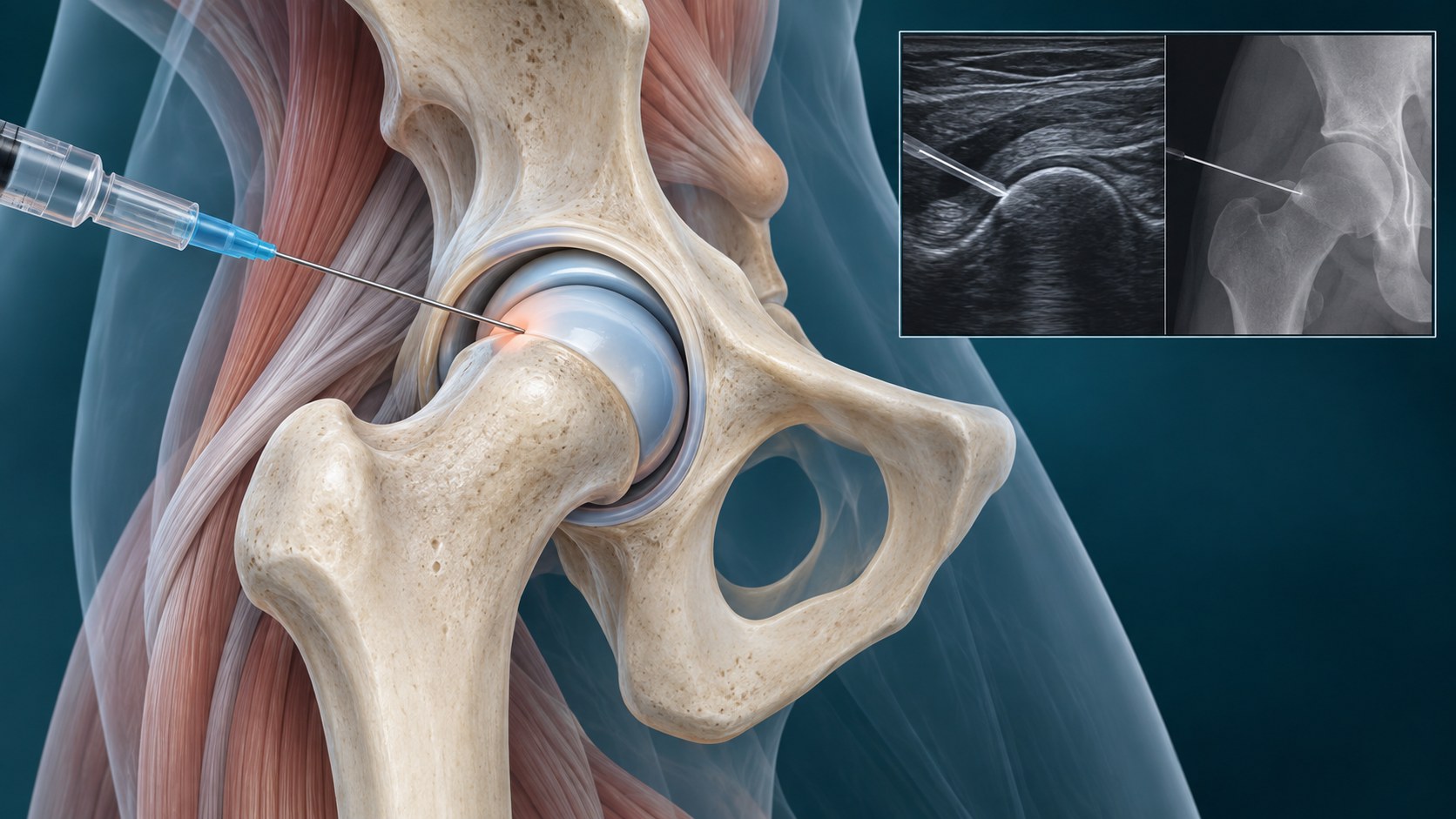
A hip intra-articular injection targets the ball-and-socket joint under image guidance. It may be considered for a diagnostic question or short-term symptom goal after the hip joint is distinguished from lateral hip and referred pain sources.
Quick orientation
What to know first
Medication, route, frequency, and aftercare are individualized rather than universal.
A response can inform the plan, but it does not automatically establish a diagnosis or require another procedure.
Target and mechanism
The target defines the procedure
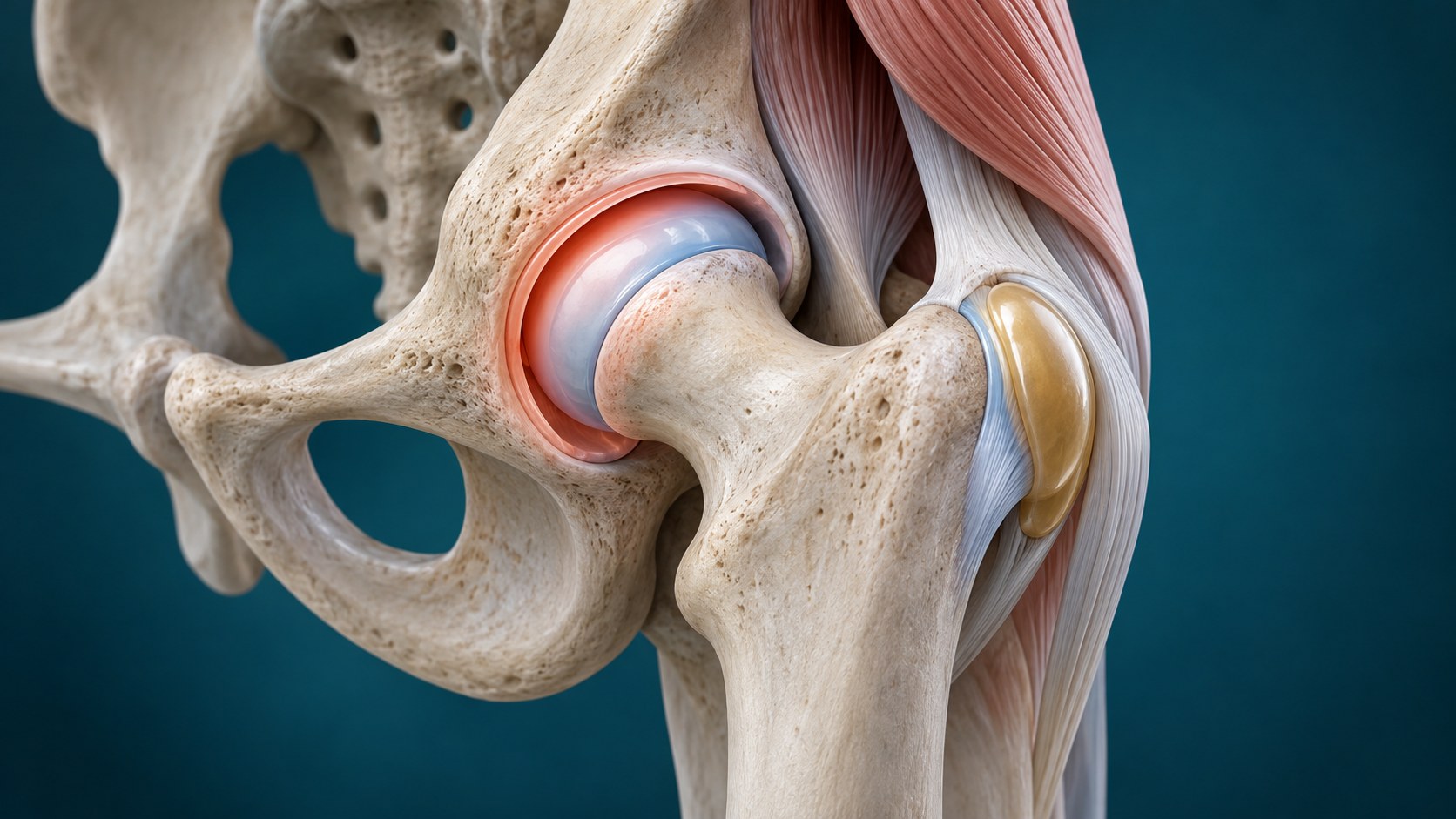
The hip joint is deep and close to important vessels and nerves, so image guidance is commonly used. The target is inside the capsule, not the greater trochanteric bursa or gluteal tendons.
Patient selection
Selection questions
Selection begins with a clinically coherent diagnosis and a specific anatomic target. It also considers competing diagnoses, prior treatment, medication and bleeding risk, infection risk, goals, and whether a procedure is the right next decision.
A clinically coherent diagnosis and target
Persistent meaningful functional limitation despite appropriate initial care or a clear diagnostic question
A risk review that supports proceeding
A defined goal and reassessment plan
A staged decision
How we decide what may come next
The clinician confirms the diagnosis, purpose, target, alternatives, and medication risks. Image guidance is used to place the needle in the intended joint region. The response is interpreted with function and the broader clinical picture.
Related care
Conditions this treatment may be considered for
These related guides show educational connections. They do not establish candidacy, a recommendation, or a required sequence.
Needs a separate clinical evaluation
Hip Osteoarthritis
May be considered for selected intra-articular hip pain after diagnosis and treatment-goal review.
Explore this pageDecision process
Decision sequence
A procedure is an optional treatment discussion, not an automatic step. The response must be reassessed against the usual symptoms and meaningful activities. A limited, absent, or discordant response should reopen the diagnosis and alternatives instead of triggering an automatic series.
Confirm the diagnosis and intended target
Review alternatives and medical risks
Define meaningful pain and functional goals
Reassess the result before deciding what comes next
Evidence at a glance
Evidence at a glance
Study results depend on diagnosis, selection, comparator, technique, outcome, and follow-up.
The AAOS guideline supports possible short-term pain and function improvement from intra-articular corticosteroid in selected symptomatic hip osteoarthritis.
Evidence is heterogeneous, and risks include infection and concern for rapidly progressive osteoarthritis.
Hyaluronic acid did not outperform placebo in the AAOS hip evidence review.
Decision quality matters
Evidence, limits, and who it may fit
A listed option or imaging finding does not establish candidacy. Evidence and uncertainty must be matched to the individual question.
Risks and limits
Evidence, risks, and limits
The AAOS guideline supports possible short-term pain and function improvement from intra-articular corticosteroid in selected symptomatic hip osteoarthritis. Evidence is heterogeneous, and risks include infection and concern for rapidly progressive osteoarthritis. Hyaluronic acid did not outperform placebo in the AAOS hip evidence review.
Bleeding, infection, allergic or medication effects, transient symptom change, and target-specific injury require individualized consent.
Medication selection, volume, frequency, sedation, medication holds, driving, and follow-up are not universal protocols.
A procedure does not replace rehabilitation, urgent evaluation, or surgical consultation when those are more appropriate.
The visit
What to expect from a consultation
The visit should define the diagnosis, intended target, evidence, alternatives, risks, and the next useful decision. Medication, frequency, sedation, medication holds, driving, and aftercare remain individualized clinician decisions.
Common questions
Hip Intra-Articular Injection FAQ
These answers are educational and cannot determine an individual diagnosis or treatment plan.
Can the injection confirm the hip is the pain source?
It may add information, but response is not perfect proof and must be interpreted with the history and examination.
Is this the same as a lateral hip injection?
No. A hip joint injection is intra-articular; trochanteric bursa and periarticular targets are outside the joint.
How long does relief last?
Duration varies. Evidence supports only a short-term average effect for selected hip osteoarthritis.
Question before procedure
Start with a diagnosis-first consultation
A consultation can clarify whether a selected procedure, another treatment, continued conservative care, or referral fits the clinical picture.