
Symptoms, examination, and imaging must be interpreted together.
Spine and nerve conditions
Lumbar Radiculopathy / Sciatica
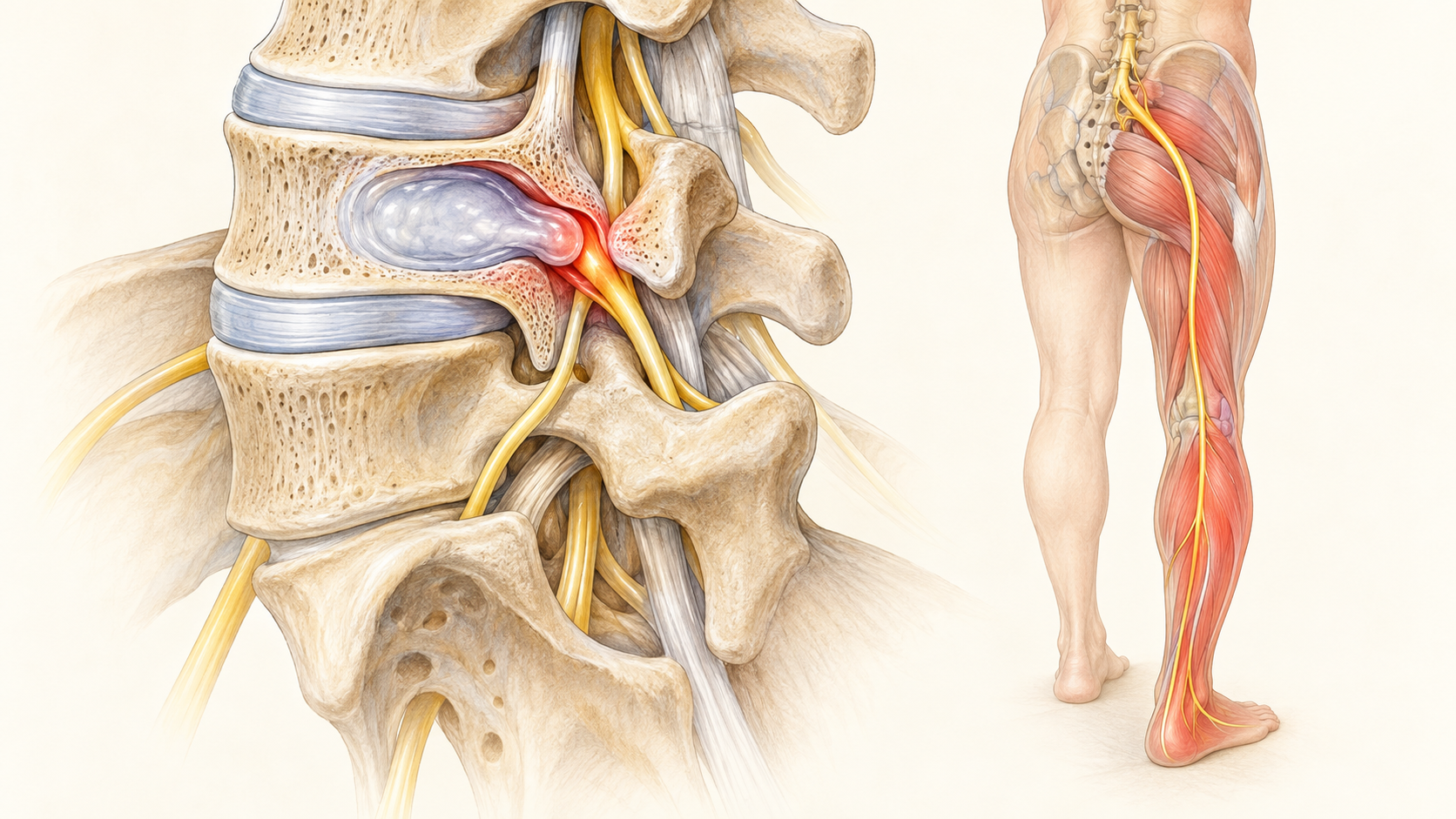
Lumbar radiculopathy can cause pain, numbness, tingling, or weakness along a nerve-root pattern into the leg. Sciatica is commonly used for radiating leg pain, but the cause still requires clinical evaluation.
Quick orientation
What to know first
A scan finding can be relevant without being the entire diagnosis.
Progressive neurologic or cord-related findings can change the urgency and destination of care.
What we may consider next
How we may treat this
These options depend on the diagnosis, exam findings, prior care, goals, and individual risk review. A listed pathway does not establish candidacy or guarantee a later procedure.
Options that may be considered
These are options, not required steps. Selection depends on the diagnosis and individual review.
Treatment option
Lumbar Epidural Steroid Injection
May be considered for selected lumbar nerve-root symptoms when findings correlate.
Alternatives, not a sequence
These options may be considered separately; one does not automatically lead to another.
Selected alternative
Caudal Epidural Steroid Injection
Alternative epidural access only when anatomy, prior surgery, target, and clinical plan support it.
Symptoms are clues, not a diagnosis
What the pattern can feel like
Symptoms help define a syndrome, but they do not confirm which structure is responsible. Distribution, timing, aggravating factors, neurologic findings, function, and important alternatives all shape the evaluation.
Pain may be only one part of the pattern.
Numbness, tingling, weakness, balance, walking tolerance, and function help define the problem.
Symptoms can overlap with more than one spinal and non-spinal condition.
Relevant anatomy
Anatomy and pain mechanisms
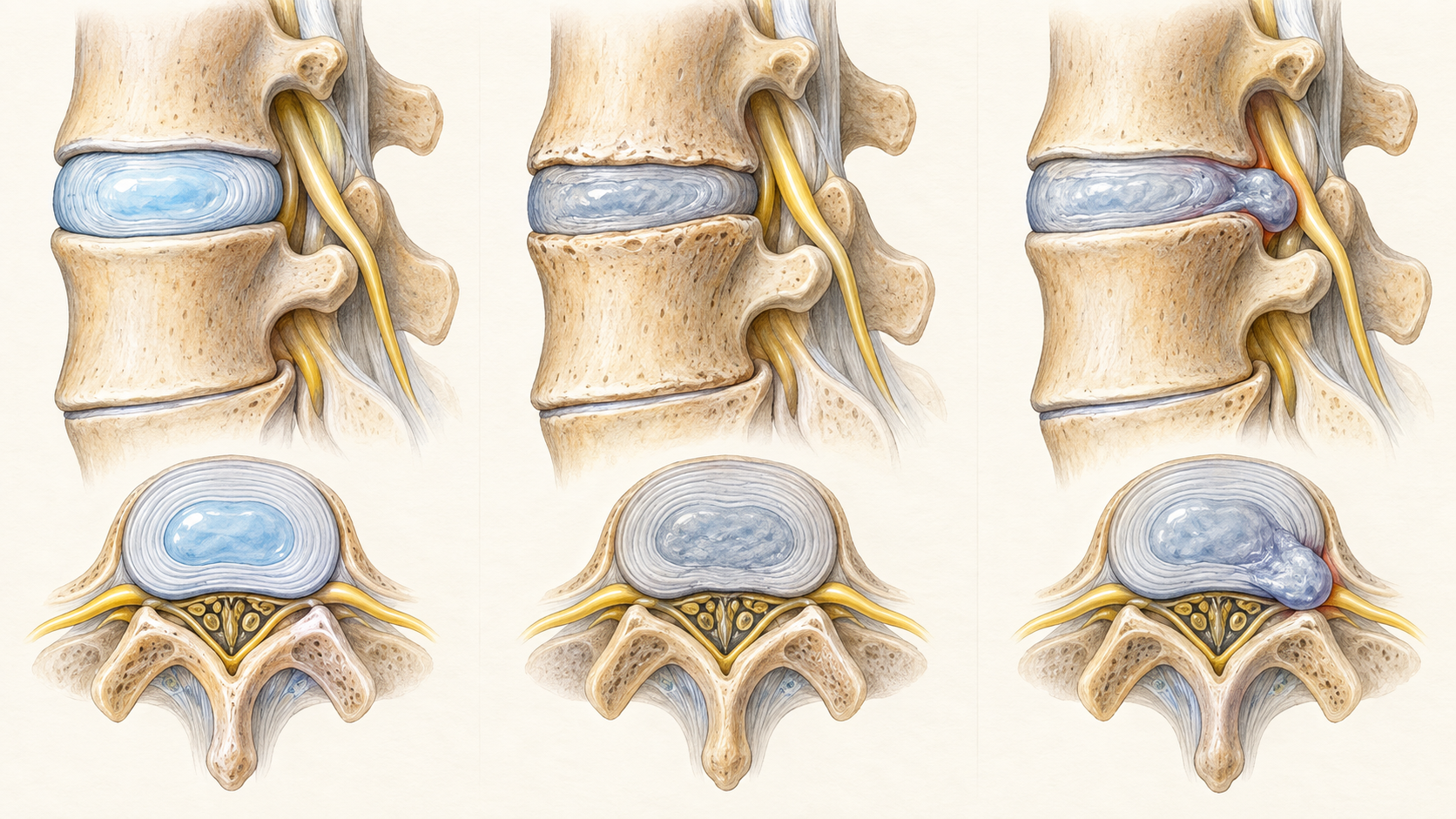
Lumbar and sacral nerve roots join pathways that supply the leg. Disc herniation, foraminal narrowing, or other changes may irritate a root, but similar leg symptoms can arise outside the spine.
History and examination first
How the diagnosis is evaluated
Evaluation begins with the time course, symptom distribution, neurologic examination, functional effects, and urgent features. Imaging can identify anatomy and important alternatives, but the result must correlate with the clinical pattern.
Keep the differential open
What else can look similar
Keep common and serious alternatives open until the evidence supports a narrower conclusion.
Axial neck or low-back pain without radiculopathy
Peripheral nerve, joint, vascular, or other non-spinal sources
Facet, disc, stenosis, or nerve-root disorders with overlapping features
Infection, fracture, tumor, inflammatory disease, or another urgent cause when the history suggests it
Core care
Conservative and coordinated care
Procedure discussions belong inside a broader plan that protects neurologic function and daily activity.
Education and paced movement
Exercise or physical therapy tailored to the diagnosis
Medication review and risk reduction
Reassessment for changing neurologic findings or function
Evidence at a glance
Evidence at a glance
Evidence strength, comparator, follow-up, and selection affect interpretation.
Imaging abnormalities are common and do not establish the symptomatic structure by themselves.
Radicular syndromes are clinical diagnoses supported by concordant anatomic findings.
Treatment evidence depends on diagnosis, comparator, follow-up, and patient selection.
Decision quality matters
Evidence, limits, and who it may fit
A listed option does not establish candidacy. Diagnosis, anatomy, prior care, risk, alternatives, goals, and evidence must align.
Referral and urgent signs
When urgent or different evaluation matters
These findings can change the timing or destination of care.
New or progressive weakness
New bowel or bladder dysfunction or saddle numbness
Fever, major trauma, cancer history, or rapidly worsening pain
The visit
What to expect at an evaluation
The visit should narrow the diagnosis, identify safety and referral needs, review imaging and prior care in context, and choose the next useful decision. The clinician should explain uncertainty and what a treatment is expected to add before it is performed.
Confirm the symptom pattern and neurologic examination
Review imaging only in the context of symptoms and examination
Choose among rehabilitation, medication, watchful reassessment, procedure discussion, or referral based on the complete picture
Common questions
Lumbar Radiculopathy / Sciatica FAQ
These answers are educational and cannot determine an individual diagnosis or treatment plan.
Is sciatica a diagnosis?
It describes a radiating symptom pattern; evaluation is needed to determine whether a lumbar nerve root is involved and why.
Can a herniated disc improve without surgery?
Yes. Many lumbar disc herniations and related symptoms improve over time, although neurologic deficits and severe persistent disability can change the plan.
When is leg pain urgent?
New bowel or bladder dysfunction, saddle numbness, or rapidly progressive weakness requires urgent evaluation.
Diagnosis before procedure
Start with a careful evaluation
A focused evaluation can clarify the diagnosis, important alternatives, and the next step that fits the clinical picture.