Solutions in Pain- Pain Management Physician

Epidural Steroid Injections | Allen & Wylie TX

Epidural Steroid Injections Therapy Guide

A Comprehensive Guide to Epidural Steroid Injections

Why Patients Choose Solutions in Pain

Personalized Care

Treatment is tailored to your condition, symptoms, and goals.

Experienced Specialists

PRP therapy is offered within a professional pain management setting.

Precision Guidance

Advanced imaging guidance supports accurate, targeted treatment.

Allen & Wylie Care

Convenient access to non-surgical treatment options close to home.

Chronic neck and back pain affects millions of Americans every year. It limits mobility, disrupts sleep, and makes even simple daily tasks a challenge. If you have tried physical therapy or medications without finding lasting relief, epidural steroid injections may be the solution you have been looking for.
Epidural steroid injections (ESI) are one of the most commonly performed and well-established procedures in pain management. They deliver anti-inflammatory medication directly to the epidural space surrounding the spinal cord. This reduces inflammation and interrupts pain signals at their source. According to the Mayo Clinic, ESI is a proven technique for reducing pain caused by inflamed spinal nerves.

Personalized Epidural Injection Care in Allen & Wylie TX

At Solutions in Pain, we offer epidural steroid injections as part of a comprehensive, personalized approach to pain management. Our team evaluates each patient individually. We determine whether ESI is appropriate based on your specific diagnosis, medical history, and treatment goals. If you are ready to explore a proven solution for chronic neck or back pain, contact our office today to schedule a consultation.

Understanding Epidural Steroid Injections : Is It Right for You?

Chronic pain affects every aspect of daily life, and finding the right treatment can feel overwhelming — especially after other options have fallen short. If you have been exploring epidural steroid injections and want to understand whether they might be appropriate for your situation, our specialists at Solutions in Pain are available to answer your questions and review your medical history in detail. Contact our office to ask questions or request an evaluation — we are here to help guide your decision.

What Is an Epidural Steroid Injection?

An epidural steroid injection (ESI) is a minimally invasive pain management procedure. It delivers anti-inflammatory corticosteroid medication directly into the epidural space surrounding the spinal cord. According to MedlinePlus, ESI reduces inflammation around irritated spinal nerves. This interrupts pain signals before they reach the brain. The result is meaningful, targeted relief for neck pain, back pain, and radiating limb pain. No surgery or significant downtime is required.

How Does an Epidural Steroid Injection Work?

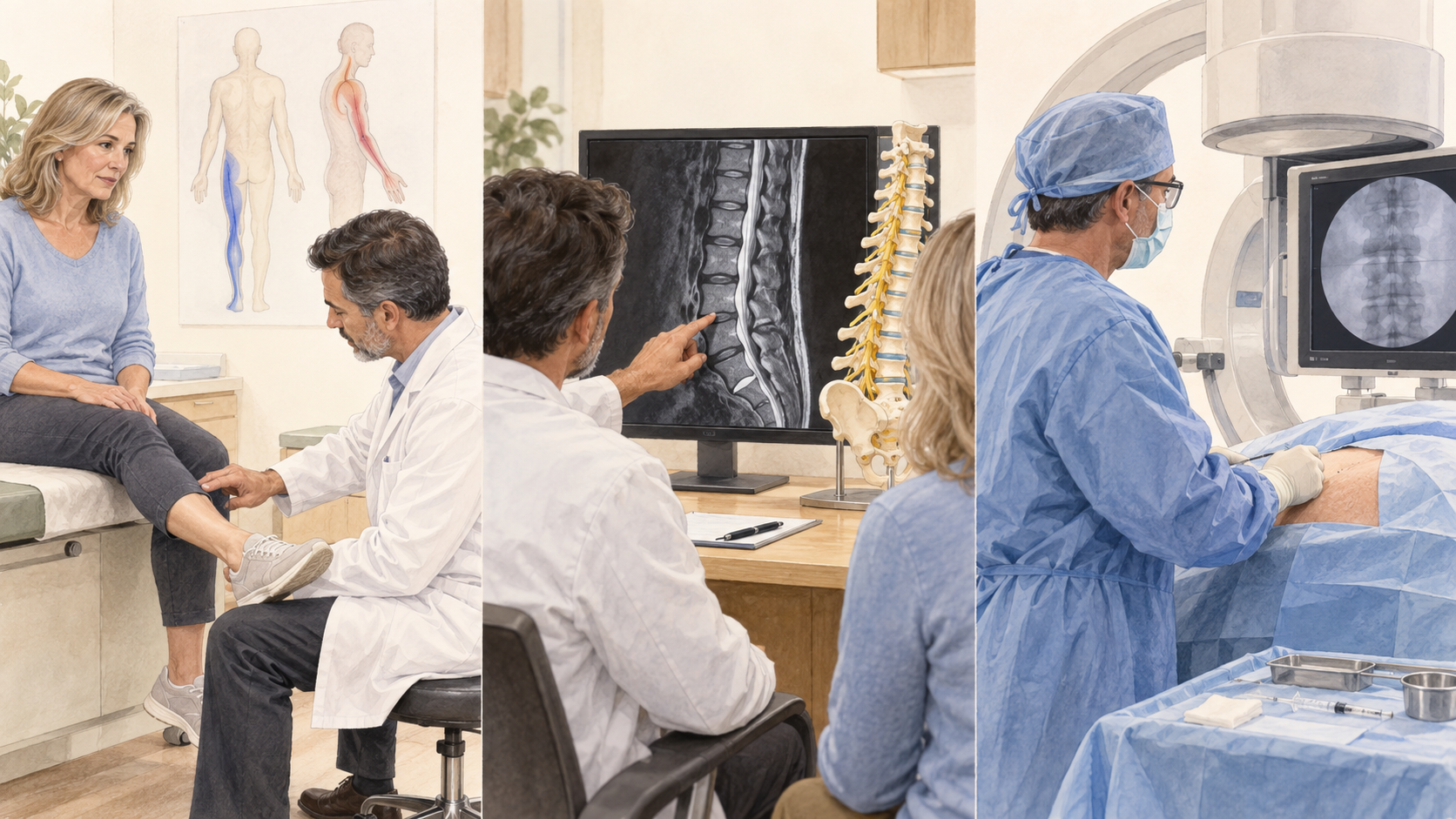
The ESI process is straightforward. Most procedures take 15 to 30 minutes. Here is what happens step by step:

  1. Preparation: Your doctor reviews your medical history and imaging studies. The treatment area is cleaned and numbed with a local anesthetic.
  2. Guided Placement: Our physician uses fluoroscopy — real-time X-ray imaging — to guide a needle precisely into the epidural space. This ensures accurate medication delivery.
  3. Injection: A corticosteroid medication is injected into the epidural space. This reduces inflammation around the affected nerves directly at the source.
  4. Recovery: Most patients go home the same day. Some mild soreness at the injection site is normal and resolves within a few days.

This precise, image-guided process ensures accurate medication delivery. Furthermore, it maximizes the effectiveness of each injection.

Potential Benefits of Epidural Steroid Injections

Patients and researchers have noted several potential advantages of ESI therapy. Individual results vary. The following benefits are commonly discussed in clinical settings:

  • Fast-Acting Relief: Many patients notice improvement within days of their injection. This allows them to return to daily activities more quickly.
  • Targeted Treatment: ESI delivers medication directly to the source of inflammation. This is more effective than oral medications that treat the whole body.
  • Minimally Invasive: No surgical incisions are required. This reduces recovery time and associated risks significantly.
  • Reduced Medication Use: ESI can reduce reliance on oral pain medications. This includes opioids and anti-inflammatory drugs.
  • Improved Mobility: Reducing inflammation helps patients move more freely. Many report improved function and quality of life following treatment.
  • Outpatient Procedure: Most patients go home the same day. No hospital stay is required.
  • Supports Rehabilitation: ESI can provide a window of pain relief that allows patients to participate more effectively in physical therapy.

Individual results vary. Your provider will discuss what outcomes are realistic for your specific condition during your consultation.

What Does an Epidural Steroid Injection Treat?

Epidural steroid injections treat a wide variety of spinal and nerve-related pain conditions. They are most commonly considered for patients who have not found adequate relief through conservative treatments. In particular, conditions frequently addressed with ESI include:

  • Sciatica: Radiating pain that travels from the lower back through the leg is one of the most common reasons patients seek ESI. The injection targets the inflamed nerve root directly.
  • Herniated Disc: A bulging or ruptured disc can press on nearby nerves causing significant pain. ESI reduces inflammation around the affected disc and nerve.
  • Spinal Stenosis: Narrowing of the spinal canal puts pressure on nerves. ESI helps reduce this pressure and the associated pain.
  • Degenerative Disc Disease: Worn spinal discs cause chronic back and neck pain. ESI provides targeted relief for patients managing this condition.
  • Neck Pain: Cervical ESI addresses nerve-related neck pain caused by disc problems or spinal degeneration. Many patients experience significant improvement.
  • Lower Back Pain: Lumbar ESI is one of the most frequently performed procedures for chronic lower back pain. It targets the specific nerves causing your discomfort.
  • Post-Surgical Pain: Patients who continue to experience pain following spinal surgery may benefit from ESI as part of a broader pain management plan.

Your provider will evaluate whether your specific diagnosis is appropriate for this treatment. Contact our office today to schedule a consultation and find out if ESI is right for you.

Our Injection Treatments at Solutions in Pain

At Solutions in Pain, we offer a comprehensive range of injection-based treatments for neck pain, back pain, joint pain, and more. In addition to epidural steroid injections, our specialists provide the following injection therapies:

Neck Pain Injections

Back Pain Injections

Joint Pain Injections

Headache & Nerve Block Injections

Abdominal, Pelvic & Groin Injections

Not sure which injection is right for you? Our specialists at Solutions in Pain will evaluate your condition and recommend the most appropriate treatment. Contact our office today to schedule a consultation at our Allen or Wylie, TX location.

Am I a good candidate for epidural steroid injections?

Good candidates for ESI are patients experiencing neck or back pain caused by inflamed spinal nerves. This includes conditions such as sciatica, herniated discs, spinal stenosis, and degenerative disc disease. Most candidates have tried conservative treatments such as physical therapy or oral medications without finding adequate relief. A thorough evaluation at Solutions in Pain will determine whether ESI is appropriate for your specific condition and history.

Does insurance cover epidural steroid injections?

Yes. Epidural steroid injections are covered by most major insurance providers for patients who meet clinical criteria. Coverage typically requires documentation that conservative treatments have been attempted without adequate relief. Our team at Solutions in Pain will work with you to verify your benefits and navigate the insurance process. Contact our office today to discuss your specific coverage and eligibility.

How long does pain relief from an epidural steroid injection last?

Pain relief from ESI typically lasts several weeks to several months depending on the patient and condition treated. Some patients experience relief for up to a year or longer. Results vary by individual. If pain returns after the initial relief period, additional injections can be performed. Your provider at Solutions in Pain will discuss realistic expectations based on your specific diagnosis during your consultation.

Are epidural steroid injections painful?

Most patients tolerate epidural steroid injections quite well. The treatment area is numbed with a local anesthetic before the procedure begins. Some patients feel mild pressure or brief discomfort during the injection. This is normal and expected. The procedure itself takes only 15 to 30 minutes. Our team takes every measure to ensure your comfort throughout the entire process.

How many epidural steroid injections will I need?

Most patients receive a series of one to three injections spaced several weeks apart. This approach allows your provider to monitor your response and adjust the treatment plan as needed. Some patients achieve significant relief after a single injection. Others benefit from additional sessions. Your provider at Solutions in Pain will develop a personalized plan based on your specific condition and goals.

Can epidural steroid injections be combined with other treatments?

Yes. At Solutions in Pain we often incorporate ESI into broader treatment plans. These may include physical therapy, radiofrequency ablation, spinal cord stimulation, or other pain management approaches. ESI can provide a window of pain relief that allows patients to participate more effectively in rehabilitation. A multi-modal strategy allows us to address chronic pain from multiple angles for more meaningful and lasting improvement.

How should I prepare for my epidural steroid injection appointment?

Before your appointment, arrange a designated driver as you will not be able to drive yourself home. Avoid blood thinners or anti-inflammatory medications such as ibuprofen or aspirin for at least one week prior if instructed by your provider. Eat a light meal beforehand and stay well hydrated. Inform our team of all current medications and supplements so we can provide personalized preparation guidance specific to your procedure.

What should I avoid after an epidural steroid injection?

After your ESI procedure, avoid strenuous physical activity for the first 24 hours. Refrain from soaking in baths, hot tubs, or swimming pools for at least 24 hours to minimize infection risk. Avoid driving on the day of your procedure. Most patients return to light daily activities the same day or the following day. Our team provides detailed post-procedure instructions tailored to your specific situation before you leave our office.

Will an epidural steroid injection reduce my need for pain medications?

Many patients reduce or eliminate their need for oral pain medications after successful ESI treatment. This includes opioids and anti-inflammatory drugs. Results vary by individual and condition. Some patients continue a reduced medication regimen alongside ESI therapy. Your provider at Solutions in Pain will develop a comprehensive plan that addresses your pain from multiple angles and reduces medication reliance wherever possible.

What makes Solutions in Pain different from other ESI providers in the DFW area?

Unlike general practitioners who may offer epidural injections as an occasional service, Solutions in Pain is dedicated entirely to pain management and interventional procedures. Our specialists bring years of focused experience in ESI and related therapies, with locations in both Allen and Wylie, TX. We use advanced fluoroscopic imaging guidance for every injection, develop fully individualized treatment plans, and offer a comprehensive range of complementary therapies under one roof. Our patient-first philosophy means you receive expert, compassionate care from your very first consultation all the way through your recovery.

Who is NOT a good candidate for epidural steroid injections?

ESI does not suit every patient. Patients with active infections, bleeding disorders, uncontrolled diabetes, or certain allergies to corticosteroids may not qualify. Those who are pregnant or currently taking blood thinners may also fall outside the criteria. Our team at Solutions in Pain conducts a thorough evaluation to determine whether ESI is safe and appropriate for your specific situation.

Can epidural steroid injections help with sciatica?

Yes. Sciatica is one of the most common conditions treated with epidural steroid injections. ESI targets the inflamed nerve root directly at the source of your radiating pain. Many patients experience significant relief from leg pain, numbness, and tingling following treatment. If you are struggling with sciatica that has not responded to physical therapy or oral medications, contact Solutions in Pain today to find out whether ESI is right for you.

How is an epidural steroid injection different from a cortisone shot?

Both procedures use corticosteroid medication to reduce inflammation. However, there is an important difference in delivery. A cortisone shot is injected directly into a joint or soft tissue. An epidural steroid injection delivers medication into the epidural space surrounding the spinal cord and nerve roots. This targeted delivery makes ESI particularly effective for nerve-related pain conditions such as sciatica, herniated discs, and spinal stenosis.

What activity restrictions apply after an epidural steroid injection?

After your ESI procedure, avoid strenuous physical activity and heavy lifting for the first 24 hours. Refrain from soaking in baths, hot tubs, or swimming pools to minimize infection risk. Avoid driving on the day of your procedure. Most patients return to light daily activities the same day or the following day. Our team provides detailed post-procedure instructions tailored to your specific situation before you leave our office.

How is an epidural steroid injection different from oral steroids?

Oral steroids travel through the entire body before reaching the source of pain. This systemic approach can cause a range of side effects including weight gain, elevated blood sugar, and immune suppression. In contrast, epidural steroid injections deliver medication directly to the inflamed area. This targeted approach uses a much lower dose of medication while achieving greater effectiveness at the site of pain. As a result, ESI typically produces fewer systemic side effects than oral steroids.

What happens if an epidural steroid injection does not work?

If ESI does not produce the desired results, our team at Solutions in Pain explores alternative options with you. These may include radiofrequency ablation, spinal cord stimulation, or other interventional pain management approaches. We never leave patients without a path forward. Our comprehensive range of pain management options means we can adjust your treatment plan based on how you respond. Contact our office today to discuss all available options.

Are there different types of epidural steroid injections?

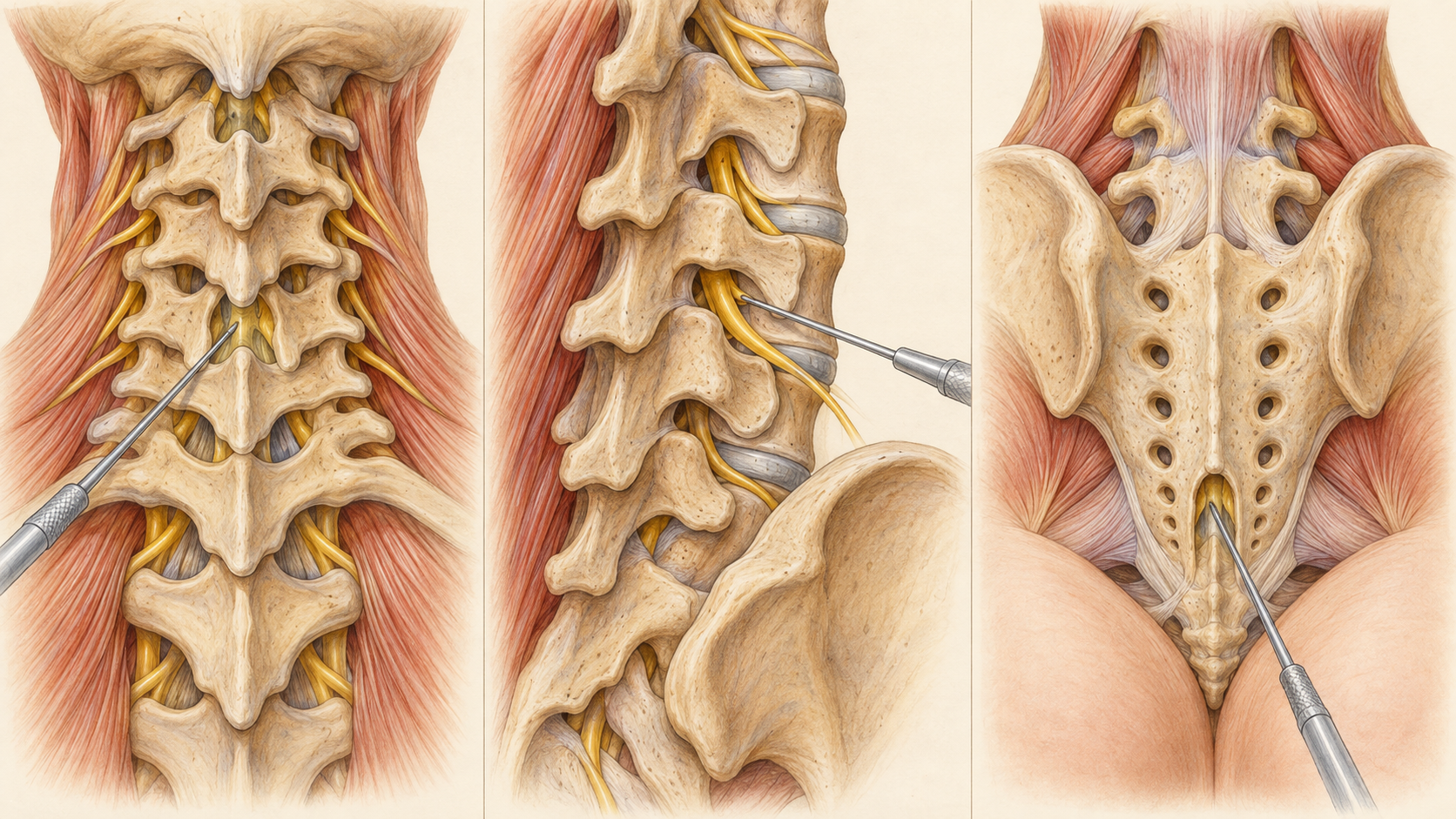
Yes. There are three main types of epidural steroid injections. An interlaminar ESI delivers medication into the middle of the epidural space. A transforaminal ESI targets the opening where the nerve root exits the spine. A caudal ESI accesses the epidural space through the base of the spine. Each approach targets a specific area and type of pain. Your provider at Solutions in Pain will recommend the most appropriate type based on your diagnosis and imaging studies.

Will I need to take time off work after an epidural steroid injection?

Most patients do not need significant time off work following ESI. The procedure is minimally invasive and most people return to light daily activities the same day or the following day. Patients with physically demanding jobs may need one to two additional days of rest. Our team provides specific return-to-work guidance tailored to your procedure and occupation before you leave our office.

How do I get started with epidural steroid injections at Solutions in Pain?

Getting started is simple. Contact our office by phone or through our website to schedule an initial consultation. During that visit your specialist will review your medical history, discuss your symptoms and goals, and determine whether ESI is an appropriate option for you. We serve patients throughout the DFW area with locations in Allen and Wylie, TX. Our team is ready to help you take the first step toward lasting pain relief today.

How many epidural steroid injection procedures does Solutions in Pain perform?

Solutions in Pain dedicates its entire practice to pain management and interventional procedures. Epidural steroid injections are one of our most frequently performed treatments — not an occasional add-on service. Our specialists bring years of focused experience to every case. Furthermore, we use advanced fluoroscopic imaging guidance for every injection to ensure precise and effective medication delivery. Patients throughout the DFW area choose Solutions in Pain because of this depth of experience and our commitment to personalized, compassionate care.

How Do Epidural Steroid Injections Compare to Other Treatments?

One of the most common questions patients ask is how ESI compares to other chronic pain management options. The table below provides a side-by-side overview across several important factors:

Epidural Steroid Injection Oral Medication Surgery
Mechanism Delivers anti-inflammatory medication directly to the affected nerve root Treats inflammation throughout the entire body Physically repairs or removes damaged spinal tissue
Duration of Effect Several weeks to several months depending on condition Short-term, requires ongoing use Permanent structural change
Invasiveness Minimally invasive injection Non-invasive Surgical incision required
Recovery Time Minimal — most patients return home same day None Weeks to months
Targeted Relief Highly targeted — delivered directly to the source of pain Systemic — affects the whole body not just the pain source Targeted to the specific structural problem
Opioid Reliance May significantly reduce or eliminate need for opioids Often requires ongoing opioid use for severe pain May reduce but not always eliminate opioid use
Insurance Coverage Often covered for qualifying conditions Often covered Often covered
Best For Nerve-related pain from sciatica, herniated discs, spinal stenosis, and degenerative disc disease Mild to moderate pain management as a first-line treatment Severe structural damage not responding to other treatments

Note: This table is for general educational purposes only. Every patient’s situation is unique. Our specialists will help you determine which approach — or which combination of approaches — is most appropriate for your condition.

Is Epidural Steroid Injection Covered by Insurance?

Unlike some pain treatments, epidural steroid injections are covered by most major insurance providers for patients who meet clinical criteria. Coverage typically requires documentation that conservative treatments have been attempted without adequate relief. In addition, imaging studies such as an MRI confirming the source of your pain are commonly required. Our team at Solutions in Pain will work with you to navigate the insurance process and determine your eligibility. Therefore, contact our office to discuss your specific coverage and what to expect.

How Quickly Does an Epidural Steroid Injection Work?

One of the most common questions patients ask is how soon they can expect results. Many patients notice improvement within two to seven days following their injection. However, the full benefits of ESI often develop gradually over one to two weeks as the medication reduces inflammation around the affected nerves.

The exact timeline depends on several individual factors. These include the severity and type of your condition, your overall health, and the specific nerves targeted. As a result, patience and consistent follow-up care are important parts of a successful ESI outcome.

What Does the Research Say About Epidural Steroid Injections?

Epidural steroid injections have a strong and growing body of clinical evidence. Researchers have studied them extensively over several decades. In particular, studies focus on sciatica, herniated discs, spinal stenosis, and cervical and lumbar conditions.

The Mayo Clinic notes that ESI can provide meaningful short-term relief for pain caused by inflamed spinal nerves. Research consistently shows that ESI is most effective for patients with nerve-related pain confirmed by imaging studies. Furthermore, it often provides enough relief to allow patients to participate more effectively in physical therapy.

The Cleveland Clinic reports that ESI is one of the most commonly performed procedures in pain management. Many patients experience significant improvement in pain and function following treatment.

The American Academy of Orthopaedic Surgeons recognizes ESI as an effective non-surgical option for managing spinal nerve pain. It is widely used as part of a comprehensive pain management plan.

Results vary by condition, patient, and nerves targeted. Our specialists review the most current evidence during your consultation. They discuss how the research applies to your specific situation rather than making generalized claims about outcomes.

Is Epidural Steroid Injection Effective?

Yes, epidural steroid injections have demonstrated strong results in both clinical studies and real-world applications. According to Spine-health, ESI provides meaningful pain relief for the majority of patients with nerve-related spinal pain. For many patients this represents a significant improvement in daily function and quality of life.

Clinical findings support ESI across several specific conditions:

Conditions Where ESI Shows Strong Results

  • Sciatica: ESI consistently delivers meaningful relief for radiating leg pain caused by irritated nerve roots. Many patients experience significant improvement after one to two injections.
  • Herniated Disc: Patients with disc-related nerve compression report significant reductions in pain and improved mobility following ESI treatment.
  • Spinal Stenosis: Chronic pain caused by narrowing of the spinal canal responds well to ESI. Furthermore, numerous clinical studies support its effectiveness for this condition.

These results establish ESI as one of the most effective non-surgical options available. It is particularly valuable for patients seeking relief from nerve-related spinal pain without surgery.

What Can You Expect During an Epidural Steroid Injection Appointment?

If you decide to schedule a consultation at Solutions in Pain, here is what you can generally expect throughout the process:

  • Initial Consultation: Your specialist reviews your condition, medical history, prior treatments, and goals. This determines whether ESI is an appropriate option for you.
  • Pre-Procedure Preparation: The treatment area is cleaned and numbed with a local anesthetic. Your doctor reviews your imaging studies to confirm the target area before proceeding.
  • Procedure Day: You will arrive with a designated driver. Our team walks you through the full benefits and risks before proceeding. The procedure takes 15 to 30 minutes. Most patients go home the same day.
  • Immediate Aftercare: Some mild soreness at the injection site is normal. It resolves within a few days. Our team provides detailed post-procedure instructions before you leave.
  • Follow-Up Appointments: Regular follow-up visits monitor your progress. Adjustments are made to your care plan as needed.

Throughout this entire process, our team is available to answer questions and provide guidance — from your first phone call to your final follow-up visit.

Questions to Ask Your Doctor About Epidural Steroid Injections

Coming prepared to your consultation helps you get the most out of your appointment. Having specific questions ready allows your provider to give you clear guidance. Here are some questions worth considering before your visit:

  • Am I a good candidate for ESI based on my diagnosis and treatment history?
  • Which type of epidural injection is most appropriate for my condition?
  • How many injections will I need and how far apart should they be spaced?
  • Will ESI replace my current medications or work alongside them?
  • What are the signs that ESI is — or is not — working for me?
  • How long should I expect my pain relief to last?
  • Can ESI be combined with physical therapy or other treatments?
  • What happens if ESI does not produce the results we are hoping for?

Asking these questions helps you feel more informed and confident going into your consultation.

Risks or Side Effects?

Epidural steroid injections are safe and well-tolerated for appropriately selected patients. The Mayo Clinic describes ESI as generally safe, noting that serious complications are uncommon when experienced specialists perform the procedure. As with any injection-based procedure, there are potential risks and side effects to be aware of before proceeding.

Potential Risks Include:

  • Mild pain or soreness at the injection site. This is common and expected during the healing process.
  • Temporary bruising or swelling in the area of the procedure.
  • Temporary increase in pain following the injection. This is known as a steroid flare and typically resolves within a day or two.
  • Infection at the injection site. Proper sterilization protocols minimize this risk significantly.
  • Headache caused by a small amount of spinal fluid leaking during the procedure. This is uncommon and typically resolves on its own.

Most side effects are mild and manageable. Furthermore, having ESI performed by experienced specialists using imaging guidance minimizes these risks significantly. Our team at Solutions in Pain reviews all relevant risks and benefits with you personally during your consultation. As a result, you can make a fully informed decision before moving forward.

Why Epidural Steroid Injections Could Be Right for You

Epidural steroid injections are ideal for patients living with neck or back pain caused by inflamed spinal nerves. They work best for those who have not found adequate relief through oral medications or physical therapy alone. ESI targets the source of your pain directly. It does not simply mask symptoms the way oral medications do.

Beyond pain relief, ESI improves overall quality of life. Many patients struggle with limited mobility, poor sleep, and dependence on pain medications. As a result, ESI offers a path toward greater independence and function. Many patients report not only reduced pain but also improved ability to perform daily activities. They return to work, engage in hobbies, and rebuild relationships that chronic pain had taken away.

A Fast, Low-Risk Path to Lasting Relief

In addition, ESI is one of the fastest and most accessible interventional procedures available. Most patients go home the same day. Recovery is minimal compared to surgical alternatives. Furthermore, if additional injections are needed over time, the procedure can be safely repeated.

If you are ready to explore a proven solution for chronic neck or back pain, epidural steroid injections at Solutions in Pain may be the answer you have been looking for. Contact our office today to schedule your consultation.

Choosing the right provider matters enormously when it comes to an injection-based procedure like an epidural steroid injection. The success of this therapy depends heavily on accurate diagnosis, precise imaging-guided needle placement, and ongoing follow-up care. At Solutions in Pain, we bring together several key advantages:

  • Specialized Focus: Our practice is dedicated entirely to pain management and interventional procedures. It is not an add-on service at a general clinic.
  • Experienced Team: Our physicians have extensive training in epidural steroid injections. They bring years of focused experience in interventional pain management and related therapies.
  • Imaging-Guided Precision: We use advanced fluoroscopic imaging guidance for every ESI procedure. This ensures accurate needle placement and optimal medication delivery every time.
  • Personalized Plans: Every treatment plan at Solutions in Pain is tailored to the individual. We do not take a one-size-fits-all approach.
  • Comprehensive Care: ESI is offered as part of a broader range of pain management options. Your treatment can evolve based on how you respond.

Above all, you deserve expert, compassionate care from a practice fully committed to your long-term health. That is exactly what we aim to provide.

Take the First Step - Speak with a Specialist

If you have been living with chronic pain and are wondering whether epidural steroid injection might be right for you, the best next step is a one-on-one conversation with a specialist who can evaluate your specific situation. At Solutions in Pain, we are available to answer your questions, review your medical history, and help you understand all of your options — without pressure or obligation. Our goal is to make sure you leave better informed than when you arrived, regardless of whether an injection turns out to be the right path for you.

Solutions in Pain serves patients throughout the DFW area, with locations in Allen and Wylie, TX.
To ask questions or schedule an evaluation, contact our office today.