
The symptom region is a starting point, not a diagnosis.
Leg, ankle & foot conditions
Ankle Pain
Ankle Pain can reflect several different structures and mechanisms. The location and quality of symptoms help organize the evaluation, but they do not establish one diagnosis or treatment path.
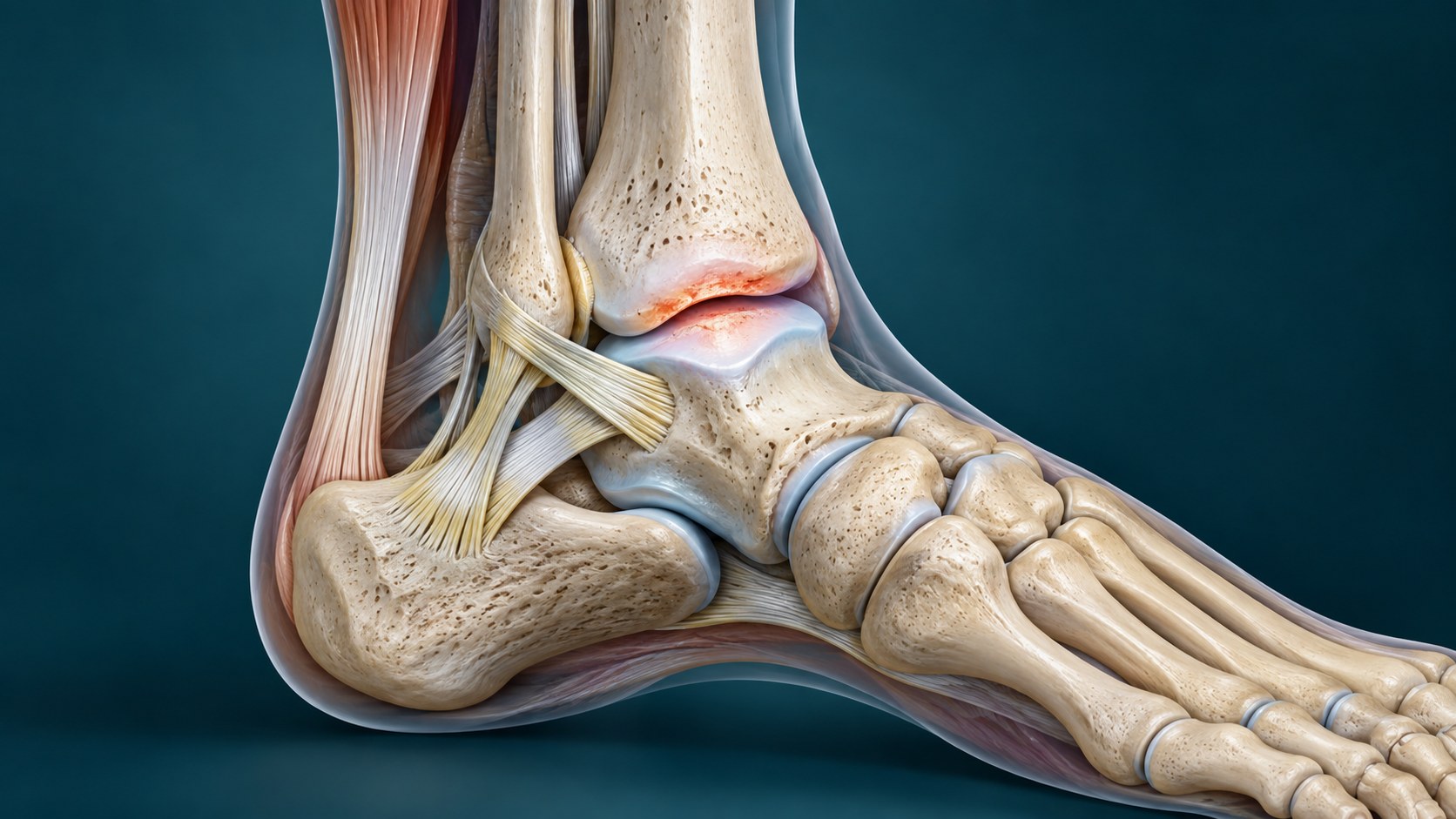
Quick orientation
What to know first
History and examination determine which anatomy and tests matter.
Urgent, neurologic, infectious, vascular, traumatic, and systemic causes stay visible until reasonably excluded.
What we may consider next
How we may treat this
These options depend on the diagnosis, exam findings, prior care, goals, and individual risk review. A listed pathway does not establish candidacy or guarantee a later procedure.
Options that may be considered
These are options, not required steps. Selection depends on the diagnosis and individual review.
Treatment option
Sciatic Nerve Block
Owner-approved narrow structural relationship only after a named neural contribution is identified; not a general treatment for all ankle pain.
Choose the guide that matches your question
Explore the specific guides.
Use these links to learn about related symptoms, conditions, and treatments. An individual evaluation is still needed to determine a diagnosis or whether a treatment may be appropriate.
Clinical guide
Ankle Osteoarthritis
Ankle-joint osteoarthritis symptoms, differential diagnosis, evaluation, conservative care, and appropriately selected procedure pathways.
Open this guideClinical guide
Tarsal Tunnel Syndrome
Symptoms, differential diagnosis, and treatment pathways for tibial nerve compression within the tarsal tunnel.
Open this guideSymptoms are clues, not a diagnosis
What the pattern can feel like
Symptoms help define a syndrome, but they do not confirm which structure is responsible. Distribution, timing, aggravating factors, neurologic findings, function, and important alternatives all shape the evaluation.
Location, radiation, timing, quality, sensory change, weakness, stiffness, swelling, activity, position, sleep, and function help define the pattern.
Similar symptoms may arise from a joint, tendon, muscle, spine, peripheral nerve, circulation, or systemic condition.
Imaging and test abnormalities require clinical correlation and may not identify the symptom source.
Relevant anatomy
Anatomy and pain mechanisms
The region includes joints, muscles, tendons, nerves, blood vessels, and possible referral pathways. Their symptom territories overlap, so the examination and selective testing must answer a defined clinical question.
History and examination first
How the diagnosis is evaluated
Evaluation begins with the patient question, safety screen, history, and focused examination. Testing is selected only when it can clarify a competing diagnosis, guide treatment, or change referral urgency.
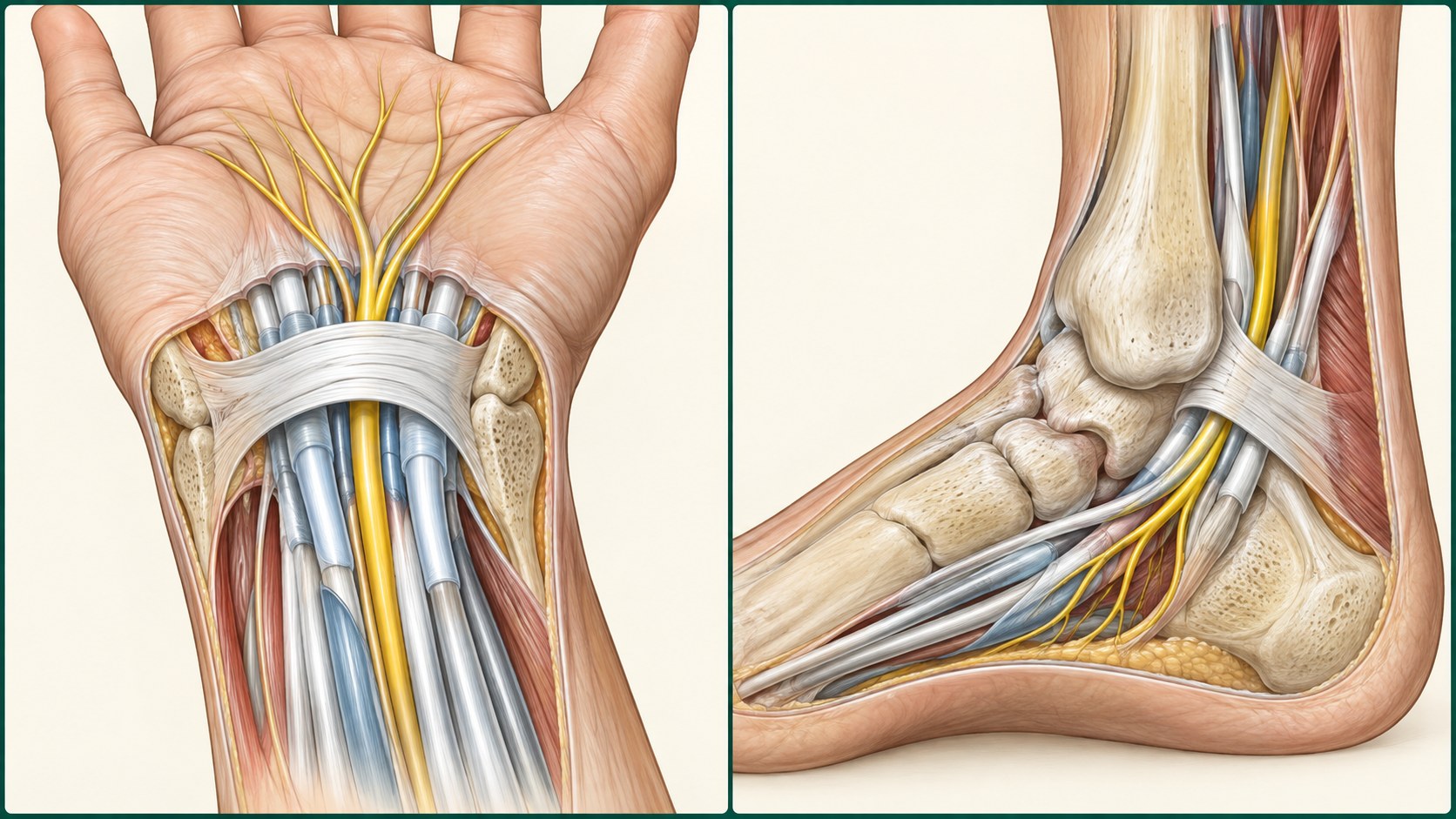
Keep the differential open
What else can look similar
Keep common and serious alternatives open until the evidence supports a narrower conclusion.
Local joint, tendon, muscle, ligament, bursa, bone, or soft-tissue disorders
Spinal referral, nerve-root, plexus, or peripheral-nerve disorders
Traumatic, infectious, inflammatory, vascular, metabolic, medication-related, or oncologic causes
Core care
Conservative and coordinated care
Procedure discussions belong inside a broader plan that protects neurologic function and daily activity.
Education, pacing, sleep and activity strategies matched to the diagnosis
Rehabilitation focused on mobility, strength, tolerance, and function when safe
Medication and comorbidity review with the appropriate clinician
Reassessment when symptoms, neurologic findings, function, or response changes
Evidence at a glance
Evidence at a glance
Evidence strength, comparator, follow-up, and selection affect interpretation.
Ankle testing is selected for the suspected joint, tendon, ligament, bone, or nerve question.
Tibiotalar degeneration and tarsal-tunnel neuropathy are distinct diagnoses.
A sciatic nerve block may be discussed only in selected cases; its presence here is not a treatment recommendation.
Decision quality matters
Evidence, limits, and who it may fit
A listed option does not establish candidacy. Diagnosis, anatomy, prior care, risk, alternatives, goals, and evidence must align.
Referral and urgent signs
When urgent or different evaluation matters
These findings can change the timing or destination of care.
A visibly deformed joint, major trauma, inability to bear weight or use the limb, or rapidly increasing swelling
A hot red joint, fever, spreading redness, open wound, or concern for infection
New limb weakness, loss of sensation, a cold or pale limb, marked calf swelling, chest symptoms, or another vascular or neurologic emergency
The visit
What to expect at an evaluation
The visit should narrow the diagnosis, identify safety and referral needs, review imaging and prior care in context, and choose the next useful decision. The clinician should explain uncertainty and what a treatment is expected to add before it is performed.
Define the location, timing, triggers, sensory features, functional effect, prior injury, and prior care
Examine the relevant joint, spine, muscles, nerves, circulation, gait, strength, sensation, and reflexes as appropriate
Use imaging, electrodiagnostic testing, laboratory work, or referral only when it answers a clinical question
Choose education, rehabilitation, medical care, further diagnostic work, a selected procedure discussion, or referral based on the working diagnosis
Common questions
Ankle Pain FAQ
These answers are educational and cannot determine an individual diagnosis or treatment plan.
For Ankle Pain, does the location alone establish the diagnosis?
No. Several tissues and referred pathways can produce pain in the same region.
Do I always need imaging for Ankle Pain?
No. Testing is chosen when it can answer a clinical question or change care.
Why is a treatment guide listed with Ankle Pain?
Related guides are educational and do not establish a diagnosis or treatment recommendation.
Diagnosis before procedure
Start with a careful evaluation
A focused evaluation can clarify the diagnosis, important alternatives, and the next step that fits the clinical picture.