
The diagnosis and named target come before the procedure.
Abdominal, pelvic, groin, chest wall and rib procedures
Ilioinguinal and Iliohypogastric Nerve Block
An ilioinguinal and iliohypogastric nerve block places medication near two neighboring sensory nerves of the lower abdominal wall. The practice commonly addresses them together when the history, examination, and anatomy support both targets, but the block is not a general treatment for every abdominal, pelvic, or groin pain pattern.
Quick orientation
What to know first
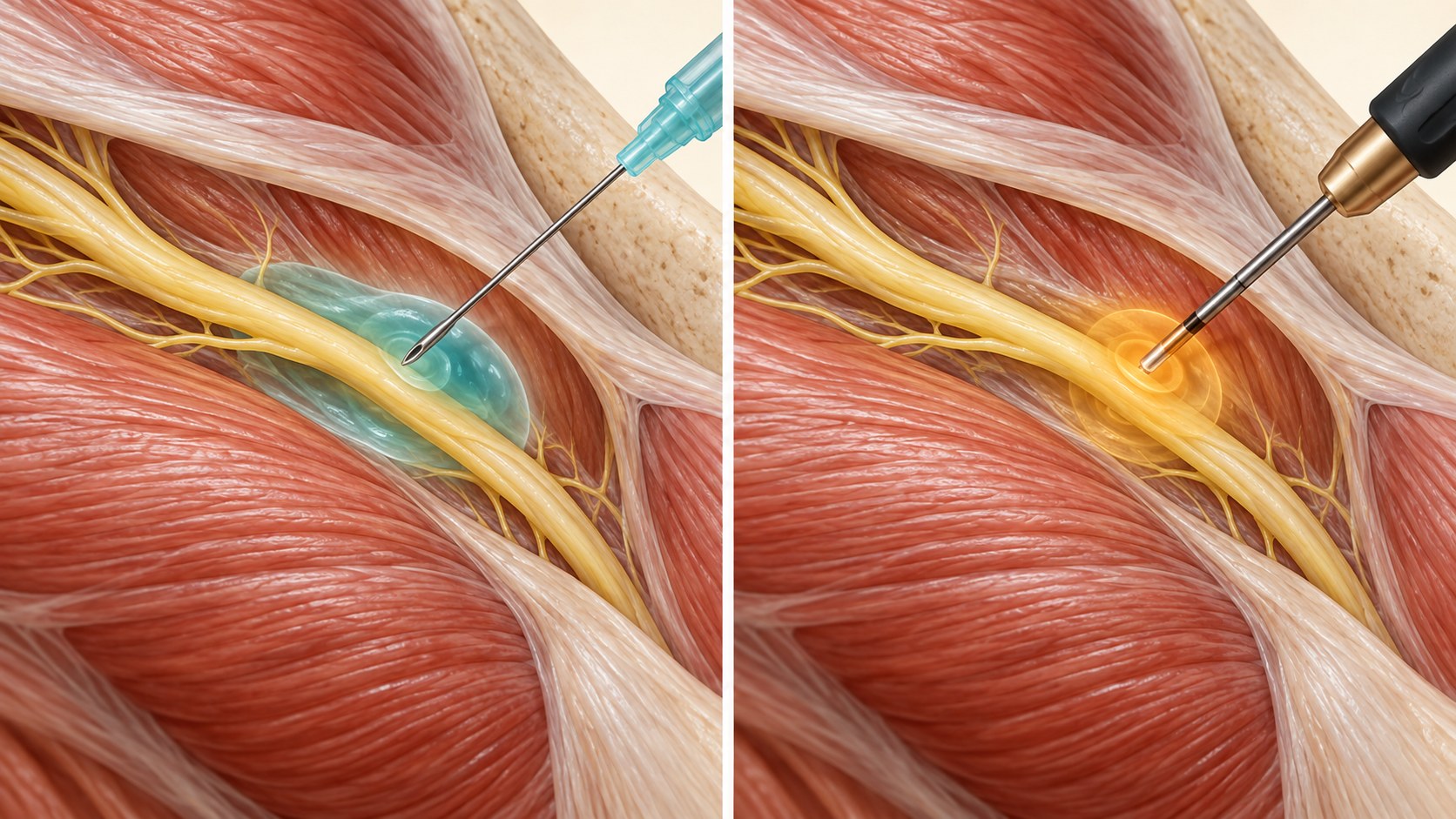
Nerve block, fascial-plane block, sympathetic block, and radiofrequency are not interchangeable.
Response may inform a plan but does not prove diagnosis, predict duration, or require another procedure.
Target and mechanism
The target defines the procedure
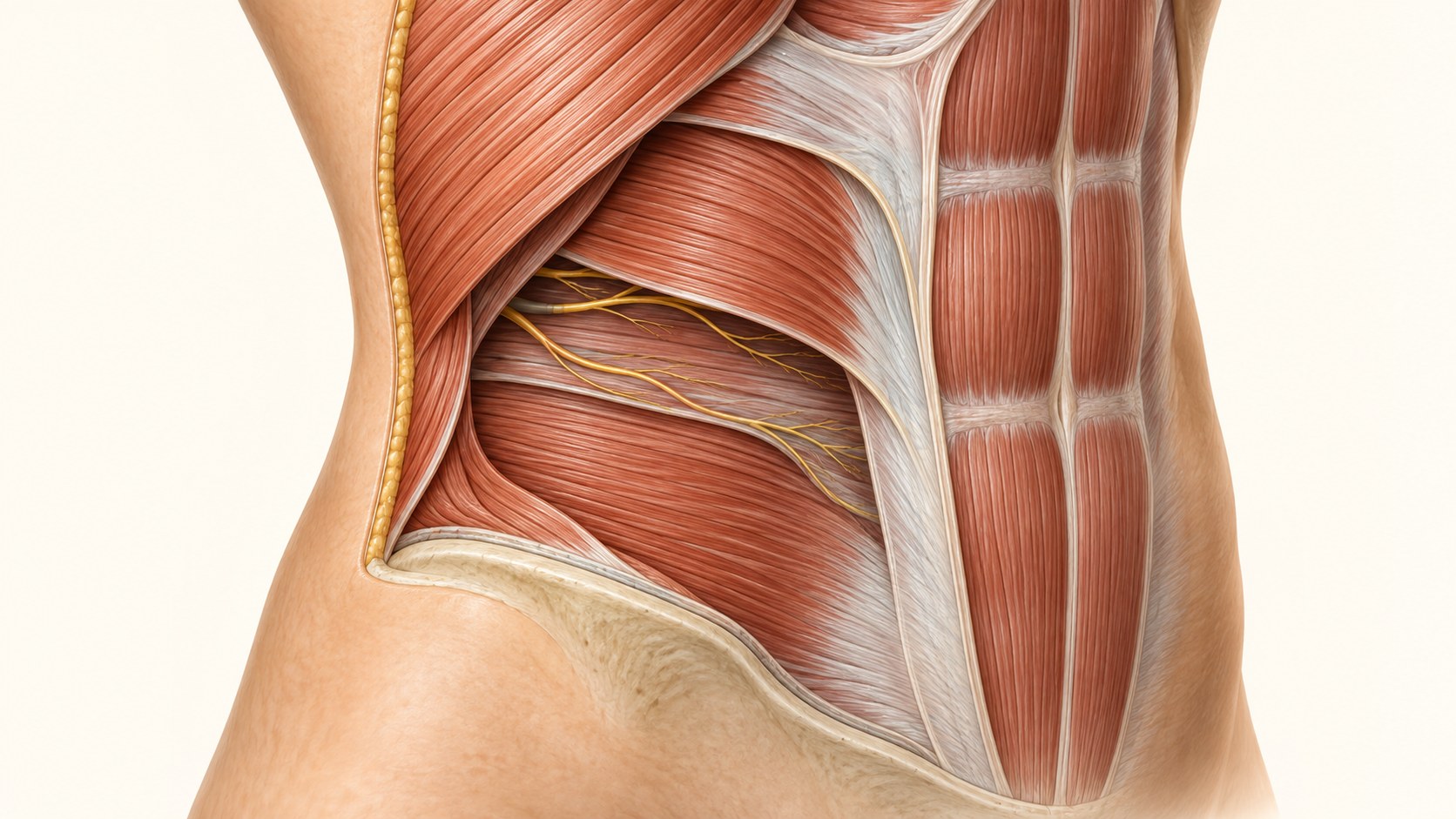
The iliohypogastric and ilioinguinal nerves arise from the upper lumbar plexus and travel through overlapping but variable lower abdominal-wall planes. Their sensory territories can overlap, especially after lower abdominal or groin surgery. A combined approach may address both named targets, while genitofemoral, TAP, scar, hernia, muscle, hip, spine, pelvic-floor, and visceral sources remain separate clinical questions. The related Ilioinguinal / Iliohypogastric Neuralgia guide explains the diagnosis and differential; this page owns only the combined block procedure.
Learn what may come next
Related guides.
Use these links to learn about related symptoms, conditions, and treatments. An individual evaluation is still needed to determine a diagnosis or whether a treatment may be appropriate.
Clinical guide
Ilioinguinal / Iliohypogastric Neuralgia
Ilioinguinal- or iliohypogastric-distribution pain, differential diagnosis, and treatment pathways.
Open this guideSymptom guide
Pelvic & Groin Pain
Combined pelvic-and-groin symptom orientation with referral boundaries and named neuralgia pathways.
Open this guideSpecific treatment
Genitofemoral Nerve Block
Understand genitofemoral nerve block role, selection, limitations, and risks.
Open this guideSpecific treatment
Transversus Abdominis Plane Block
Understand TAP block role, selection, limitations, and risks.
Open this guideRelated care
Conditions this treatment may be considered for
These related options are educational. They do not establish a diagnosis, candidacy, recommendation, or required treatment sequence.
Patient selection
Selection questions
Selection begins with a clinically coherent diagnosis and a specific anatomic target. It also considers competing diagnoses, prior treatment, medication and bleeding risk, infection risk, goals, and whether a procedure is the right next decision.
A clinically coherent lower abdominal-wall or groin pain pattern involving both nerve territories
A focused diagnostic or therapeutic question after hernia, visceral, hip, spine, pelvic-floor, scar, and other causes are considered
A medication, bleeding, infection, allergy, pregnancy, and procedural-risk review that supports the selected approach
Defined symptom and functional goals with a plan to interpret temporary, partial, absent, or discordant response
Evidence at a glance
Evidence at a glance
Study results depend on diagnosis, selection, comparator, technique, outcome, and follow-up.
The ilioinguinal and iliohypogastric nerves have variable, overlapping courses in the lower abdominal wall.
Published block evidence spans different diagnoses, approaches, medications, and outcomes, so expectations must remain diagnosis-specific.
A temporary response can inform reassessment but does not by itself prove a single pain source or require another procedure.
Decision process
Decision sequence
A procedure is an optional treatment discussion, not an automatic step. The response must be reassessed against the usual symptoms and meaningful activities. A limited, absent, or discordant response should reopen the diagnosis and alternatives instead of triggering an automatic series.
Review the pain map, prior surgery, examination, imaging, and competing diagnoses
Confirm why both named nerves, rather than one nerve or a broader fascial plane, are being considered
Receive individualized preparation, medication-hold, transportation, and aftercare instructions
Track familiar symptoms and meaningful function during recovery, then reassess before any next decision
A staged decision
How we decide what may come next
After the target pattern, alternatives, and safety factors are reviewed, the physician uses image guidance appropriate to the anatomy to position a needle near the ilioinguinal and iliohypogastric nerves. Medication is delivered after position and safety checks. The exact approach, medication, volume, sedation plan, and aftercare are individualized.
Decision quality matters
Evidence, limits, and who it may fit
A listed option or imaging finding does not establish candidacy. Evidence and uncertainty must be matched to the individual question.
Risks and limits
Evidence, risks, and limits
The ilioinguinal and iliohypogastric nerves have variable, overlapping courses in the lower abdominal wall. Published block evidence spans different diagnoses, approaches, medications, and outcomes, so expectations must remain diagnosis-specific. A temporary response can inform reassessment but does not by itself prove a single pain source or require another procedure.
Bleeding, infection, local pain, bruising, temporary numbness or weakness, nerve or vascular injury, unintended medication spread, injury to a nearby abdominal structure, allergic reaction, and local anesthetic toxicity require individualized consent.
Temporary leg heaviness, abdominal-wall numbness, soreness, or a symptom flare can occur; urgent or unexpected symptoms require prompt clinical guidance.
Medication, volume, image-guidance approach, sedation, medication holds, driving, activity, and follow-up are individualized rather than universal instructions.
A helpful response does not prove that both nerves are the only pain source, guarantee duration, or establish an automatic repeat or radiofrequency pathway.
The visit
What to expect from a consultation
The visit should define the diagnosis, intended target, evidence, alternatives, risks, and the next useful decision. Medication, frequency, sedation, medication holds, driving, and aftercare remain individualized clinician decisions.
Common questions
Ilioinguinal and Iliohypogastric Nerve Block FAQ
These answers are educational and cannot determine an individual diagnosis or treatment plan.
Why are the ilioinguinal and iliohypogastric nerves sometimes blocked together?
Their courses and sensory territories can overlap. When the clinical pattern supports both targets, addressing them together may be more appropriate than assuming only one nerve is involved.
Is this the same as a TAP block?
No. A combined ilioinguinal and iliohypogastric block targets two named nerves. A TAP block addresses a broader abdominal-wall fascial plane and has a different clinical role.
Can the block prove which nerve causes the pain?
No. The response is interpreted with the history, examination, competing diagnoses, medication spread, and the patient’s usual symptoms and function.
How should I prepare and recover?
Preparation, medication holds, transportation, activity, and follow-up depend on individual risks and the planned technique. The clinical team provides instructions for the specific procedure.
When is evaluation needed before considering a block?
Evaluation is needed to confirm the pain pattern, review prior surgery and testing, examine competing hernia, visceral, hip, spine, pelvic-floor, scar, and nerve causes, and identify safety or referral needs before a procedure is selected.
Does a successful block mean radiofrequency is next?
No. The practice does not present a combined block as an automatic pathway to another procedure. Every later decision requires separate evidence, risk, and clinical review.
Question before procedure
Start with a diagnosis-first consultation
A consultation can clarify whether a selected procedure, another treatment, continued conservative care, or referral fits the clinical picture.