
The diagnosis and patient goal come before a treatment choice.
Spine & sacroiliac treatments
Minuteman Interspinous-Interlaminar Fusion
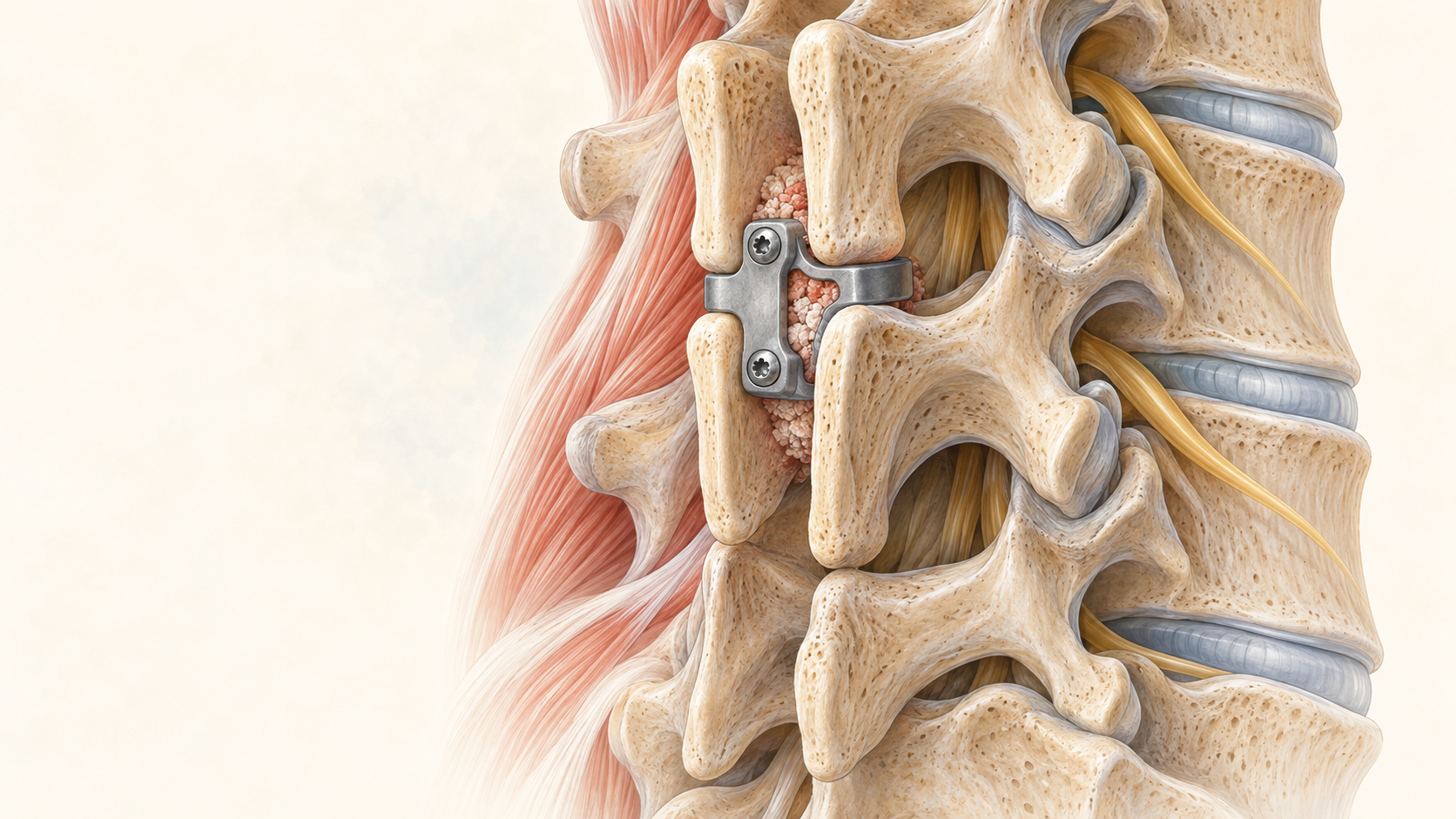
Minuteman is a posterior lumbar stabilization and fusion procedure involving adjacent posterior vertebral elements. It is considered only for a defined clinical and anatomic problem after nonsurgical care, alternatives, instability, stenosis, and surgical-referral questions are reviewed.
Quick orientation
What to know first
Each pathway has a distinct purpose, evidence base, limitations, and risk profile.
A consultation organizes options without creating an automatic procedure sequence.
Learn what may come next
Related guides.
Use these links to learn about related symptoms, conditions, and treatments. An individual evaluation is still needed to determine a diagnosis or whether a treatment may be appropriate.
Care overview
Lumbar & Back Treatments
Compare lumbar and low-back treatment guides by clinical purpose.
Open this guideSymptom guide
Chronic / Low Back Pain
Broad low-back-pain orientation across mechanical, disc, facet, stenotic, radicular, and sacroiliac causes.
Open this guideSpecific treatment
Lumbar Epidural Steroid Injection
Lumbar ESI anatomy, selection context, procedure considerations, risks, and recovery.
Open this guideSpecific treatment
Lumbar Medial Branch Block
Lumbar medial branch block anatomy, diagnostic role, selection context, risks, and next-step interpretation.
Open this guideSpecific treatment
Lumbar Radiofrequency Ablation
Lumbar facet RFA anatomy, prerequisite evaluation, selection context, risks, and recovery.
Open this guideTarget and mechanism
The target defines the procedure
The implant spans adjacent posterior lumbar elements and is used with a fusion intent. It is not interchangeable with every interspinous spacer or decompression technology; exact device labeling, level, anatomy, bone quality, neural compression, and stability matter.
Patient selection
Selection questions
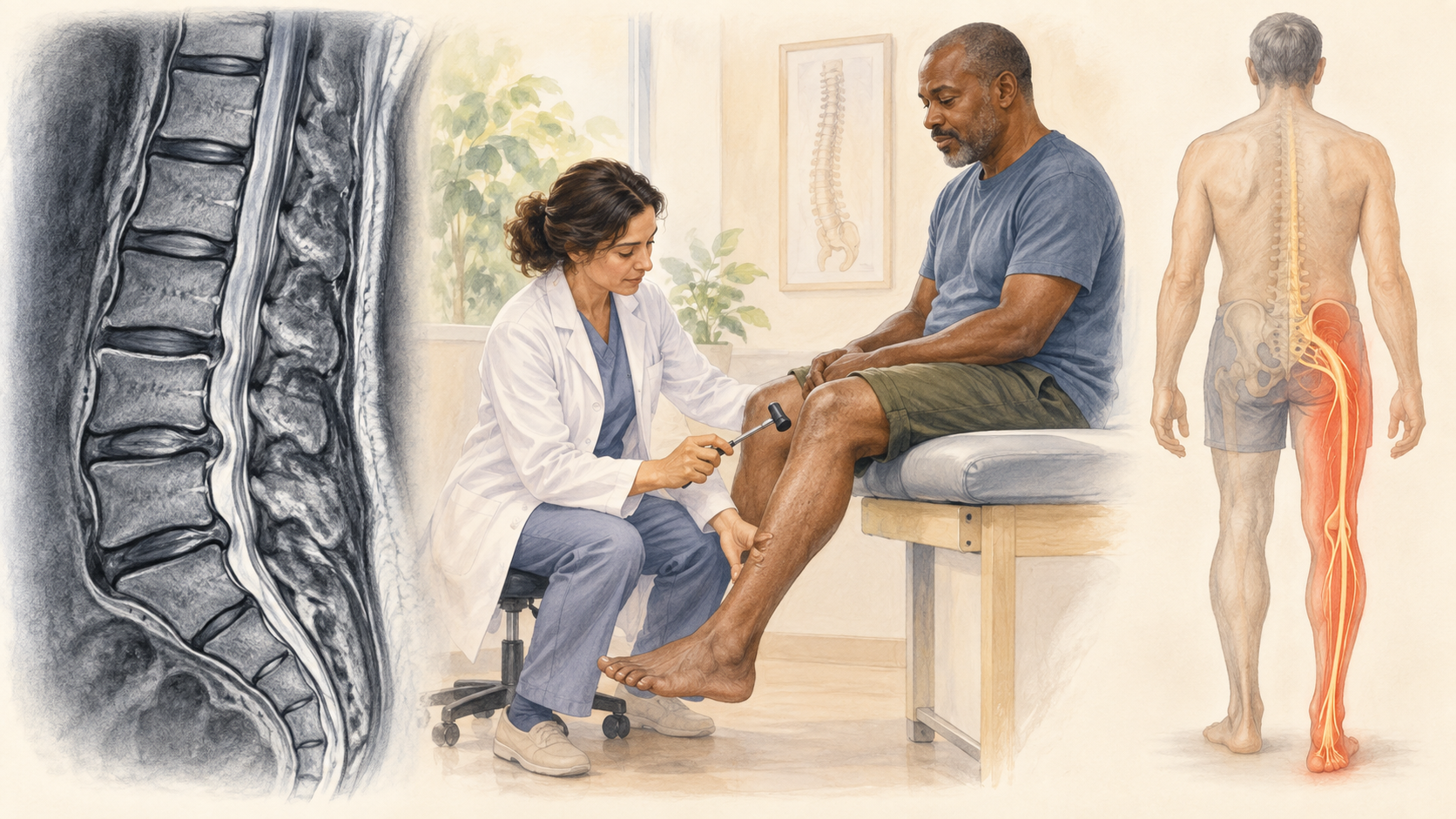
Selection begins with a clinically coherent diagnosis and a specific anatomic target. It also considers competing diagnoses, prior treatment, medication and bleeding risk, infection risk, goals, and whether a procedure is the right next decision.
A clinically coherent diagnosis and specific patient question
Meaningful functional limitation despite appropriate initial care
Risks, alternatives, goals, and expected value reviewed together
A defined reassessment or referral plan
A staged decision
How we decide what may come next
The selected posterior elements are accessed with image guidance, prepared according to the planned technique, and stabilized with an interspinous-interlaminar fixation construct and graft context. The procedure does not directly establish that all stenosis has been decompressed, and the need for formal decompression or another surgical approach must be considered separately.
Related care
Conditions this treatment may be considered for
These related options are educational. They do not establish a diagnosis, candidacy, recommendation, or required treatment sequence.
Therapeutic Consideration
Lumbar Spinal Stenosis
May be considered only for the procedure's confirmed selection criteria after structural, neurologic, and surgical review.
Explore this pageDecision process
Decision sequence
A procedure is an optional treatment discussion, not an automatic step. The response must be reassessed against the usual symptoms and meaningful activities. A limited, absent, or discordant response should reopen the diagnosis and alternatives instead of triggering an automatic series.
Clarify the diagnosis and main functional problem
Review prior care, imaging, medication, and medical risks in context
Compare appropriate conservative, interventional, surgical, and referral options
Choose the next useful decision and define how it will be reassessed
Evidence at a glance
Evidence at a glance
Study results depend on diagnosis, selection, comparator, technique, outcome, and follow-up.
FDA 510(k) clearance establishes substantial equivalence for labeled use, not guaranteed clinical benefit.
Direct clinical evidence for the exact construct is limited and does not establish universal comparative superiority.
Imaging stenosis or degenerative change alone does not establish appropriateness; neurologic findings, stability, bone quality, alternatives, and surgical needs matter.
Decision quality matters
Evidence, limits, and who it may fit
A listed option or imaging finding does not establish candidacy. Evidence and uncertainty must be matched to the individual question.
Risks and limits
Evidence, risks, and limits
FDA 510(k) clearance establishes substantial equivalence for labeled use, not guaranteed clinical benefit. Direct clinical evidence for the exact construct is limited and does not establish universal comparative superiority. Imaging stenosis or degenerative change alone does not establish appropriateness; neurologic findings, stability, bone quality, alternatives, and surgical needs matter.
Treatment evidence applies to defined diagnoses, techniques, and populations rather than every pain presentation.
Patient selection, medication, technique, recovery, and follow-up are individualized.
A procedure or medication plan does not replace urgent neurologic, surgical, behavioral-health, or addiction-treatment evaluation when indicated.
The visit
What to expect from a consultation
The visit should define the diagnosis, intended target, evidence, alternatives, risks, and the next useful decision. Medication, frequency, sedation, medication holds, driving, and aftercare remain individualized clinician decisions.
Common questions
Minuteman Interspinous-Interlaminar Fusion FAQ
These answers are educational and cannot determine an individual diagnosis or treatment plan.
Is Minuteman the same as every interspinous spacer?
No. Device designs, fixation, fusion intent, indications, and evidence differ; this page does not generalize from another technology.
Does an MRI showing stenosis make me a candidate?
No. Symptoms, examination, neurologic status, stability, bone quality, prior care, alternatives, and surgical questions must align.
When may surgical evaluation be more appropriate?
Progressive neurologic deficits, instability, severe or multilevel compression, uncertain diagnosis, or anatomy needing direct decompression can change the referral pathway.
Question before procedure
Start with a diagnosis-first consultation
A consultation can clarify whether a selected procedure, another treatment, continued conservative care, or referral fits the clinical picture.