
The diagnosis and anatomic target come before the procedure.
Joint and musculoskeletal treatments
Posterior Sacroiliac Joint Fusion
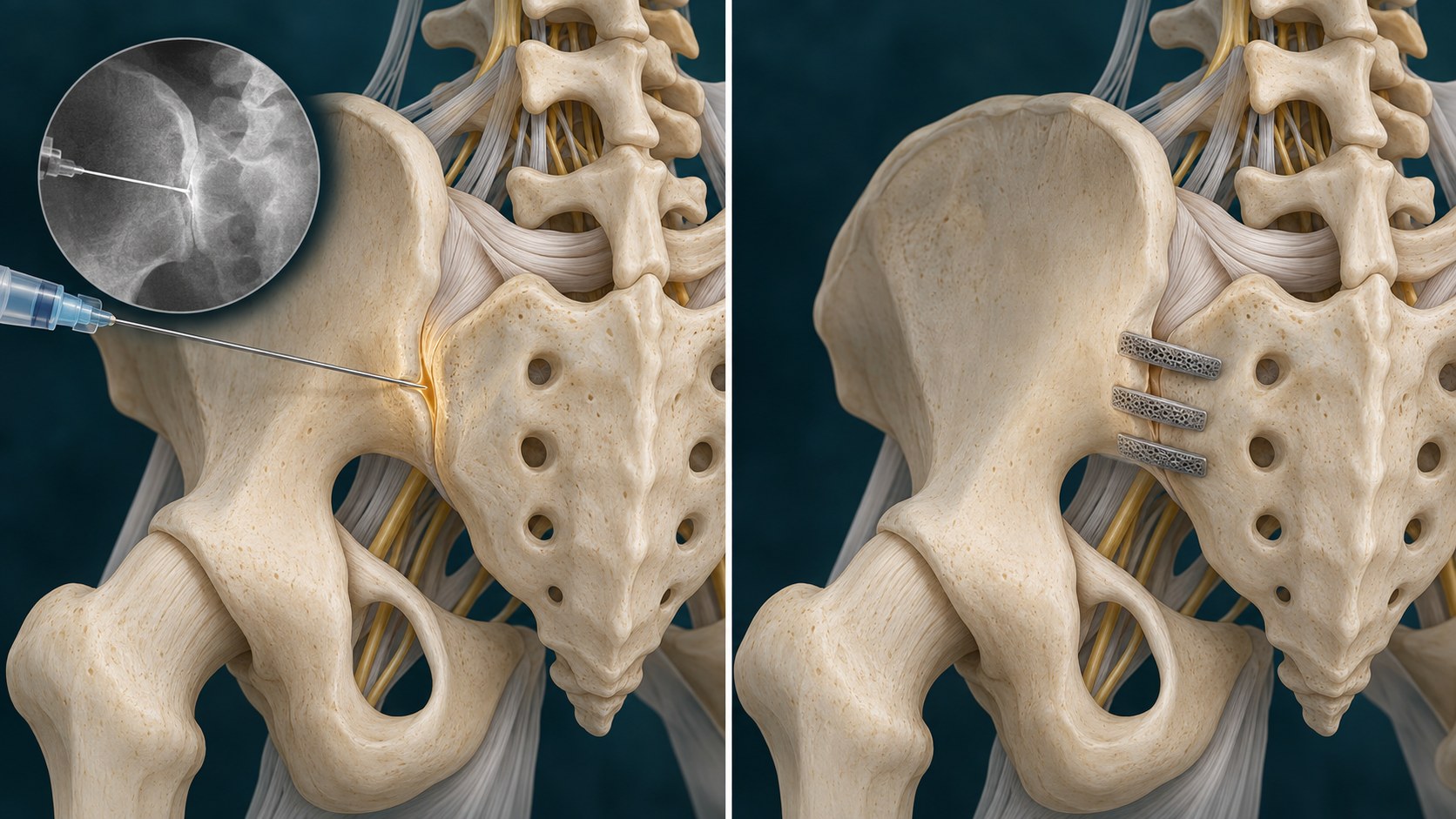
Posterior SI joint fusion is a stabilization procedure considered only for carefully selected persistent SI-mediated pain after a diagnosis-focused workup and appropriate nonoperative care. It is not the expected next step after an injection.
Quick orientation
What to know first
Medication, route, frequency, and aftercare are individualized rather than universal.
A response can inform the plan, but it does not automatically establish a diagnosis or require another procedure.
Learn what may come next
Related guides.
Use these links to learn about related symptoms, conditions, and treatments. An individual evaluation is still needed to determine a diagnosis or whether a treatment may be appropriate.
Care overview
Sacroiliac Joint Treatments
Compare sacroiliac diagnostic and treatment pathways.
Open this guideClinical guide
Sacroiliac Joint Pain
Sacroiliac-joint pain patterns, evaluation, differential diagnosis, and treatment pathways.
Open this guideSpecific treatment
Sacroiliac Joint Injection
Understand SI-joint injection indications, diagnostic/therapeutic context, risks, and next steps.
Open this guideTarget and mechanism
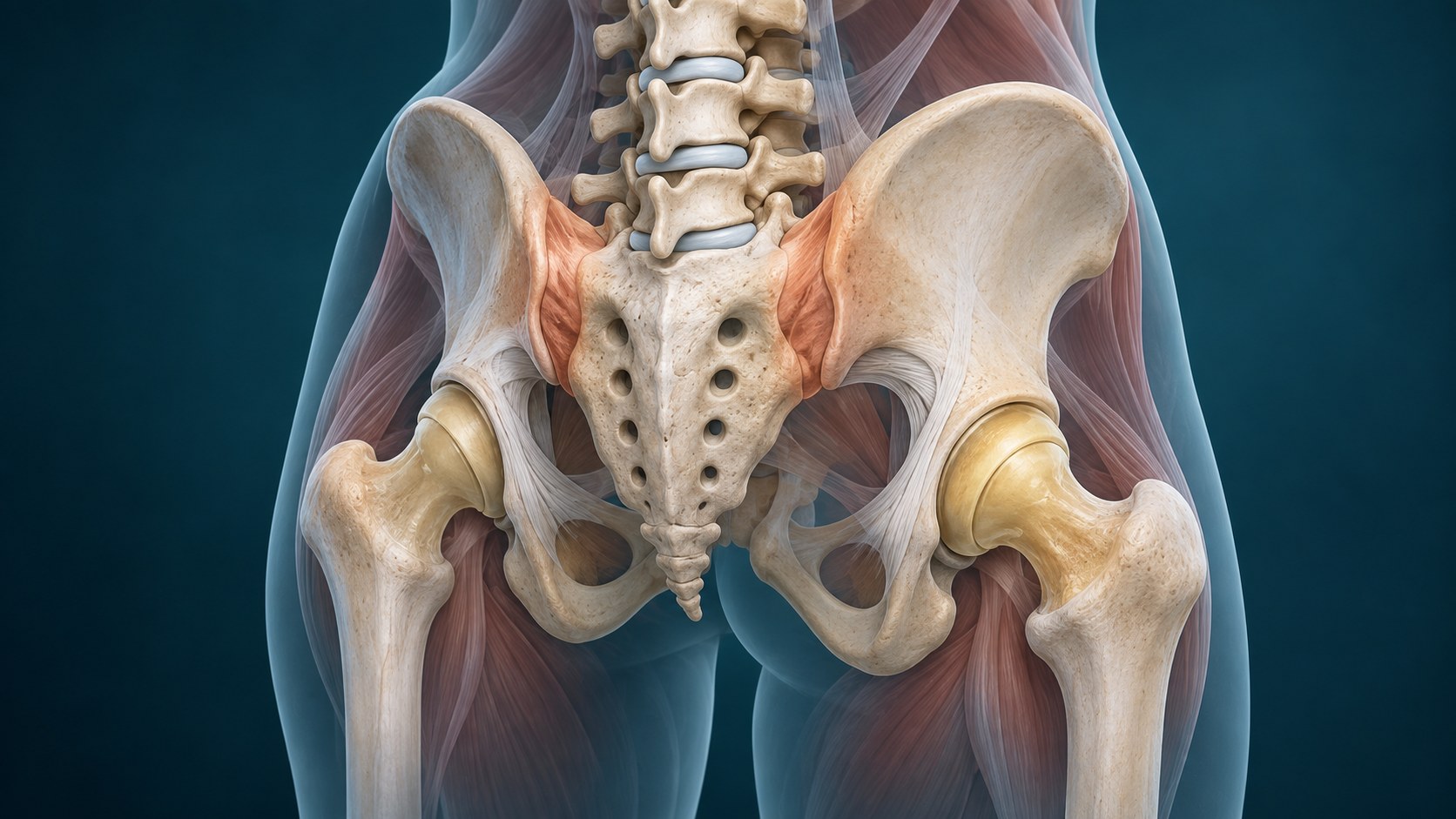
The target defines the procedure
Posterior approaches place a generic stabilization or fusion construct across or within the SI joint region. Technique and device details vary. This page does not endorse a named product or claim that one approach is superior.
Patient selection
Selection questions
Selection begins with a clinically coherent diagnosis and a specific anatomic target. It also considers competing diagnoses, prior treatment, medication and bleeding risk, infection risk, goals, and whether a procedure is the right next decision.
Persistent function-limiting symptoms with a coherent SI joint complex diagnosis
Reasonable evaluation of competing lumbar, hip, pelvic, and other pain sources
Appropriate nonoperative care and a review of surgical and nonsurgical alternatives
A procedure-specific review of anatomy, bone health, medical risk, recovery demands, and evidence uncertainty
A staged decision
How we decide what may come next
After confirming the diagnosis, alternatives, and operative plan, the clinician accesses the posterior SI region and places a stabilization or fusion construct according to the selected technique. Implant position, bone preparation or graft use, closure, and postoperative restrictions vary by approach. This is not an injection, and a prior injection response alone does not establish surgical candidacy.
Related care
Conditions this treatment may be considered for
These related guides show educational connections. They do not establish candidacy, a recommendation, or a required sequence.
Needs a separate clinical evaluation
Sacroiliac Joint Pain
Later treatment pathway only after diagnosis confirmation, conservative care, and procedure-specific selection.
Explore this pageDecision process
Decision sequence
A procedure is an optional treatment discussion, not an automatic step. The response must be reassessed against the usual symptoms and meaningful activities. A limited, absent, or discordant response should reopen the diagnosis and alternatives instead of triggering an automatic series.
Confirm the SI diagnosis and important competing pain sources
Review why fusion rather than continued nonoperative care or another referral is being considered
Discuss the exact approach, device-neutral operative plan, risks, recovery, restrictions, alternatives, and evidence uncertainty
Evidence at a glance
Evidence at a glance
Study results depend on diagnosis, selection, comparator, technique, outcome, and follow-up.
Open-label randomized comparisons with non-surgical management reported improvement in selected patients, but device-industry involvement and crossover complicate interpretation.
A double-blind sham-controlled trial did not prove superiority over sham surgery at six months.
The 2025 multispecialty guideline characterized fusion evidence for carefully selected patients as weak or very weak.
Decision quality matters
Evidence, limits, and who it may fit
A listed option or imaging finding does not establish candidacy. Evidence and uncertainty must be matched to the individual question.
Risks and limits
Evidence, risks, and limits
Open-label randomized comparisons with non-surgical management reported improvement in selected patients, but device-industry involvement and crossover complicate interpretation. A double-blind sham-controlled trial did not prove superiority over sham surgery at six months. The 2025 multispecialty guideline characterized fusion evidence for carefully selected patients as weak or very weak.
Risks can include bleeding, infection, wound or implant problems, nerve injury, persistent or worsened pain, failure to fuse, adjacent pain, reoperation, and general medical or anesthesia complications.
Recovery, weight-bearing, activity restrictions, rehabilitation, and return to work depend on the technique, anatomy, health, and treating clinician.
Neither fusion nor a particular amount or duration of symptom relief can be guaranteed, and sham-controlled evidence leaves important uncertainty.
The visit
What to expect from a consultation
The visit should define the diagnosis, intended target, evidence, alternatives, risks, and the next useful decision. Medication, frequency, sedation, medication holds, driving, and aftercare remain individualized clinician decisions.
Common questions
Posterior Sacroiliac Joint Fusion FAQ
These answers are educational and cannot determine an individual diagnosis or treatment plan.
Who may enter a fusion discussion?
Only a carefully selected patient with persistent symptoms, a coherent SI diagnosis, appropriate prior care, and a favorable individualized risk and alternative review.
Is fusion proven better than placebo surgery?
A 2024 sham-controlled trial did not establish superiority at six months, so uncertainty must be discussed.
Is there one required block threshold?
No universal clinical threshold should be published here. Guidelines, payers, surgeons, and studies use different criteria.
Question before procedure
Start with a diagnosis-first consultation
A consultation can clarify whether a selected procedure, another treatment, continued conservative care, or referral fits the clinical picture.